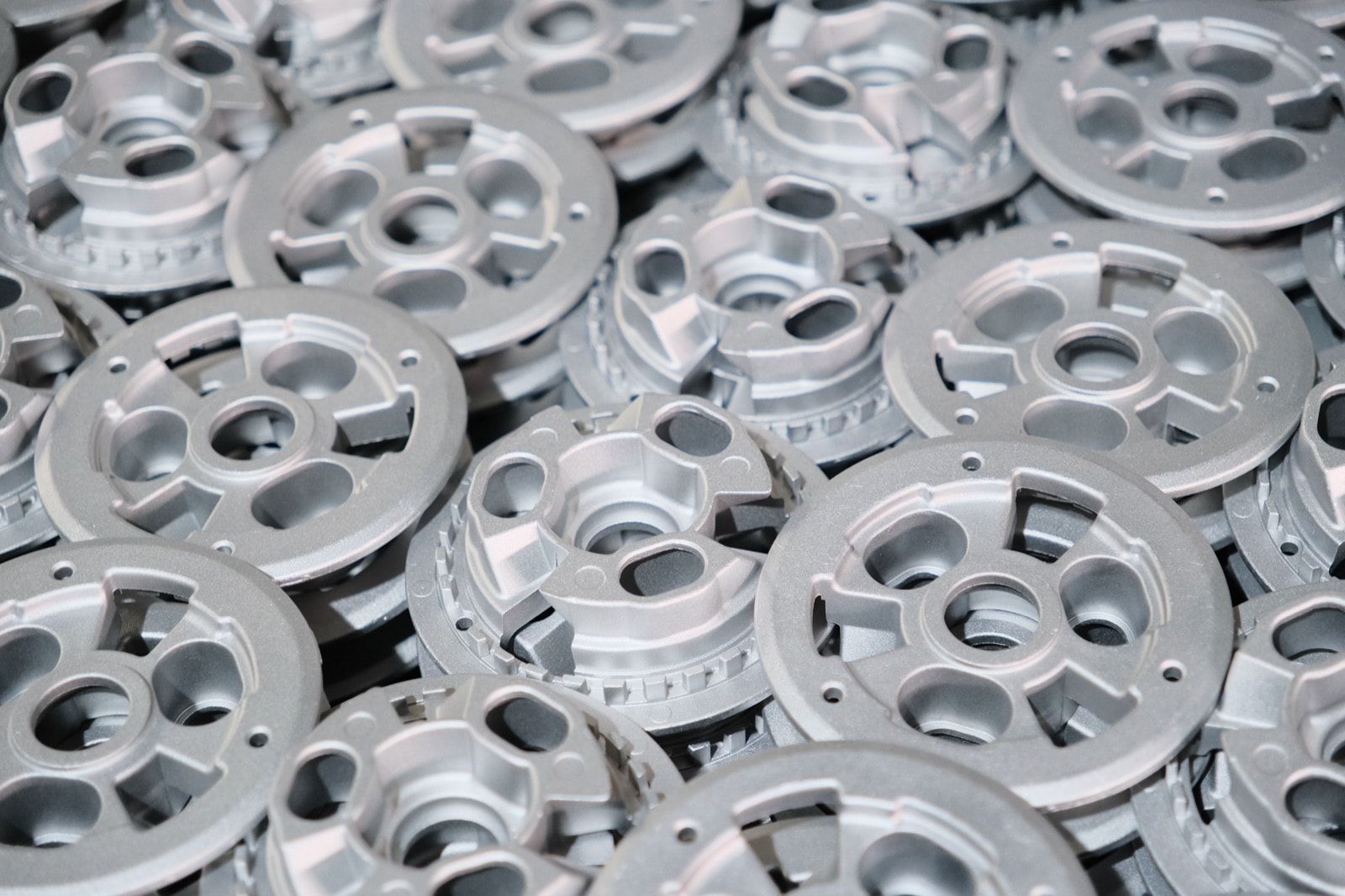
CASE STUDIES · PART TYPE
Cosmetic die castings: flow marks, cold laps and blistering
Smart lock panels and handles are zinc parts people see and touch every day, so flow marks, cold laps and blisters after finishing are all in plain view. Below: what makes them hard, how we handle them, and every case we have published.
What makes these parts hard
Zinc freezes over a very narrow range (about 380–386 ℃ for Zamak 5), so the flow front loses fluidity almost as soon as it cools and two meeting streams leave cold laps and flow marks that plating only makes more visible. Subsurface pores expand during pre-treatment and baking and lift the plating into blisters, and lead or cadmium above the limits cause intergranular corrosion that blisters the same way.
How we handle them
We size gates to the metal each region needs, keep them off the cores, route knit lines to hidden faces and control die temperature, and every batch of alloy is checked by spectrometer. In-house finishes include PVD, powder coating, bead blasting and vibratory finishing; plating is arranged through a partner plater, with quality owned by us. In the case published here, plating blisters on a smart lock front panel are held below 0.5%.
Cosmetic parts · Production cases2
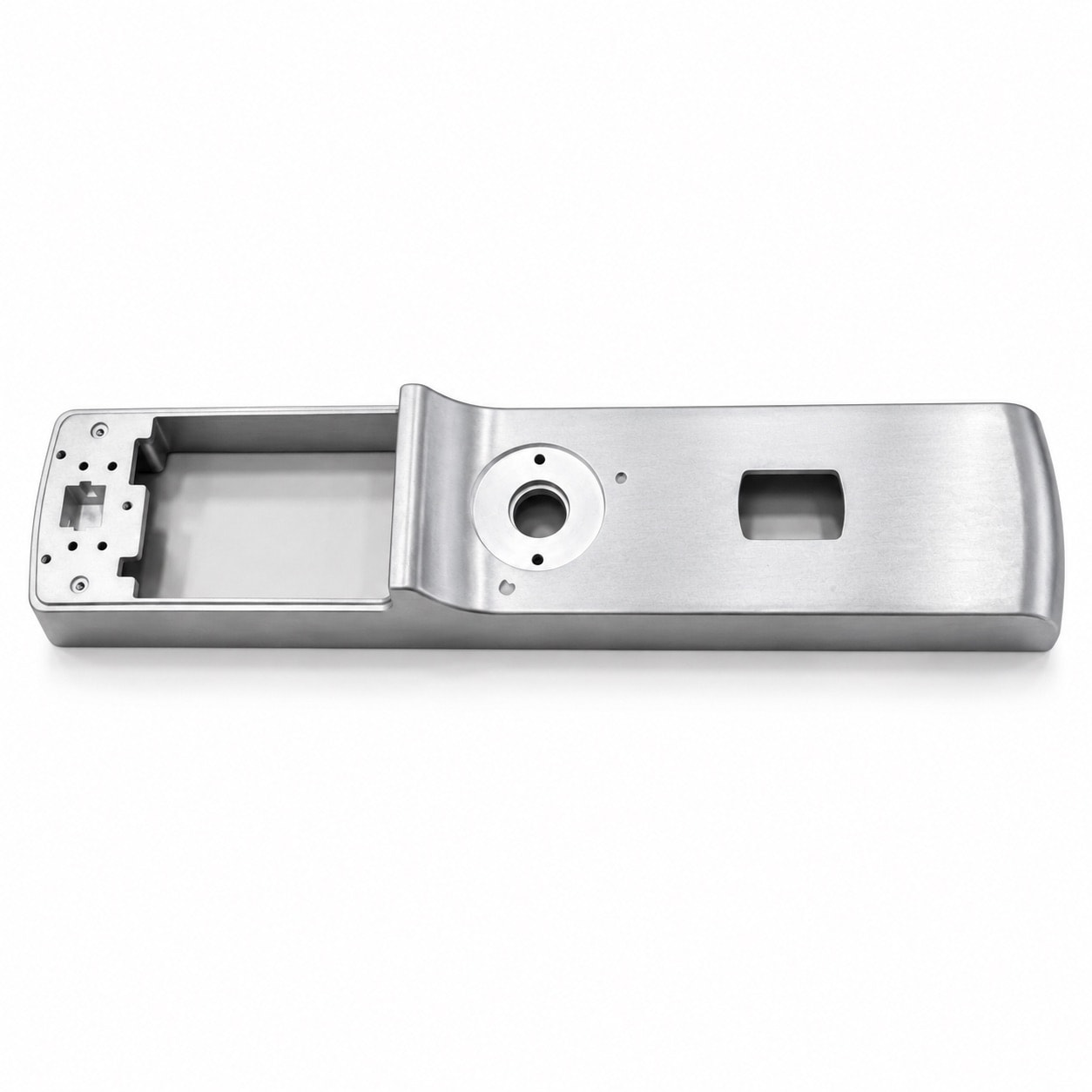
Zinc Alloy Smart Door Lock Front Panel
Plating blistered and flow marks marred the show face. Gates sized to each region and knit lines moved off it cut blisters from about 8% to under 0.5%.
Zamak 5 / YZZnAl4Cu1 (GB/T 13818-2024) · 约 450 g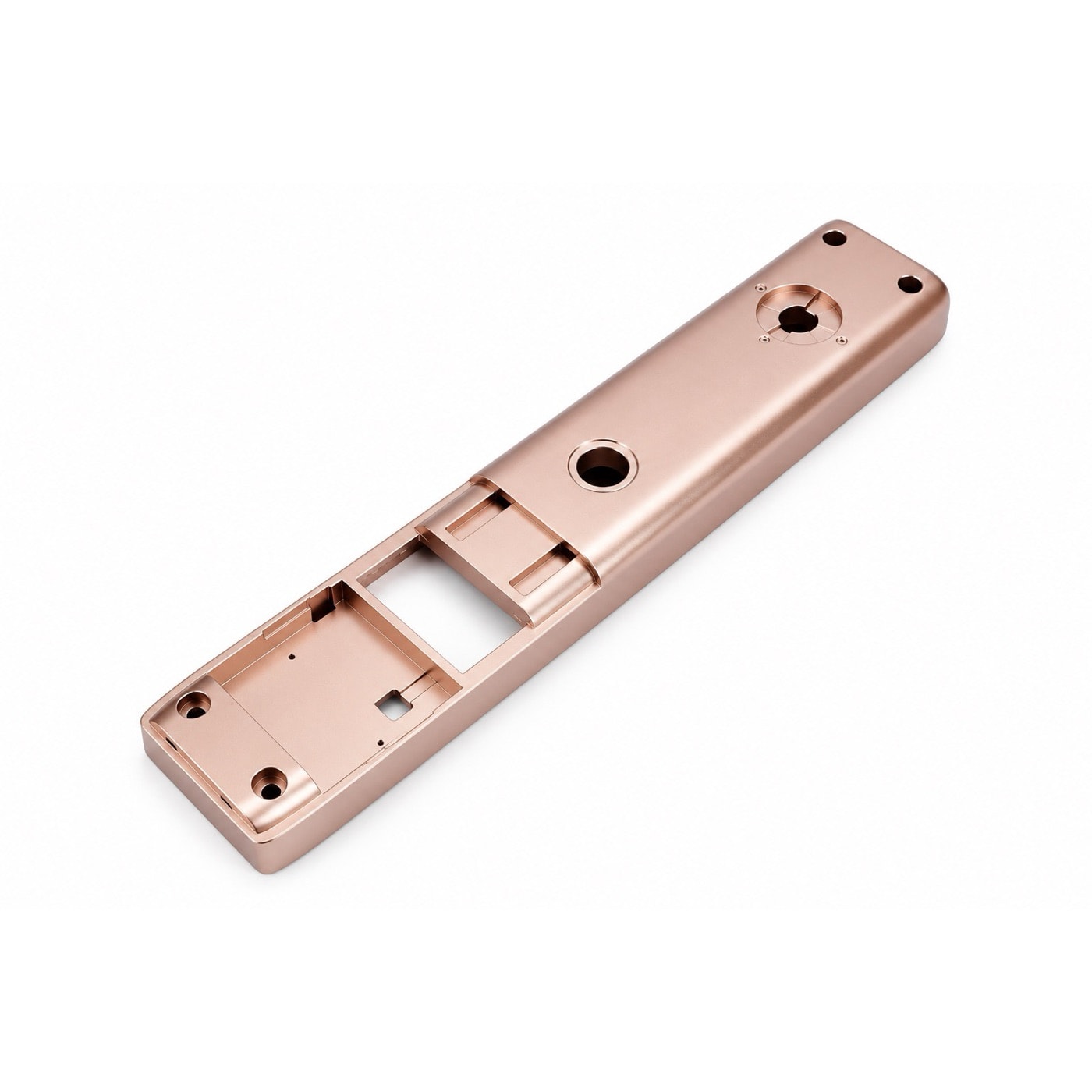
Zinc Alloy Smart Lock Panel with Rose-Gold PVD
A 300 mm panel that warped after casting, under a PVD film too thin to hide sink marks. Cored bosses, zoned cooling and per-load colour checks give 0.15 mm flatness and ΔE ≤ 1.0.
Zamak 3 / YZZnAl4A (GB/T 13818-2024) · 约 420 gQuestions
Zamak 3 or Zamak 5 for a cosmetic part?+
Zamak 3 is more ductile and more stable dimensionally over time; Zamak 5 adds about 1% copper for higher strength and hardness, with typical tensile strengths of about 283 MPa and 328 MPa respectively. Both are common for cosmetic parts; Zamak 5 is worth considering where the part carries more load.
Do you plate parts?+
Plating is done through a partner plater that we coordinate, and we own the quality. In-house finishes are PVD, powder coating, bead blasting, shot blasting, vibratory finishing and anodizing.
Have a part like this?
Start with the cost estimator to see how the price is built, or upload a drawing for us to review — we reply within 24 hours.