MATERIALS
Zinc and aluminum die-casting alloys
We cast eleven everyday die-casting grades, cross-referenced across ASTM, EN, JIS and GB, with aluminum and zinc both made in our own factory.
OVERVIEW
The alloys we cast
We cast eleven everyday die-casting grades:
- Aluminum alloys (7): ADC12, A380, A360, AlSi9Cu3, ADC10, ADC6, AlSi12
- Zinc alloys (4): Zamak 3, Zamak 5, ZA-8, ZA-12
Aluminum and zinc castings are both made in our own factory, on ten die casting machines from 160 to 800 t. Zinc castings weigh 20 g–1.5 kg a piece, aluminum castings 20 g–5.5 kg.
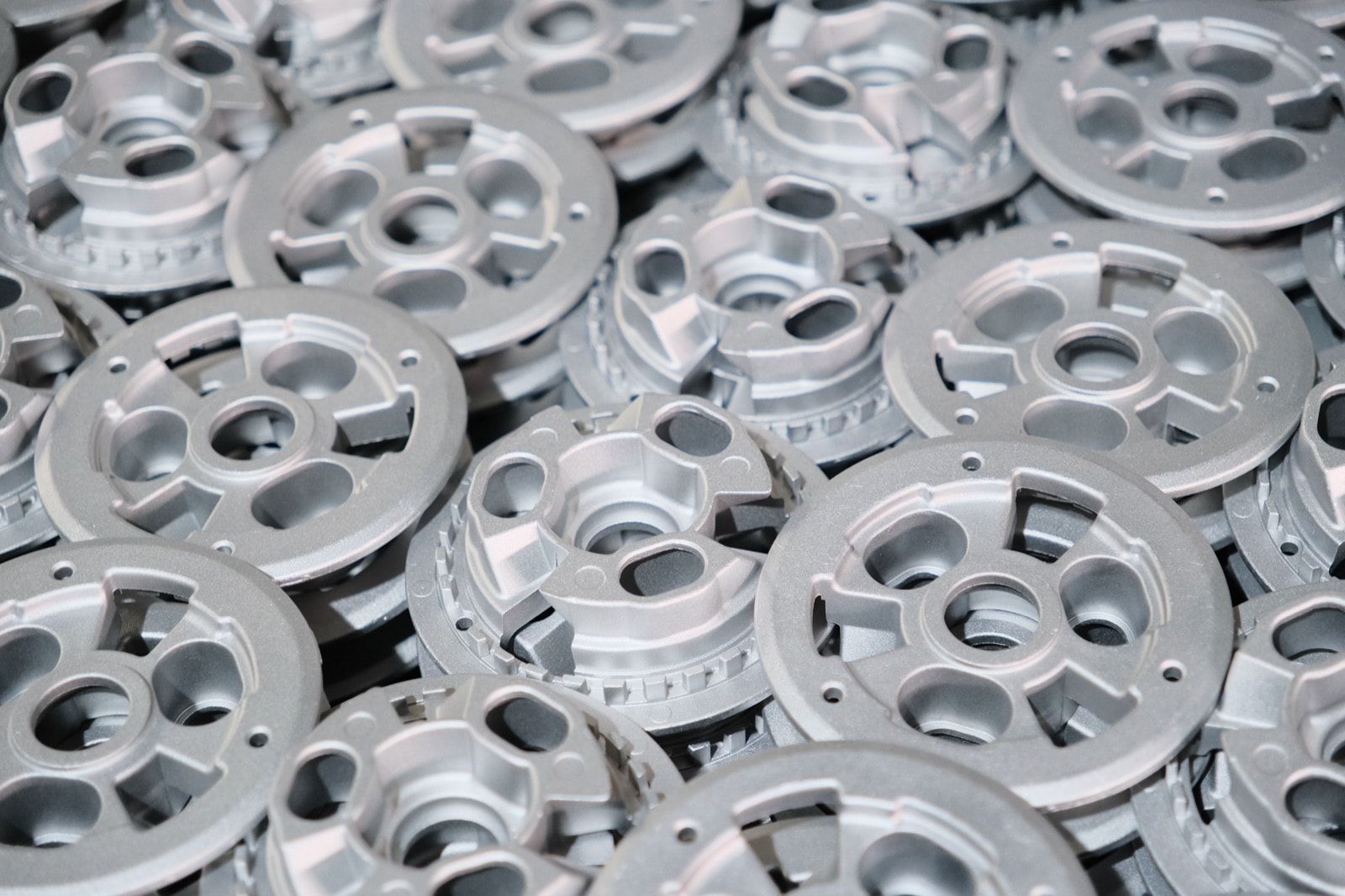
The two metals have different strengths. Aluminum is light and handles heat well, so it is mostly used for pressure housings, heat-dissipating parts and structural parts. Zinc holds dimensions exceptionally well and its tools last longer, which suits small precision parts and decorative cosmetic parts.
We control the metal from the moment it arrives: every delivery of alloy ingot is fully checked on a SPECTRO direct-reading spectrometer, the melt is sampled and analysed before pouring, and every shipment can carry a material certificate. You can nominate the alloy grade, and you can also nominate the ingot supplier.
Jump toAluminum / zinc ↓Supply control ↓Questions ↓Alloy selector →
ALUMINUM / ZINC
Two metals, two kinds of part
Aluminum die casting
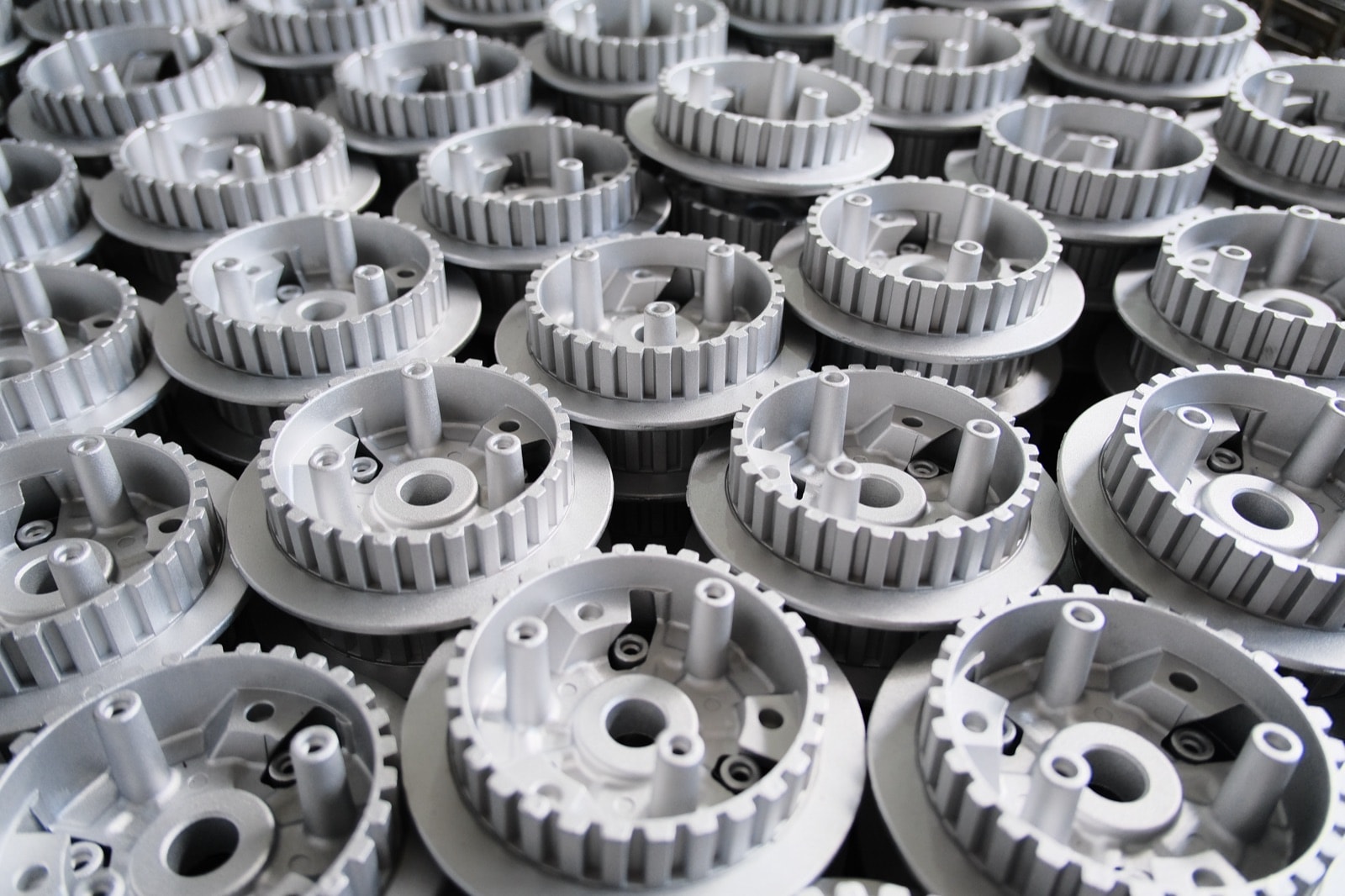
For parts that must be light, take heat or hold pressure: carburettor bodies, crankcase covers, pump bodies, thermostat housings, LED heat sinks, controller enclosures and structural parts.
20 g to 5.5 kg a piece, typical production walls of 1.0–3.5 mm, DCTG 5–6 as cast, tool life around 100k shots; pressure-tight parts are 100% leak tested.
GradesADC12A380A360AlSi9Cu3ADC10ADC6AlSi12
Aluminum die casting capability →Zinc die casting
For small parts where precision or appearance leads: lock faceplates and bodies, door, window and bathroom hardware, bag fittings, small gears, badges and nameplates.
20 g to 1.5 kg a piece, typical production walls of 1.0–3.5 mm, ±0.025 mm on small features within one die half, tool life 250k to 1M shots.
Zinc die casting capability →SUPPLY CONTROL
Supply and material control
Choosing the right grade is only the first step. Material problems rarely come from the choice of grade; they come from mixed incoming stock, impurities over the limit or uncontrolled returns. Here is how we control them.
Material certificates and lot traceability
Every shipment can carry a material certificate with the heat number, grade, measured chemical composition and the corresponding standard. Lots trace back to the specific melt and production shift, so if you find a problem we can pin down that melt's raw material source and process parameters, rather than simply swapping in another batch.
Spectrometer analysis before pouring
We run a SPECTRO direct-reading spectrometer on site: incoming alloy ingot is 100% checked, the melt is sampled and analysed before pouring, and metal that fails on composition is not cast. Zinc needs especially tight control of impurities: lead, cadmium or tin above the limit cause intergranular corrosion cracking months later — a defect that cannot be seen at delivery and only shows up once the parts are with you.
Returns in the melt
Runners, overflows and rejects are sorted, cleaned and reused, with returns held to 30% or less of the melt (an internal control limit, which we are happy to set differently in a technical agreement). You can require 100% virgin ingot, and the cost difference will be shown separately in the quotation. Returns of different grades are stored strictly apart to rule out mixing.
Nominated grades and suppliers
You can nominate the alloy grade and also the alloy supplier; we buy through the channel you specify and keep the purchase records. If a grade you nominate conflicts with the part design or the process (for example, decorative anodizing on ADC12), we raise it in writing at the DFM stage and leave the decision to you.
Third-party testing and compliance
Third-party material verification, mechanical testing and metallographic analysis can be arranged on request, at extra cost and with the time added to the lead time. Export parts can be supplied with RoHS and REACH declarations of conformity. We suggest confirming which documents you need at the enquiry stage, as some tests materially affect cost and lead time.
FAQ
Material questions
Zinc or aluminum, how the common grades differ, standards, finishing and certificates — the questions that come up most at enquiry.
Zinc or aluminum die casting — how do I choose, and what parts are typical for each?
+
If the part must be light, withstand heat or hold pressure, aluminum is usually the choice; if it is small, needs tight dimensional accuracy or will be plated for appearance, zinc usually is. Typical aluminum die castings include carburettor bodies, crankcase covers and clutch parts for motorcycles and small petrol engines; fluid parts such as pump bodies and thermostat housings; heat-dissipating and electronic housings such as LED heat sinks and controller enclosures; and brackets and structural parts of all kinds. Typical zinc die castings include smart-lock faceplates and bodies, door, window and bathroom hardware, bag and garment fittings, electronic connector shells, small precision parts such as gears, and decorative parts such as badges and nameplates. The main differences: zinc tools last 250k–1M shots against around 100k for aluminum, and zinc holds DCTG 4–5 as cast against DCTG 5–6 for aluminum. But zinc's density is 6.0–6.6 g/cm³, more than twice that of aluminum, and zinc is not recommended for parts that work above 100 ℃ for long periods.
Which aluminum grade do you use most, and how do ADC12, A380 and A360 differ?
+
The grade we pour most is ADC12: it flows well and suits thin, complex parts that will be painted. A380 is the general-purpose grade most often seen on North-American drawings, with a balanced mix of strength and castability. A360 has better corrosion resistance and pressure tightness, which makes it the choice for pressure housings and anodised cosmetic parts. European drawings usually call for AlSi9Cu3, Japanese ones for ADC12 or ADC10. If you are unsure, the DFM review comes back with a grade recommendation set against the geometry.
Further reading: ADC12 vs A380 vs A360 →My drawing names a European, Japanese or Chinese grade. Can you work to it?
+
Yes. All eleven of our everyday grades are cross-referenced across ASTM, EN, JIS and GB. A380, for example, corresponds approximately to EN AC-46000 (AlSi9Cu3(Fe)), JIS ADC10 and GB YZAlSi9Cu4; Zamak 3 is EN 1774 ZP0400 and approximately GB ZZnAl4. If you are in Europe, we can produce to the EN grade and issue the material certificate against that standard.
Full cross-reference in the alloy selector →My part will be anodised or plated. Which material should it be?
+
For decorative anodising we recommend A360; where colour matters even more, ADC6 is an option, at the cost of harder casting and a higher price. High-silicon grades such as ADC12 anodise grey and uneven and are not suitable for anodised cosmetic parts. Parts to be plated are usually zinc — Zamak 3 or Zamak 5; plating can be arranged through a partner plater, with quality responsibility staying with us. In house we anodise, PVD coat, powder coat, sand blast, shot blast and vibratory polish.
Can I nominate the grade or the ingot supplier, or require all-virgin metal?
+
Yes to all three. We buy through the channel you name and keep the purchase records; if you require 100% virgin ingot, the cost difference is shown separately in the quotation. Where a nominated grade conflicts with the geometry or the process, we say so in writing at the DFM stage and leave the decision with you.
Does every lot come with a material certificate? Can you supply RoHS and REACH declarations?
+
Every shipment can come with a material certificate, and export parts can be supplied with RoHS and REACH declarations of conformity. Third-party re-testing or mechanical property testing can be arranged if needed, at extra cost.
Look up a grade
The alloy selector holds composition, mechanical properties, minimum wall and the ASTM / EN / JIS / GB cross-reference for all eleven grades, filterable by base metal and requirement. If you are still unsure, send the drawing and the DFM review will recommend a grade.