CAPABILITIES · Aluminum Die Casting · 03
Aluminum die casting
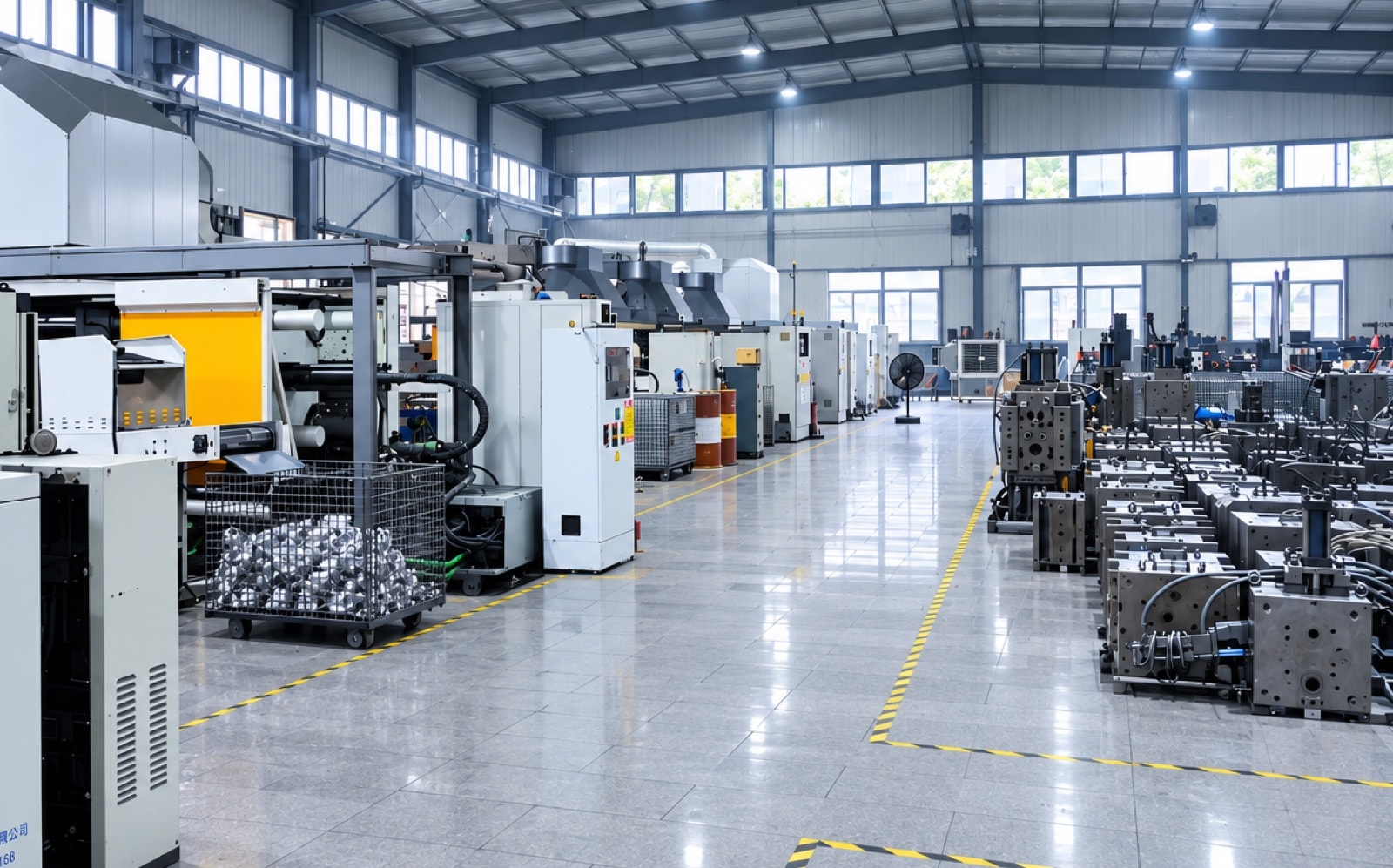
We make aluminum parts on ten die casting machines from 160 to 800 t, from 20 g to 5.5 kg, with typical production walls of 1.0–3.5 mm. Pressure-tight parts get local squeeze on heavy sections and are 100% leak tested to your standard. Tooling, CNC machining, finishing and inspection all happen in one factory.
OVERVIEW
The aluminum parts we make
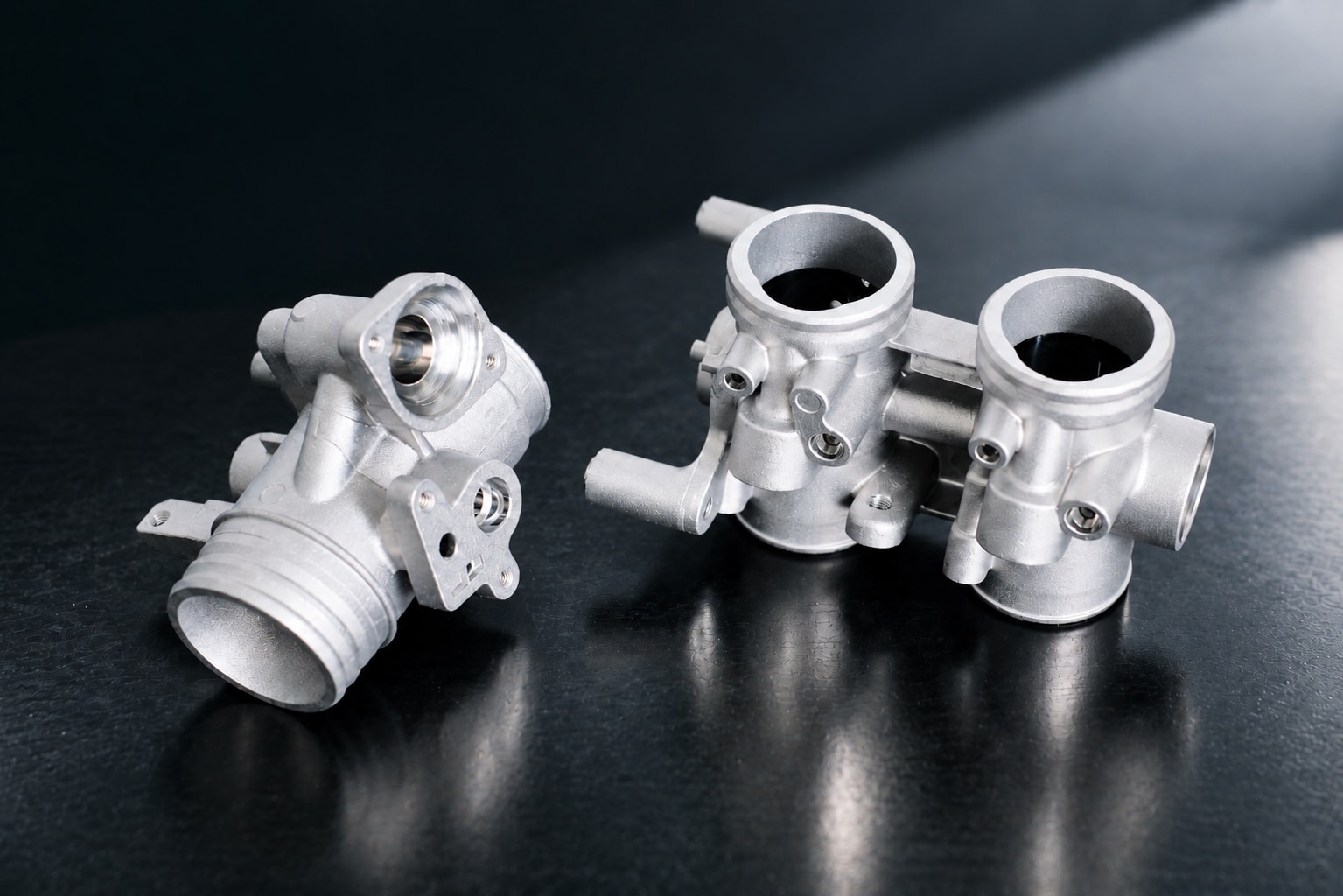
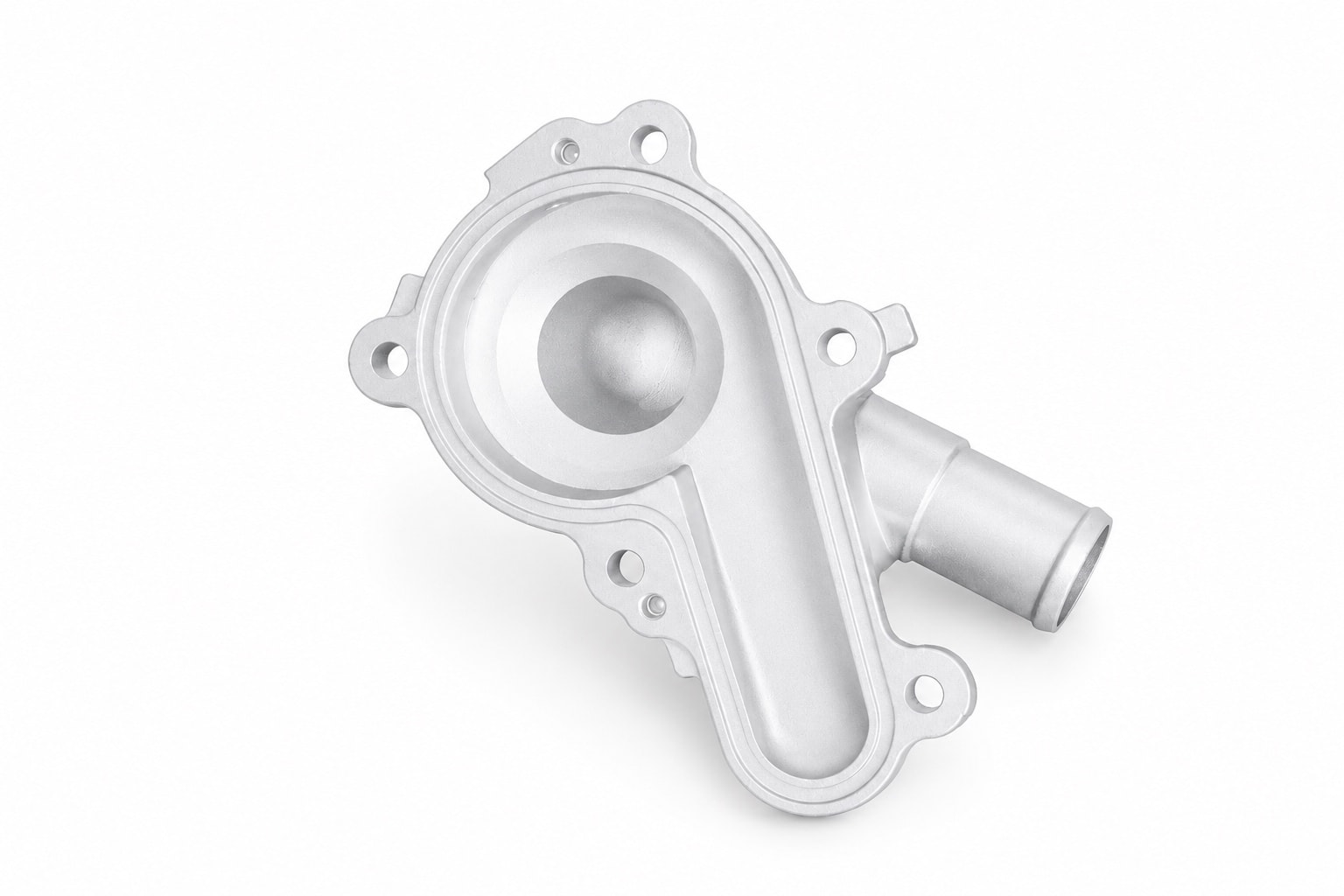
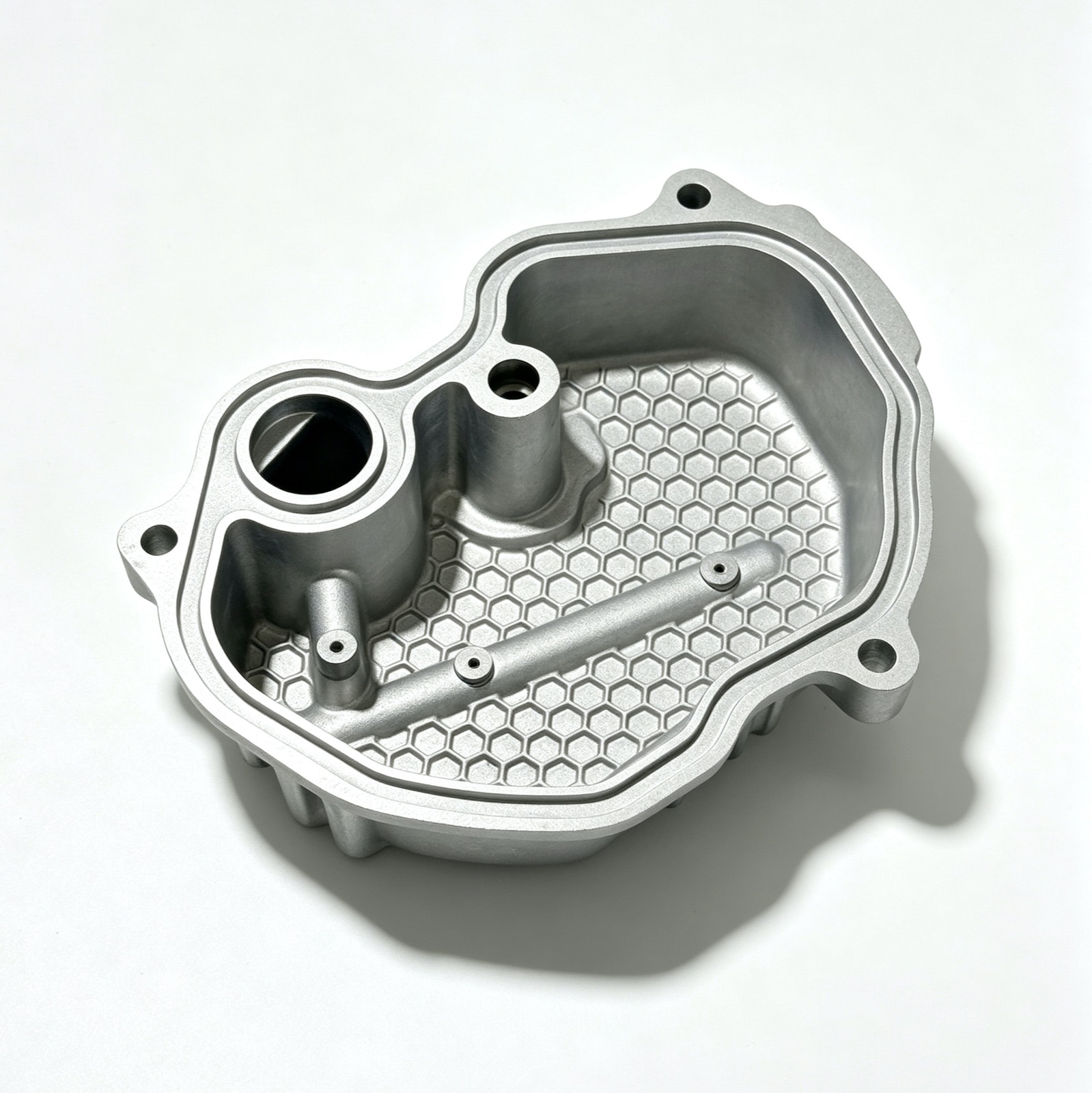
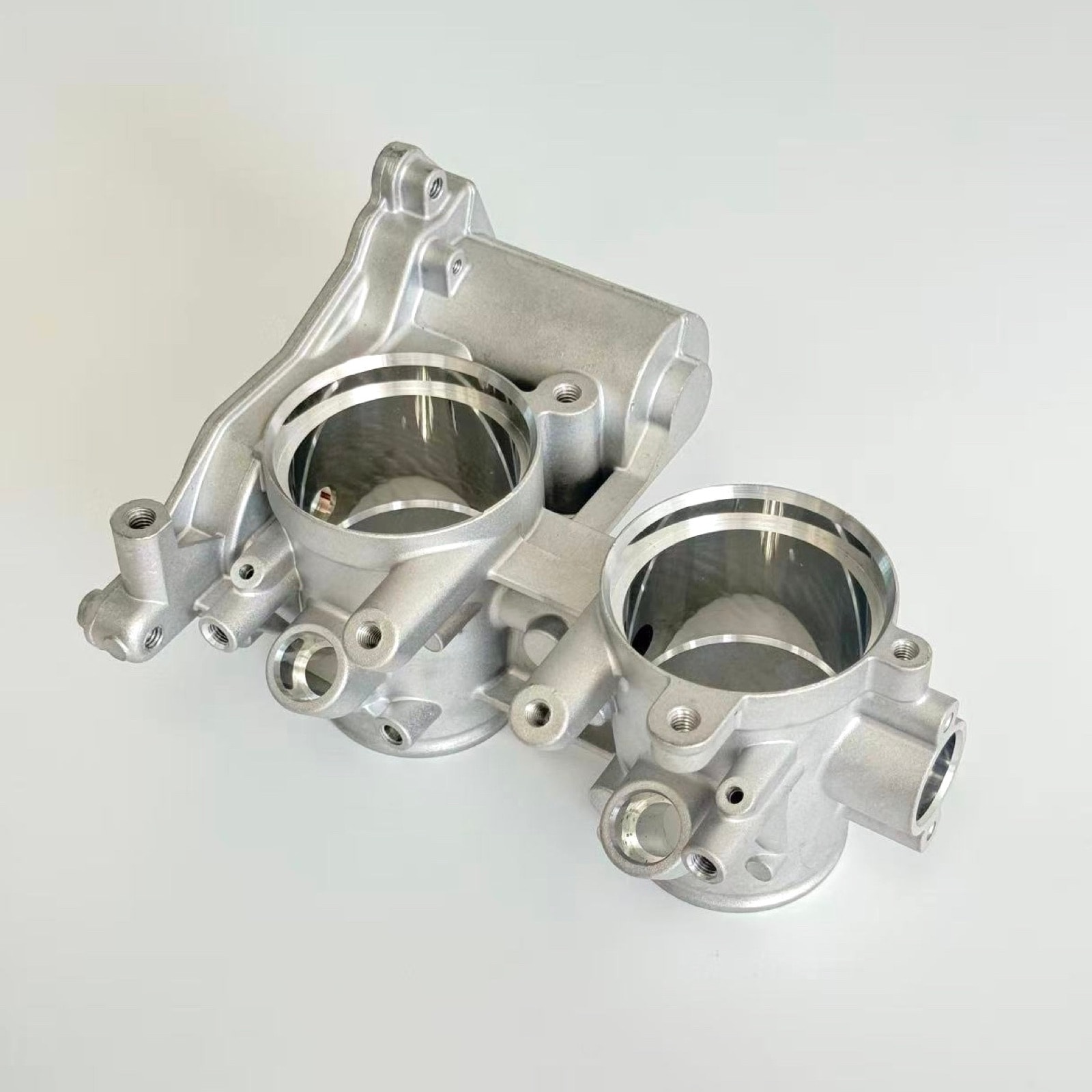
We can make you aluminum parts — structural parts, pressure-tight housings such as pump and valve bodies, parts with complex internal passages, and heatsink housings — in ADC12, A380, A360 and AlSi9Cu3, from 20 g to 5.5 kg.
Ten die casting machines from 160 to 800 t, the largest taking parts of about 950 cm² projected area. Tool design and build, CNC machining, finishing and inspection are all joined up on site, so one order can cover aluminum and zinc parts together.
Capability at a glance
- Part weight
- 20 g – 5.5 kg
- Max. projected area
- On the 800 t machine, runners included
- ~950 cm²
- Typical production wall
- Thinner locally, assessed for each part
- 1.0–3.5 mm
- As-cast linear tolerance (first 25 mm)
- General as-cast DCTG 5–6; tighter still by in-house CNC
- ±0.1 mm
- Leak test pressure
- To your standard, 100% tested
- ≤ 0.6 MPa
- Everyday grades
- ADC12, A380, A360, AlSi9Cu3; A360 for anodised cosmetic parts
- 4 grades
Pressure-tight parts: from design to 100% testing
The leak standard is set by your requirement and the part's geometry. At 0.25 MPa held for 30 s, for example, leakage typically stays under 0.5%, and with optimised gating and local squeeze it can go below 0.3%.
- 01
DFM and flow simulation
Locate gas entrapment and hot spots, and rework gating and venting.
- 02
Tooling
Overflows and vents near the hot spots open a feed path.
- 03
Casting
Gating and venting set from the simulation; squeeze pins feed heavy sections.
- 04
Inspection
X-ray sampling and a 100% leak test on finished parts; micro-leakers go to vacuum impregnation by prior agreement and are re-tested.
From casting to finished part: one factory
Tool development, die casting, precision machining, surface finishing and quality inspection for aluminum parts can all run in sequence on one site, as a closed-loop process. You can also hand us any single one of these stages on its own, as your project requires.
- 01
Tooling
Tools designed and built in-house, with flow simulation before steel is cut.
More → - 02
Casting
Ten machines from 160 to 800 t; local squeeze and 100% leak testing for sealed parts.
- 03
CNC machining
Fits, bores and sealing faces are machined in-house.
More → - 04
Finishing
Anodizing, PVD, powder coating, sand and shot blasting, vibratory polishing; plating can be arranged through a partner plater.
More → - 05
Inspection and shipping
Dimensional inspection, leak testing, outgoing checks and export packing.
Quality and inspection
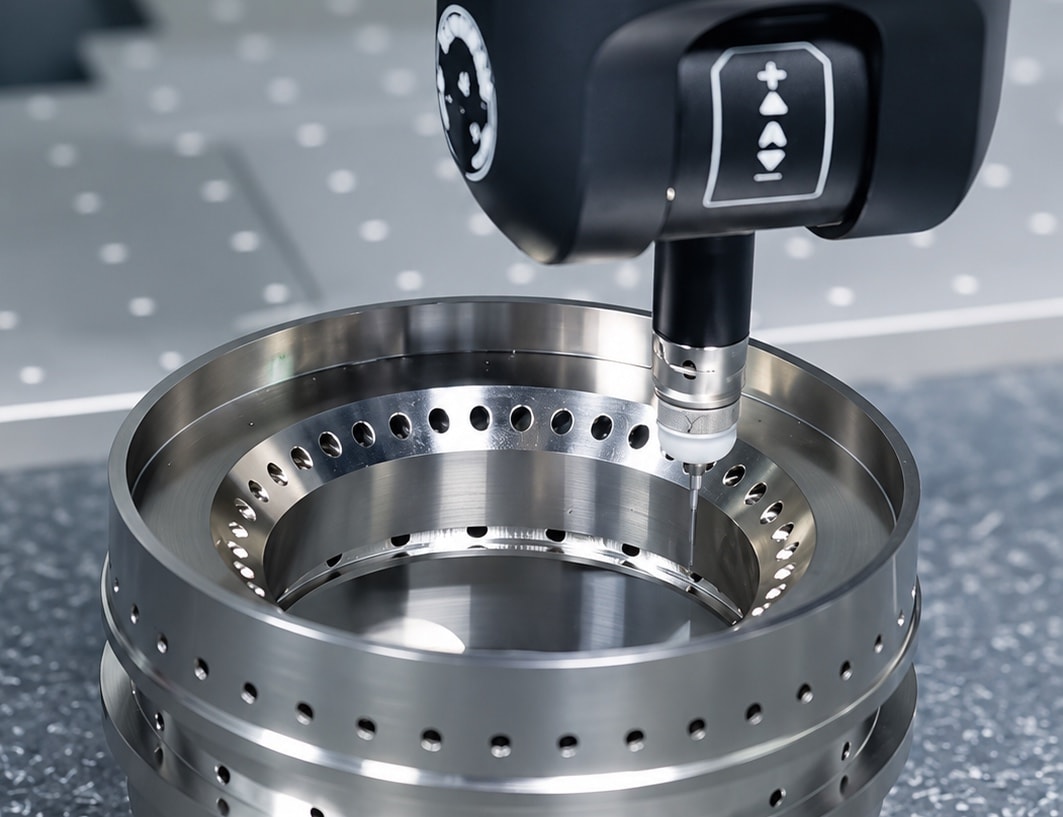
We work strictly to our ISO 9001:2015 quality management system; the specific tests and the form of the reports can be set to your requirements.
- 1
DimensionsCMM measurement, full or sampled; dimensional and first-article reports available.
- 2
Internal soundnessX-ray inspection for gas and shrinkage porosity.
- 3
Leak and flowCombined leak and flow test benches, with 100% testing of sealed parts.
- 4
Material and reportsComposition analysis, with material certificates available; CPK data and 8D reports on request.
LEAD TIME
Lead time and order quantity
- 01DFM review3–5days
- 02Toolmaking30–45daysDetails →
- 03T1 trial3–5days
- 04Production, per batch25–35days
All of these times are estimates and depend on the part's design and complexity. Toolmaking normally takes 30–45 days, longer for a complex tool; sample testing depends on whether we test or you do, and some tools need a surface treatment that adds about 10 days before production. A pilot run can follow sample approval; in production each batch is delivered in about 25–35 days, depending on batch size. Production orders start at 500 pcs, and there is no minimum order quantity for samples or pilot runs.
CASE STUDIES
Parts made with this capability
FAQ
Questions we get
How large and heavy an aluminum part can you make?+
From 20 g to 5.5 kg; our 800 t machine takes about 950 cm² of projected area including runners and overflows. Thin walls need higher cavity pressure, so the same area can call for a bigger machine. We calculate the required tonnage from your drawing at quotation, and the online cost estimator shows a recommended machine size too.
How thin can an aluminum part be?+
Typical production walls are 1.0–3.5 mm. How thin a wall can go depends directly on the design — part size, geometry, flow length and gate position all play a part — so we assess it against your drawing at the DFM stage.
What leak rate can you hold on pressure parts?+
The standard is yours to set, and the result depends heavily on the part — big swings between thick and thin sections, or complex internal passages, are inherently harder. At 0.25 MPa held for 30 s, for example, leakage typically stays under 0.5% once the process is settled, and with optimised gating and local squeeze it can go below 0.3%. We assess the risk in simulation at DFM and tell you the expected leak rate, and whether impregnation will be needed, up front.
What tolerance does casting hold, and what goes to CNC?+
About ±0.1 mm over the first 25 mm as cast (GB/T 6414 DCTG 5–6), with 0.15–0.3 mm flatness. Fits inside ±0.02 mm, flatness under 0.05 mm and bore concentricity are held by our in-house CNC, with 0.1–0.3 mm of stock left on the casting. At DFM we separate cast-controlled from machining-controlled characteristics and have you sign it off.
What MOQ and tooling cost apply to aluminum parts?+
Production starts at 500 pcs; samples and pilot runs have no MOQ. Tooling cost is made up of the base, steel, machining, mechanisms and trials, and it can be linked to volume: with a committed programme it can be amortised into the piece price, waived, or rebated at milestones. Send a drawing and we will quote the tooling plan and piece price together.
FURTHER READING
Technical articles
- DESIGN RULES
How to Control Minimum Wall Thickness in Aluminum and Zinc Die Casting Product Design
Learn how to control minimum wall thickness in aluminum and zinc die castings, including fillability, ribs, transitions, porosity, machining, tooling, and production capability.
- QUALITY
Die Casting Leak Testing and Impregnation: How to Specify Pressure-Tight Parts
What a pressure-tight die casting specification needs to state — test pressure, medium, leak limit and when testing happens — how to trace a leak, and when impregnation is and is not appropriate.
- MATERIALS
ADC12, A380, and A360 Aluminum Alloys: Composition, Performance, and Practical Selection for Die-Cast Parts
Three grades with similar names and similar strength that are still not interchangeable. Composition and properties from NADCA and JIS sources, and what really differs in filling, corrosion, machining and finishing.