CAPABILITIES · Mould Design & Development · 01
Die-casting mould design and development
The tool sets roughly 80% of what a casting can ever be. We run our own tool room — DFM review, flow simulation, structural design, machining and trials all in-house, never subcontracted. Toolmaking normally takes 30–45 days, trials rarely exceed three rounds, and the tool belongs to you.
OVERVIEW
Our own tool room, from drawing to trial
Many of a casting's quality problems are fixed before the tool is ever built: where the weld lines land, where gas gets trapped, whether the heavy sections shrink. Once that is cut into steel, machine settings can hardly rescue it. That is why we put so much weight on the DFM review before tooling: it is usually done within 3–5 days of receiving the drawing, settles the drawing's problems before the tool is built and is signed off by you, so repeated tool changes are avoided at the source.
Tool design and toolmaking are done entirely in-house, in a tool room with its own CNC machining centres, EDM and wire-cut machines. The same factory is responsible for the tool and the castings, so anything a trial turns up goes straight back to the designers, with no coordination between separate plants.
For you that means three things: drawing problems come to light before the tool is built; few trial rounds, usually no more than three; and the steel grade, structural scheme, repair policy and ownership terms are all written into the contract.
PROCESS
Prototype to production
- 01DFM review and process sign-off3–5daysDetails below ↓
- 02Mould design and build30–45daysDetails below ↓
- 03T1 trial and samples3–5days
*For reference only — actual timing depends on the part's design, complexity and logistics, and is confirmed after review.
Before the tool: prototypes
Before the production tool is built, prototypes can prove the look, the fit and the function, so the tool is cut once the design is confirmed and later rework is kept down. The prototype cost is refundable once the project moves to production tooling or series production.
Metal 3D-printed prototypes
No tooling needed and the fastest route — suited to early checks of appearance and fit.
CNC-machined prototypes
Machined from solid stock for high dimensional accuracy — suited to checking assembly and fits.
Prototypes from a simplified or modified tool
About 7–15 days, and the closest to a production casting — suited to functional and performance testing.
DFM review: keep problems on the drawing
Within 3–5 days of receiving your drawing we complete the DFM review, settle the problems before the tool is built and ask you to sign it off, so the tool is not reworked again and again later.
The report covers five things
- Wall thicknessWhether the walls are uniform, and where the heavy sections sit.
- DraftWhether the draft angles work.
- Core pulls and parting lineWhether the core pulls are feasible, and where the parting line should go.
- Bore datumsWhether the bore patterns share a common datum.
- Machining stockWhether the stock left for CNC suits the machining.
Flow simulation: find the problems before the tool is built
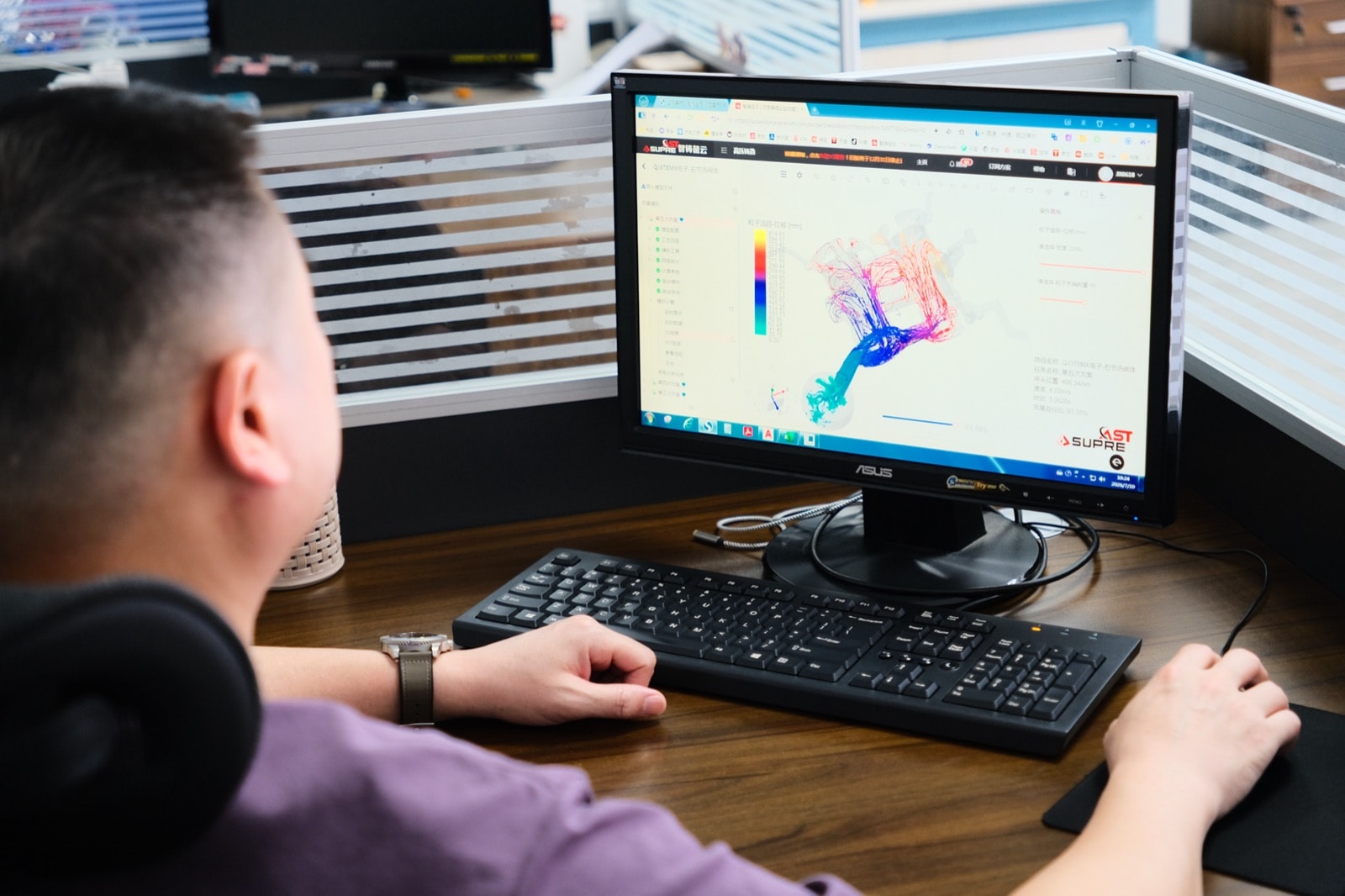
Before the tool is built, we run the metal's filling and solidification through flow-simulation software, find the places likely to cause trouble and fix them at the design stage — rather than building the tool, running a trial and reworking it again and again. Flow simulation is free for every new tool, with no extra charge. The simulation mainly answers four questions:
- 1
Will it fill completely?Confirms every part of the casting fills completely, avoiding short shots and cold laps.
- 2
Where will gas be trapped?Finds in advance where gas will be trapped so the venting is designed right, lowering the risk of porosity and leaks.
- 3
Will cosmetic faces show flow marks?Predicts where weld lines land; on cosmetic parts they are routed to faces nobody sees.
- 4
Will thick sections shrink?Finds the hot spots in heavy sections and plans feeding in advance, reducing internal shrinkage.
Maintenance and life management
In production, maintenance runs on shot count so that the dimensional drift from die wear is predictable.
Every 10,000 shots · inspectionCheck the cavity surface, the core action and whether any vents are blocked.
Every 50,000 shots · full serviceA full service with the trend on key dimensions recorded. The trend sheet can be shared with you, so you see the drift coming instead of discovering it when parts fail.
Three signs a tool has reached end of life: (1) a key dimension keeps drifting one way and repair no longer recovers it; (2) heat-checking spreads across the cavity surface; (3) flash increases enough to need frequent extra trimming.
CAPABILITIES
Capabilities and options
What we hold on every tool
- Toolmaking lead time (typical)
- 30–45 days
- trial rounds, typically
- ≤ 3 rounds
- core-pull repeatability
- ≤ 0.02 mm
- cavity surface finish
- Ra ≤ 0.8 μm
Configured to your part and volume
- Die steel
- H13standard
- 8407
- DIEVAR
The higher the volume and the harder the duty, the higher the steel grade; cavities are heat treated to HRC 44–48.
- Cavity surface treatment
- None
- Nitriding
- PVD coating
Tools can be coated to extend die life.
- Mechanisms
- SliderSide holes, grooves · repeatability ≤ 0.02 mm
- LifterInternal undercuts · repeatability ≤ 0.02 mm
- Conformal coolingFins, hot spots · die temperature ±5 ℃
- Squeeze pinHeavy sections · local feeding against shrinkage porosity
Fitted as the part's geometry requires, settled at the DFM stage.
- Die life
- Zinc25–100 万模次 / 250k–1M shots
- Aluminum约 10 万模次 / ~100k shots
Reference ranges. Life depends on the alloy, steel, surface treatment and maintenance, and can be designed to the target volume.
The configuration is recommended at the DFM stage from the part geometry and annual volume, and goes into the contract once you confirm it.
COMMERCIAL TERMS
Commercial terms and tool ownership
The tool is yours
Once you have paid for the tool it belongs to you, and the contract says so. While we look after it, it is never used for anyone else's parts.
Our fault, repaired free for life
Rework caused by our design or manufacture is free for the life of the tool. If a drawing change, tolerance revision or structural change on your side calls for rework, it is charged by the hour — we quote first and go ahead once you agree.
Two years' free storage
After production ends we look after your tool free for two years, and we write to you ahead of expiry to agree what happens next.
Take it back any time
You can take your tool back at any time; we handle removal, cleaning and packing.
What tooling cost is made of
- 01Mould base
- 02Cavity and core steel
- 03Machining and EDM
- 04Slider and lifter mechanisms
- 05Fitting and trials
Flow simulation is free, with no extra charge. The tooling price is linked to order volume: with steady volume it can be reduced, or rebated at milestones. Upload your drawing and we will quote the tooling plan and the piece price together.
Send a drawing for a tooling plan and piece price →CASE STUDIES
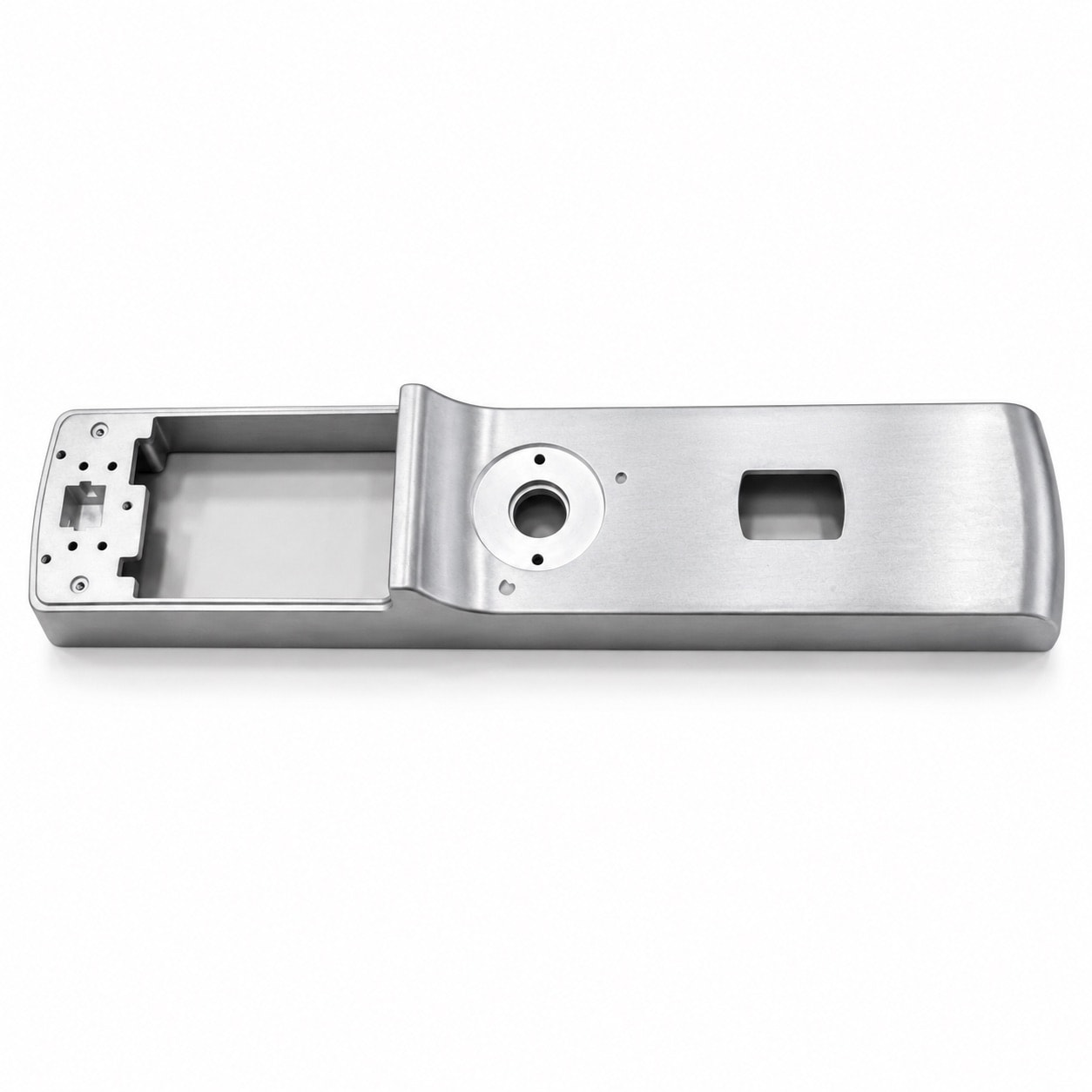
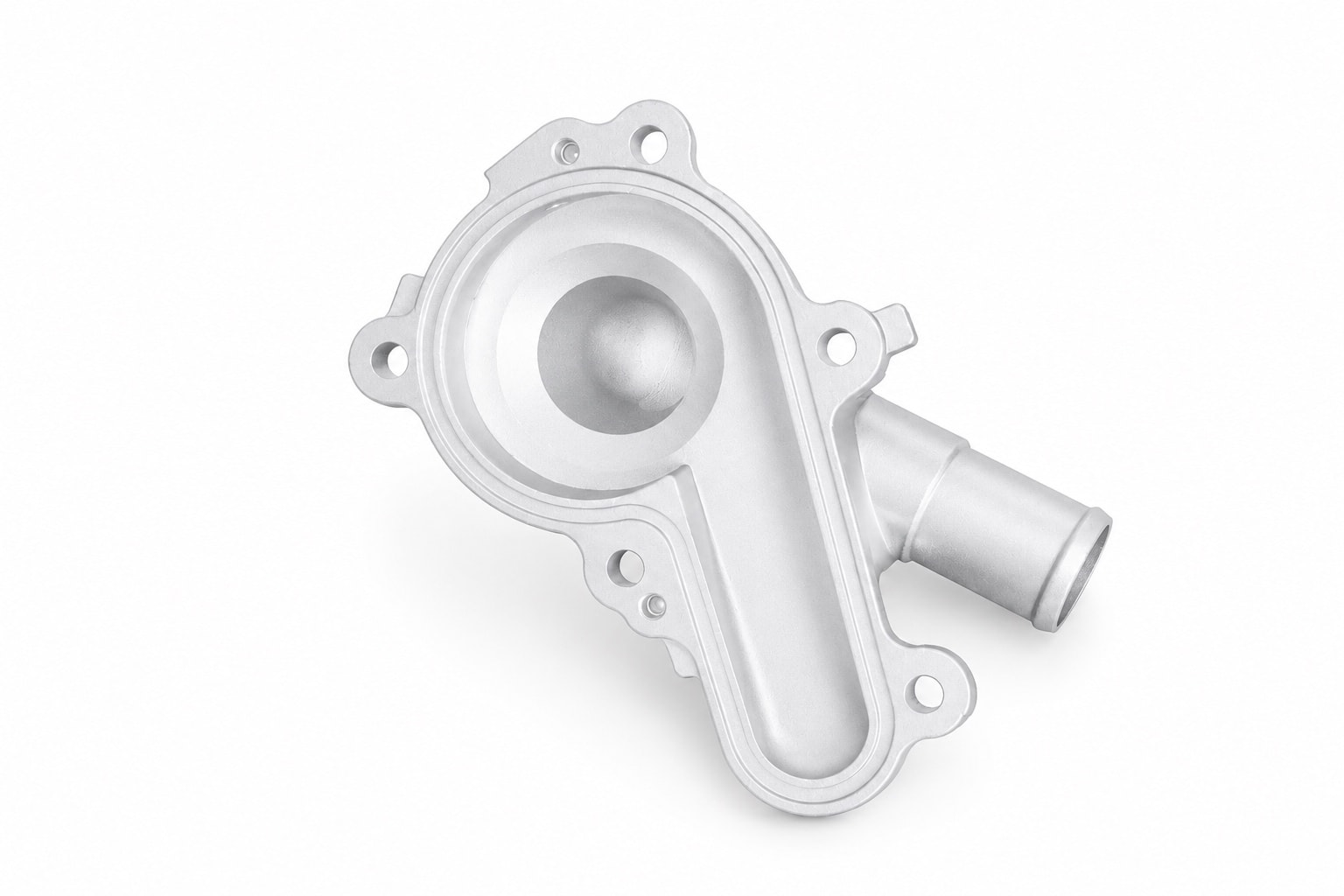
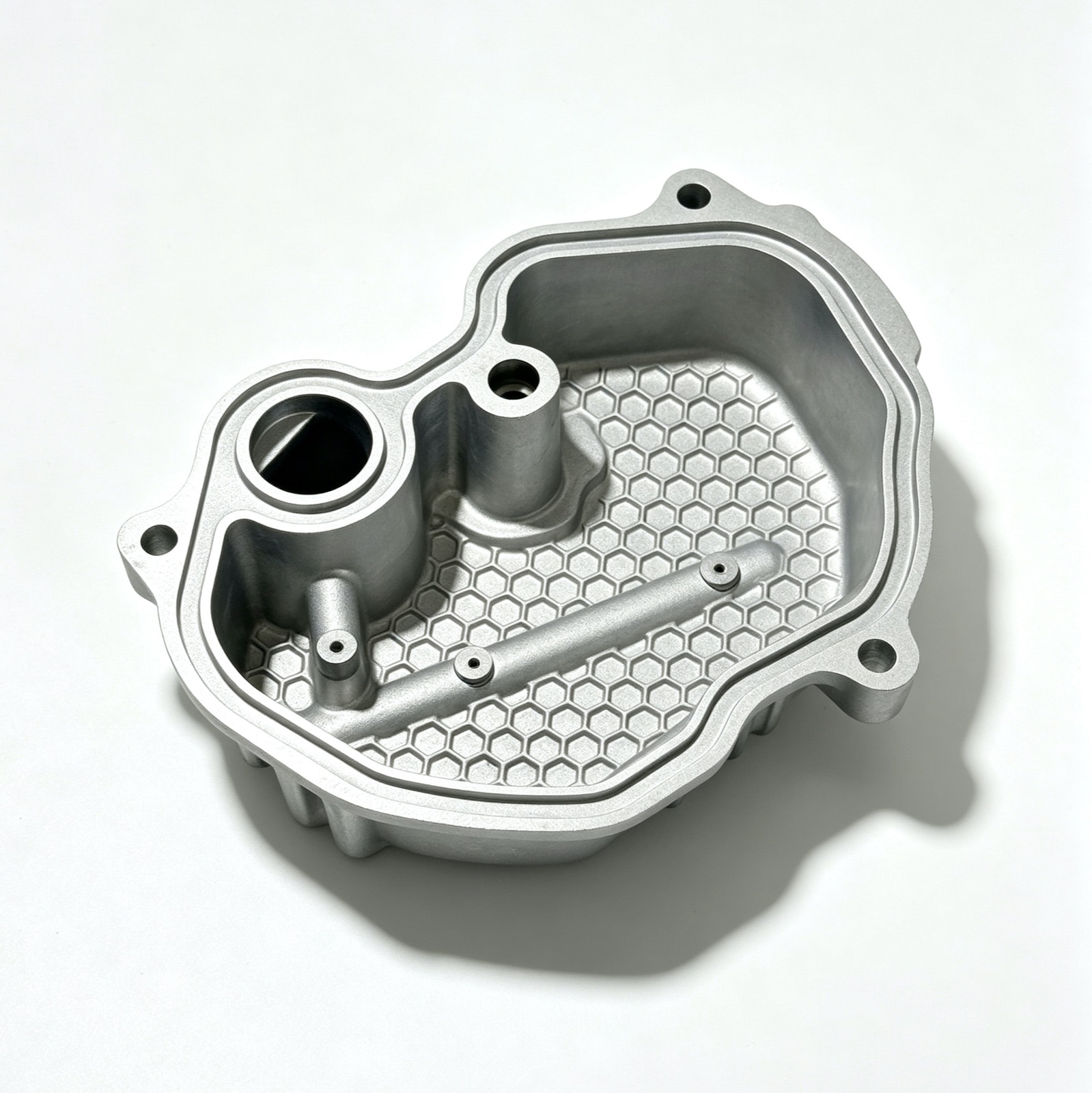
Parts made with this capability
FAQ
Questions we get
Can we prototype before the tool is built?+
Yes. Before the tool is built we can supply metal 3D-printed prototypes and CNC-machined prototypes, or make prototypes from a simplified or modified tool (about 7–15 days), so the look, fit and function are checked first and the production tool is built once everything is confirmed. The prototype cost is refunded once the project moves to production tooling or series production.
How long does a die cost, and how long does it take?+
Toolmaking normally takes 30–45 days, longer for a complex tool; if all goes well the T1 trial takes 3–5 days, and sample testing after that depends on how complex the samples are. Tooling cost depends directly on the part's projected area, the cavity count, the number of sliders and the tool-life class, so the range is wide. It can also be linked to order volume: with steady volume it can be reduced or rebated at milestones. Upload your drawing and we will send a complete quotation that includes the tooling plan.
Who owns the tool, and what happens when production stops?+
A tool you have paid for belongs to you. After production ends we store it free for two years and write to you before the period expires to ask how you would like it handled; you can also ask to take the tool back at any time, and we handle removal, cleaning and packing. While in storage, the tool is never used for any other project.
If the trial fails, who pays for the rework?+
It depends on the cause. Rework needed because of our tool design or manufacture is free for the life of the tool; rework caused by a drawing change, tolerance revision or structural change on your side is charged by the hour, and we quote it and confirm with you first. In practice, the more thorough the DFM review, the fewer disputes later — which is why we insist on writing down the cast-controlled and machining-controlled characteristics before the tool is built, and ask you to sign them off.
Is flow simulation mandatory, and is it charged extra?+
Flow simulation is free on every new tool, with no extra charge. Whether it is needed depends on the part: for simple geometry with even walls, experience is enough. But if your part has thin walls under 1.5 mm, a sealing requirement, a cosmetic face or a big swing between thick and thin sections, we recommend simulating first. A single trial on a part like that costs far more than the analysis, and once a weld line or a gas trap is cut into steel, machine settings can hardly rescue it.
FURTHER READING
Technical articles
- TOOLING
Die Casting Runner and Gate Design: How Experienced Suppliers Control Fill, Porosity, and Cost
Gate location, runner size, overflows and vents decide fill, porosity, appearance and cost. NADCA's design starting points, and the questions to settle before steel is cut.
- DEFECTS
Porosity in Die Casting: What Causes It, Why It Matters After Machining, and How Suppliers Control It
Learn why porosity in die-cast parts often becomes visible only after CNC machining, how it causes leaks and rejections, and how experienced suppliers control it.
- TOOLING
Die Casting Die Life: How Buyers Can Specify and Extend Tooling Life
Die life is not a fixed shot count. It depends on the alloy, part design, thermal control, steel and heat treatment, maintenance, and how the end of useful life is defined.