CASE STUDIES · PART TYPE
Heatsinks and electronic enclosures: fins, shielding faces and seals
Finned heat sink plates, power-module base housings and controller or inverter housings have to dissipate heat, seat flat, seal and shield at the same time, and are found in power supplies, energy storage and charging equipment. Below: what makes them hard, how we handle them, and every case we have published.
What makes these parts hard
Fins are thin and close together, and the tips fill last, so that is where short fills and cold laps appear; bosses among the fins are heavy spots prone to shrinkage, and dense fins drag on ejection. Long base housings with asymmetric sections bow along their length, and the base is both the heat path and the mounting face, so its flatness affects heat transfer. On controller and inverter housings the shielding face has to meet the lid all the way round — local roll-off barely shows in a flatness reading yet opens a gap.
How we handle them
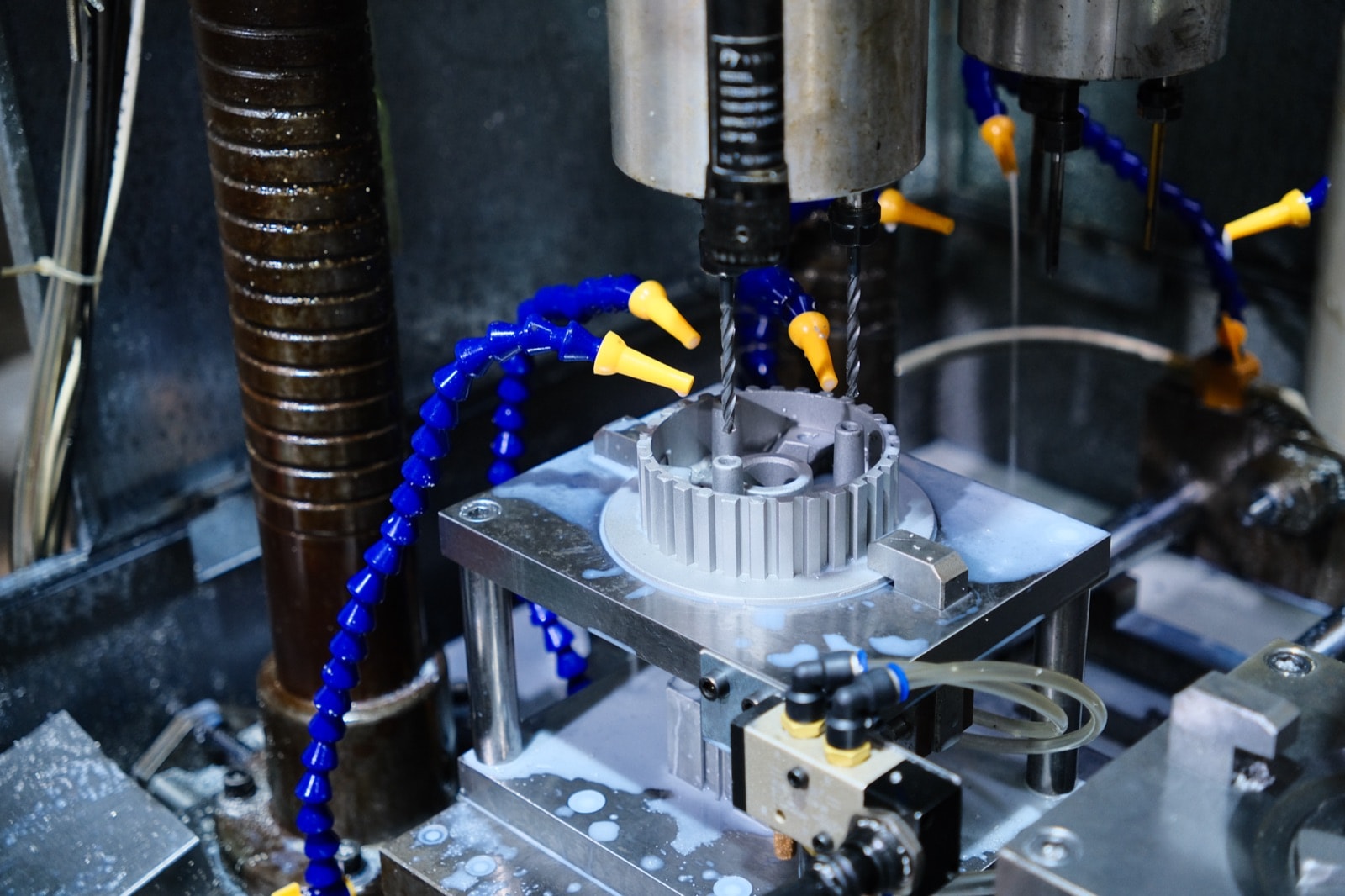
Flow simulation sets the gating: we feed along the fins and control die temperature so the tips fill before the flow fronts meet. Boss cores are spot-cooled, long parts get cooling zoned to their section and a setting fixture after ejection, and bases, shielding faces and seal grooves are CNC machined with stress relief between roughing and finishing. In the cases published here, a shaped heat sink plate runs 2.0 mm fins at about 6:1 with over 99% fill and ejection rejects down from about 4% to under 0.5%, and a 320 mm base housing comes out within 0.15 mm of warp with its base flat to 0.05 mm per 100 mm.
Heatsinks & electronic enclosures · Production cases2
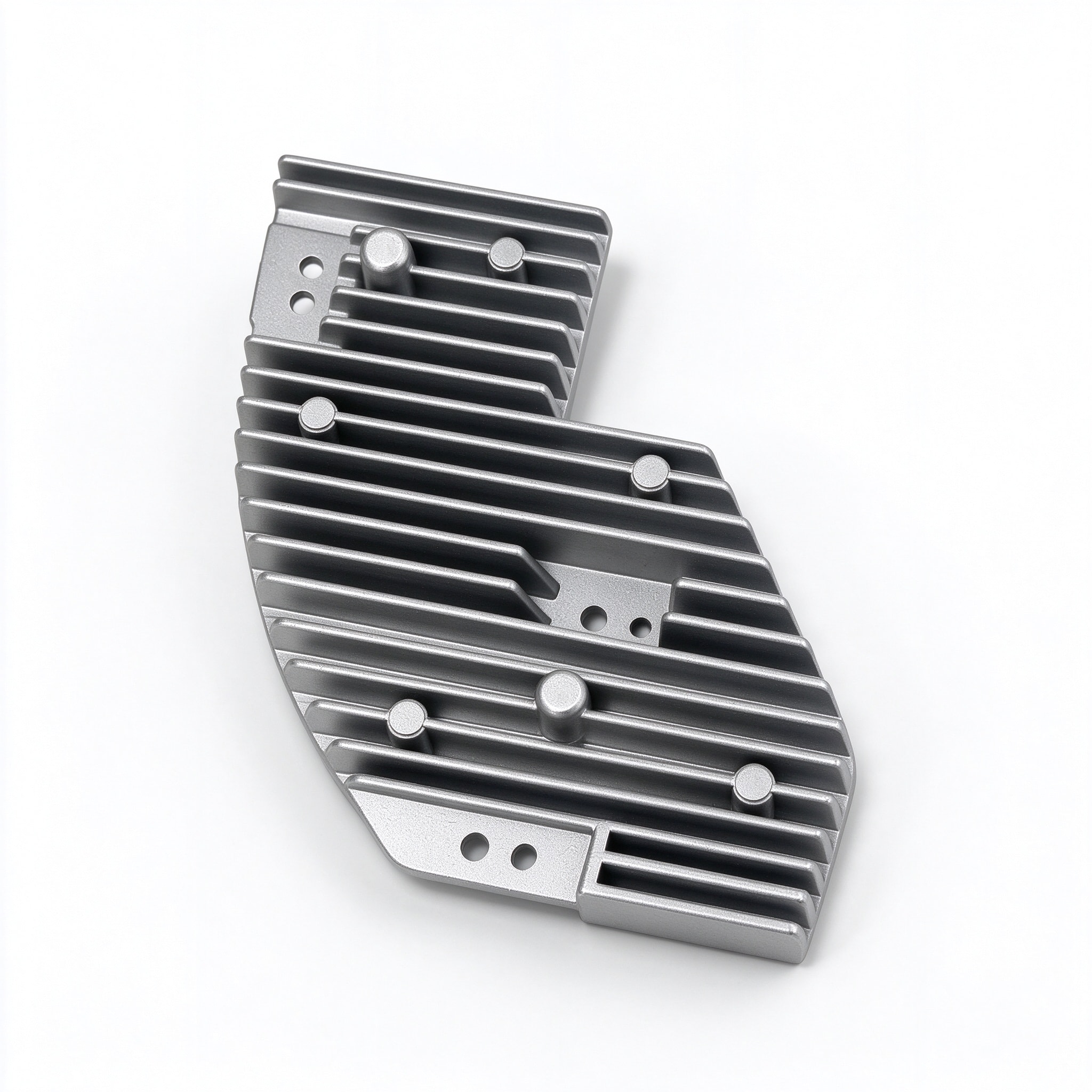
Shaped Aluminum Finned Heat Sink Plate
An irregular plate with 2 mm fins and seven bosses among them. Flow-led gating, spot-cooled boss cores and more draft give over 99% fin fill and cut drag marks from 4% to under 0.5%.
ADC12 (JIS H5302) · 约 480 g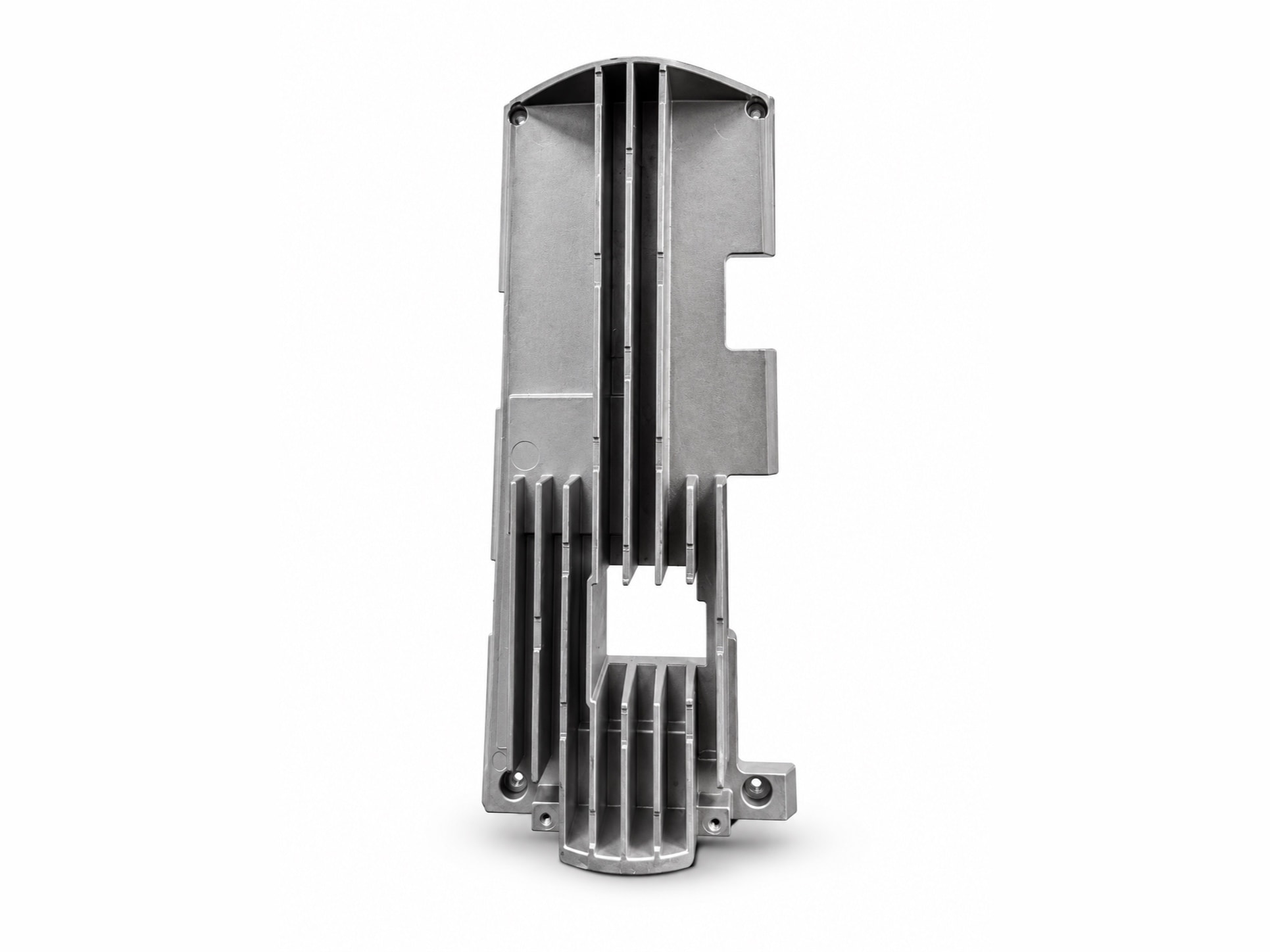
Long Aluminum Heat Sink Base Housing
A 320 mm housing with long internal fins and an asymmetric section warped 0.6 mm. Multi-point gating, zoned cooling and stress relief brought it within 0.15 mm, base flat to 0.05 mm/100 mm.
ADC12 (JIS H5302) · 约 780 gQuestions
How thin can the fins be?+
It depends on fin height, pitch and part size. The published case runs 2.0 mm fins at about 6:1; thinner is possible locally but has to be assessed for each part, best at the DFM stage.
Can the shielding face of a controller housing be coated?+
Shielding and grounding faces that must conduct cannot carry an insulating coating, so they are masked during coating and left as machined, while the outside can be powder coated. The detail follows your drawing.
Have a part like this?
Start with the cost estimator to see how the price is built, or upload a drawing for us to review — we reply within 24 hours.