CASE STUDIES · PART TYPE
Motor and gearbox housings: coaxial bearing bores, pilots and sound metal
Motor housings, end covers and reducer housings are found in robot joints, electric vehicles and industrial drives. What makes them hard is coaxial bearing bores, pilots square to the axis, and machined faces with no porosity breaking through. Below: the difficulties, how we handle them, and every case we have published.
What makes these parts hard
The bearing bores at each end must be closely coaxial and the pilot and mounting faces square to the axis, or running torque and noise rise and bearings wear early. The bosses carrying the bores are the heaviest, last-to-freeze sections, so shrinkage collects there and opens onto the bearing seat once fine boring removes the dense skin. The housings are built light and thin-walled, so clamping force and cutting heat also distort them during machining.
How we handle them
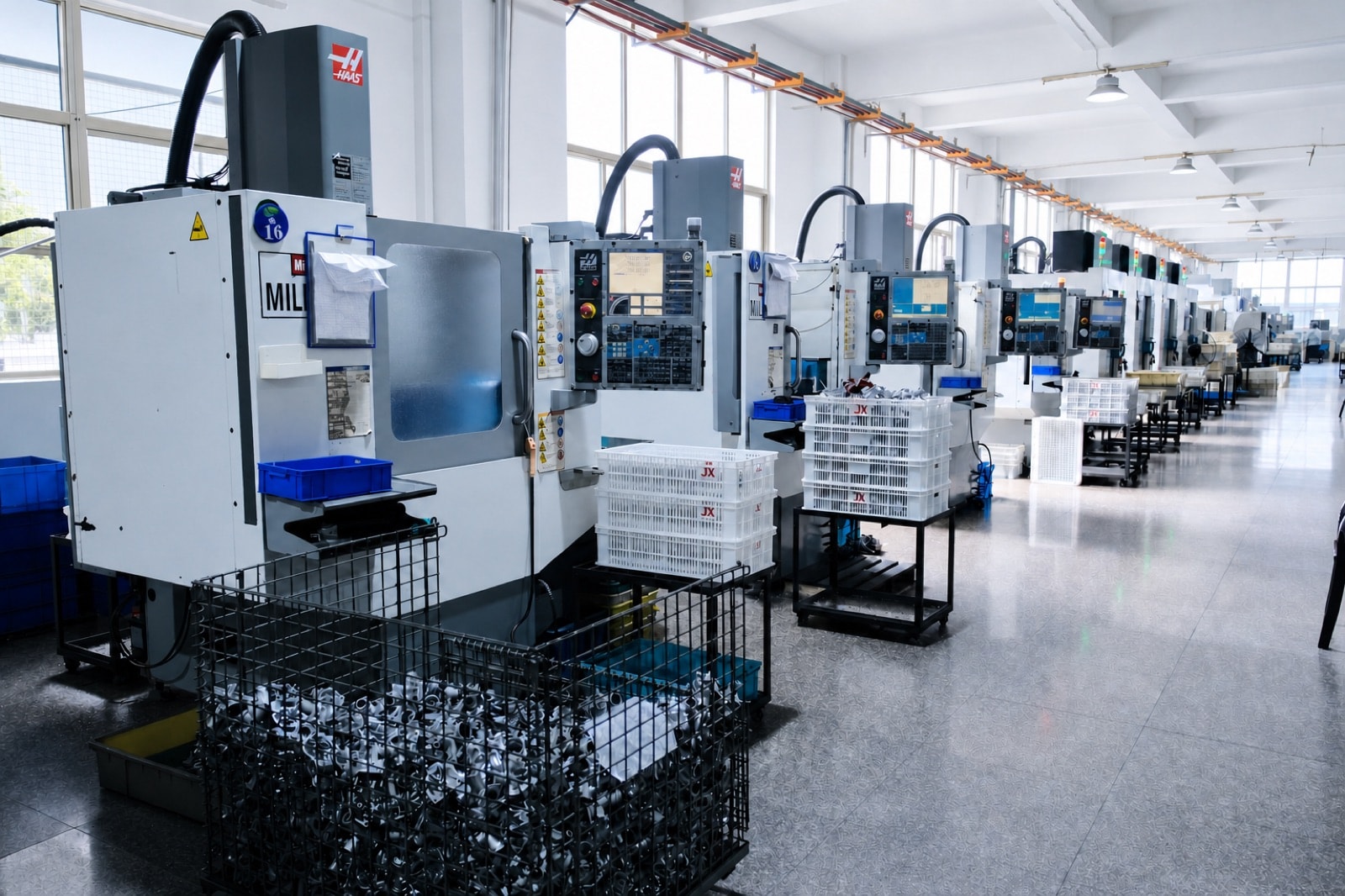
We squeeze-feed the bearing bosses and leave only 0.1–0.3 mm of stock on the casting so finishing stays inside the dense layer; bores and pilot are finished in one setup on a machining centre, roughing and finishing are separated to relieve stress, and coaxiality and squareness are checked on the CMM. Critical CNC dimensions can be held to ±0.005 mm at best, depending on the part's geometry and size. At DFM we agree with you which features the casting holds and which the machining holds.
The same requirements in our other production parts
Boring bores in one setup and holding their coaxiality is central to our other production parts too: an aluminum water pump housing holds its bearing and seal bores coaxial within φ0.05 mm at CPK ≥ 1.33, a twin throttle body keeps its two bores within 0.02 mm of each other, and a crankcase side cover has its bearing seat and joint face machined in the same operation.
Motor & gearbox housings · Production cases3
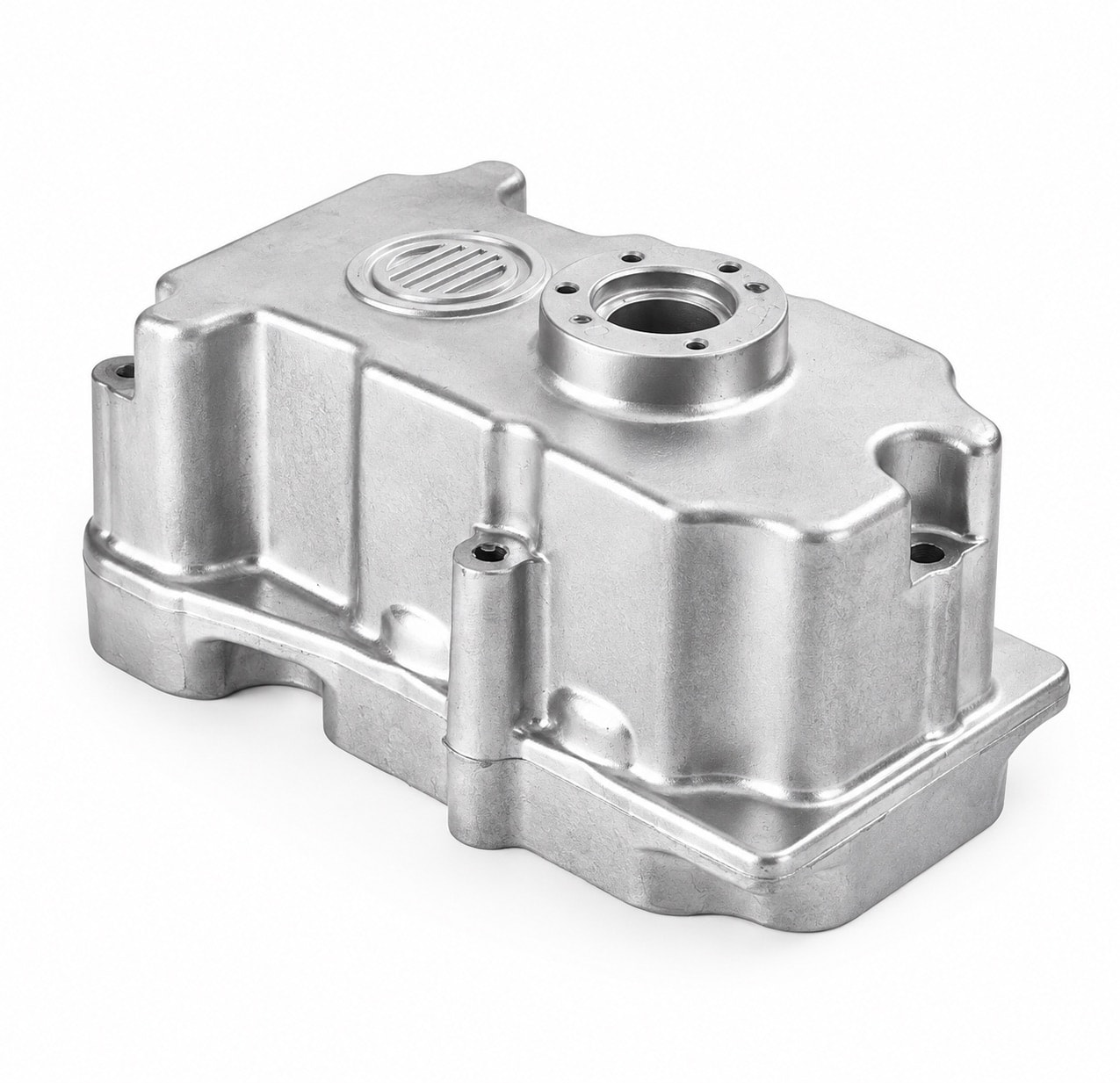
Aluminum Gearbox Housing
Bearing bosses opened porosity on boring, and bores machined apart from the joint face did not line up. Cored bosses and one-setup machining now hold ±0.03 mm and 98% first-pass leak test.
ADC12 (JIS H5302) · 约 1.2 kg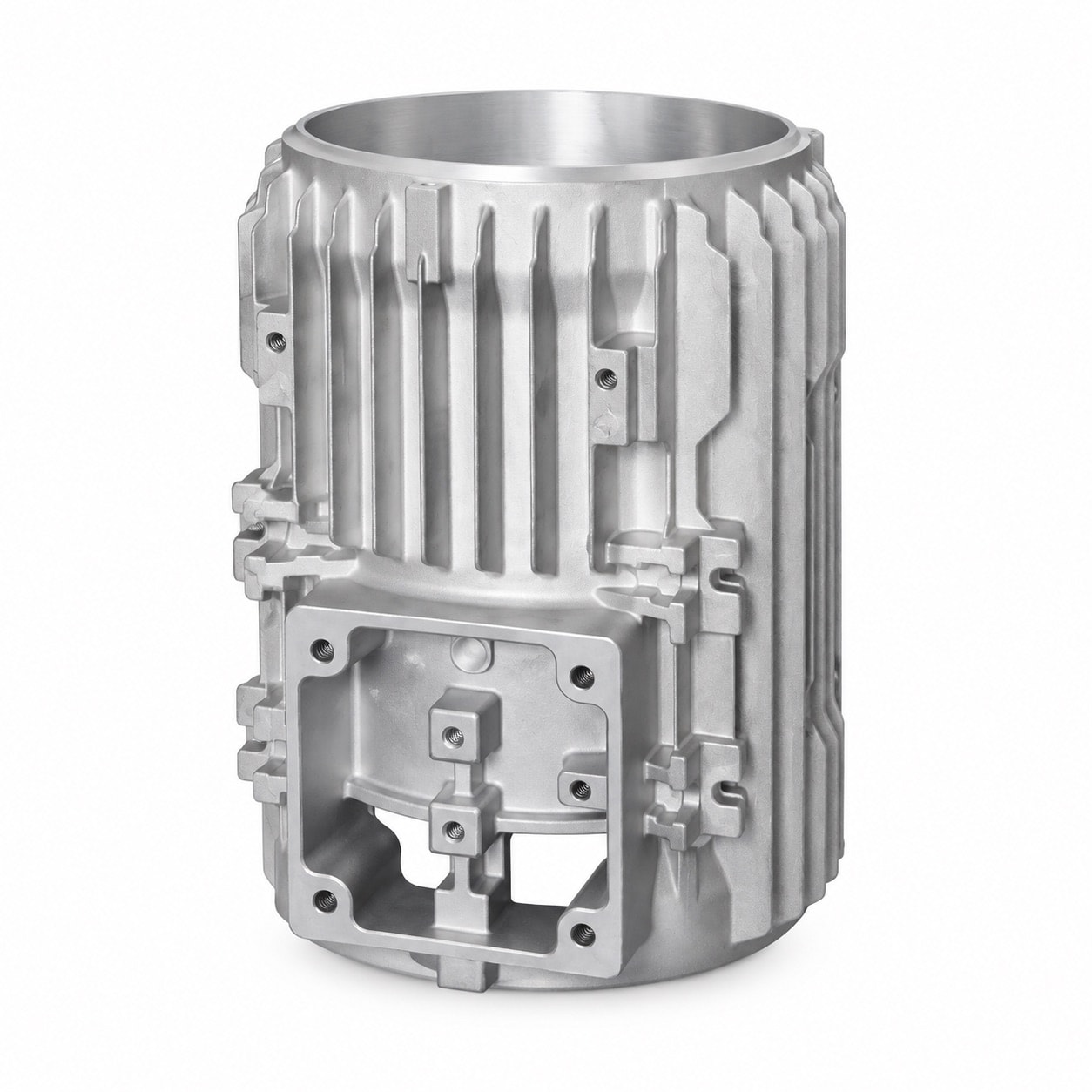
Finned Aluminum Motor Housing
A thin-walled bore, two pilots and a coating step between roughing and finishing. A fin-located, axially clamped fixture and one datum throughout hold 0.02 mm roundness and φ0.03 mm coaxiality.
ADC12 (JIS H5302) · 约 2.6 kg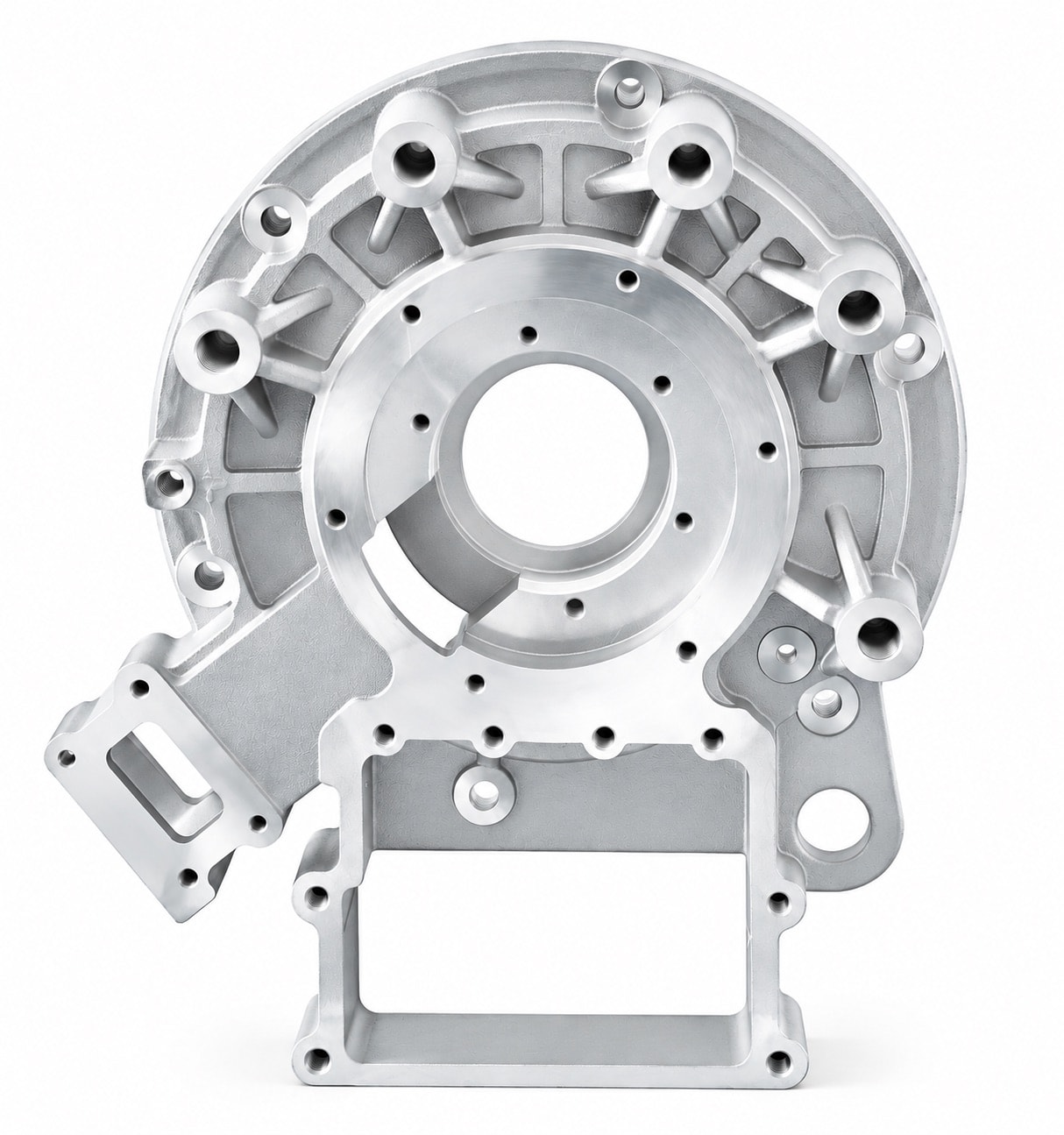
Aluminum Motor Rear End Cover
Heavy mounting bosses on this bearing-carrying end cover showed shrinkage on X-ray. Split, re-angled gates and local squeeze cleared it to ASTM E505 level 2; bearing bore coaxial within φ0.03 mm.
ADC12 (JIS H5302) · 约 2.2 kgQuestions
Does a joint housing need redesigning to move from billet to die casting?+
Usually, yes: add draft, even out wall thickness, core out heavy sections and agree which features the casting holds and which the machining holds. Billet is quicker for changes during development and small batches; once the design is frozen and volumes rise, a die-cast blank with only the critical faces machined cuts the piece cost substantially. We can compare the two at your annual volume.
Can bearing bores be cast to size?+
No. As-cast tolerance is about ±0.1 mm, so H7 bores and coaxiality in the 0.01 mm range have to come from CNC finishing. What the casting must deliver is even stock and sound metal under the finished faces — those decide whether the machined part passes consistently.
Have a part like this?
Start with the cost estimator to see how the price is built, or upload a drawing for us to review — we reply within 24 hours.