CASE STUDIES · PART TYPE
Rotating and drive parts: concentricity, runout and balance
Clutch baskets, pressure plates and pump impellers spin fast and take shock loads, so concentricity, face runout and imbalance turn straight into vibration, wear and shift feel. Below: what makes them hard, how we handle them, and every case we have published.
What makes these parts hard
Slots, fins and blades are all long or thin features: heat concentrates in the cores, which leads to soldering and drag marks, and thin sections are slow to fill. Slot cores wear and distort through thermal cycling, so dimensions drift from batch to batch on the same die, and uneven blade walls translate directly into imbalance.
How we handle them
We step up cooling in the slot cores and inspect and replace them by shot count; fins and blades are gated in the order they need to fill; the centre bore and faces are machined in one setup. Balance requirements follow the product's performance needs, and we can balance-test and correct parts. In the cases published here, clutch-basket slot width holds ±0.05 mm, pressure-plate runout stays within 0.05 mm and impeller imbalance is no more than 1 g·mm.
Rotating & drive parts · Production cases3
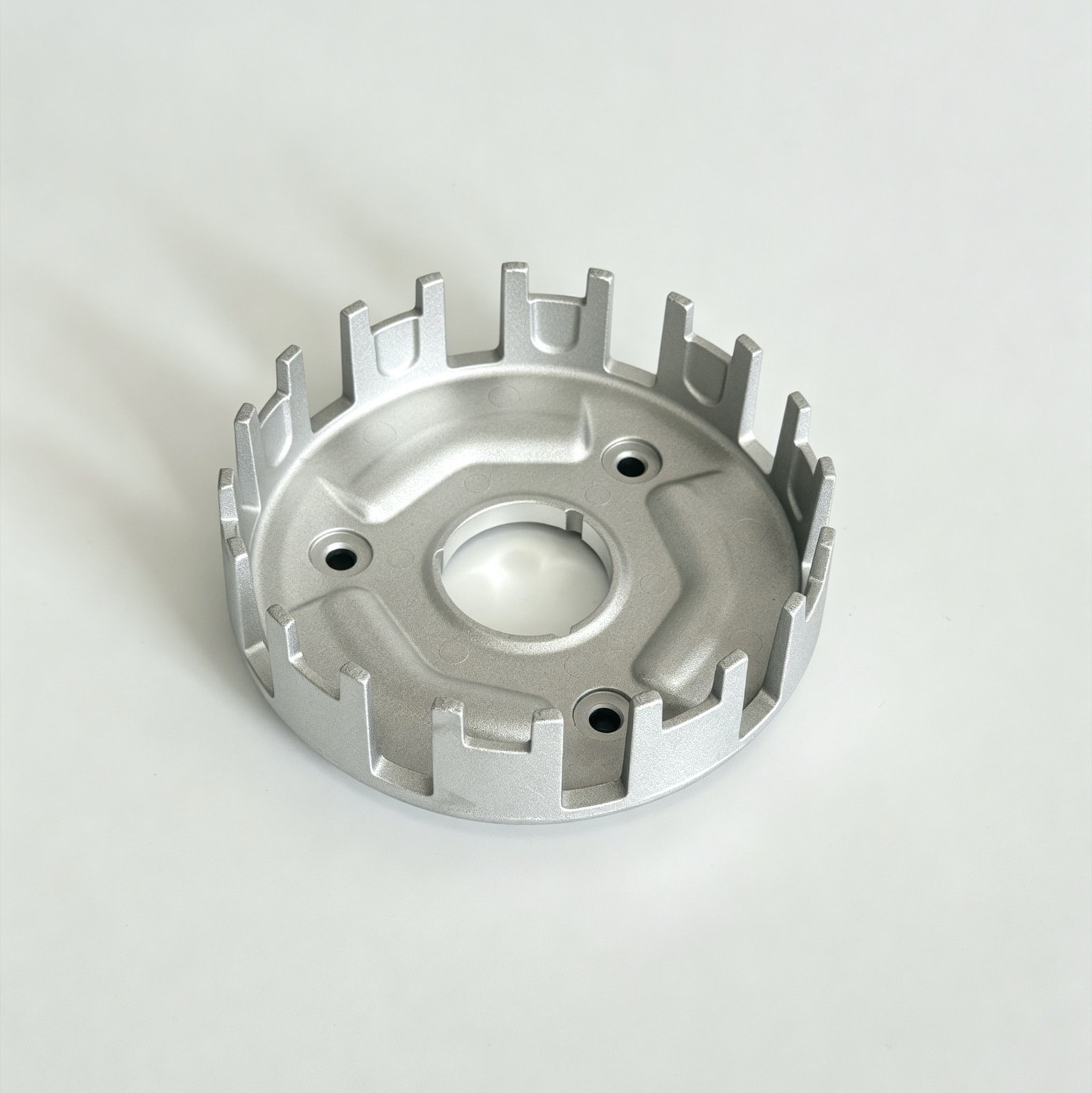
Motorcycle Clutch Basket
Slot widths once varied by 0.08 mm between batches and the friction plates bound. Core cooling, scheduled core changes and 100% gauging now hold ±0.05 mm.
ADC12 (JIS H5302) · 约 330 g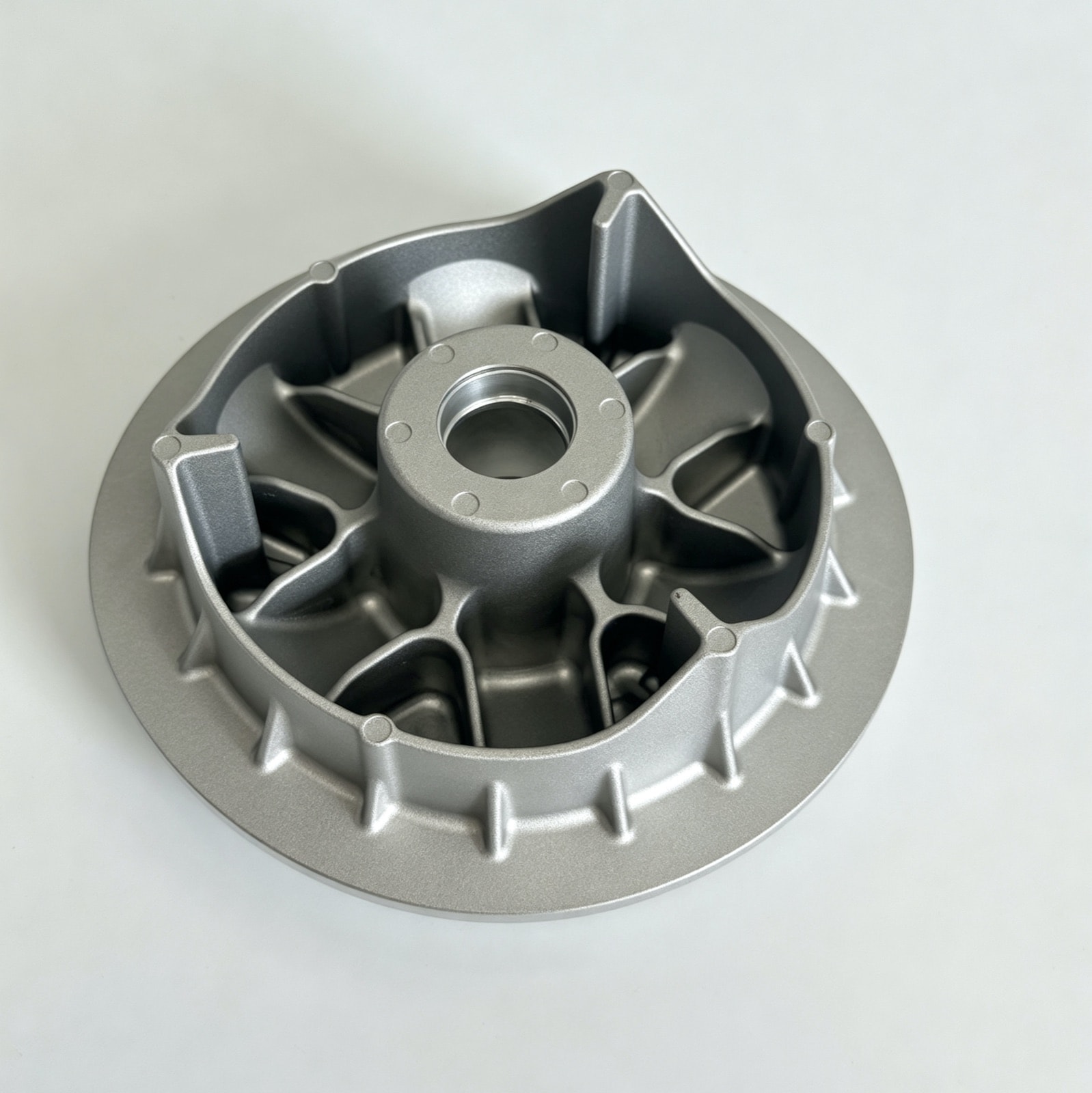
Motorcycle Clutch Pressure Plate
2 mm fins short-filled at the tips and warped the face. Hotter fin cavities, tip vents and flow-length control now fill over 99%, with runout within 0.05 mm.
ADC12 (JIS H5302) · 约 260 g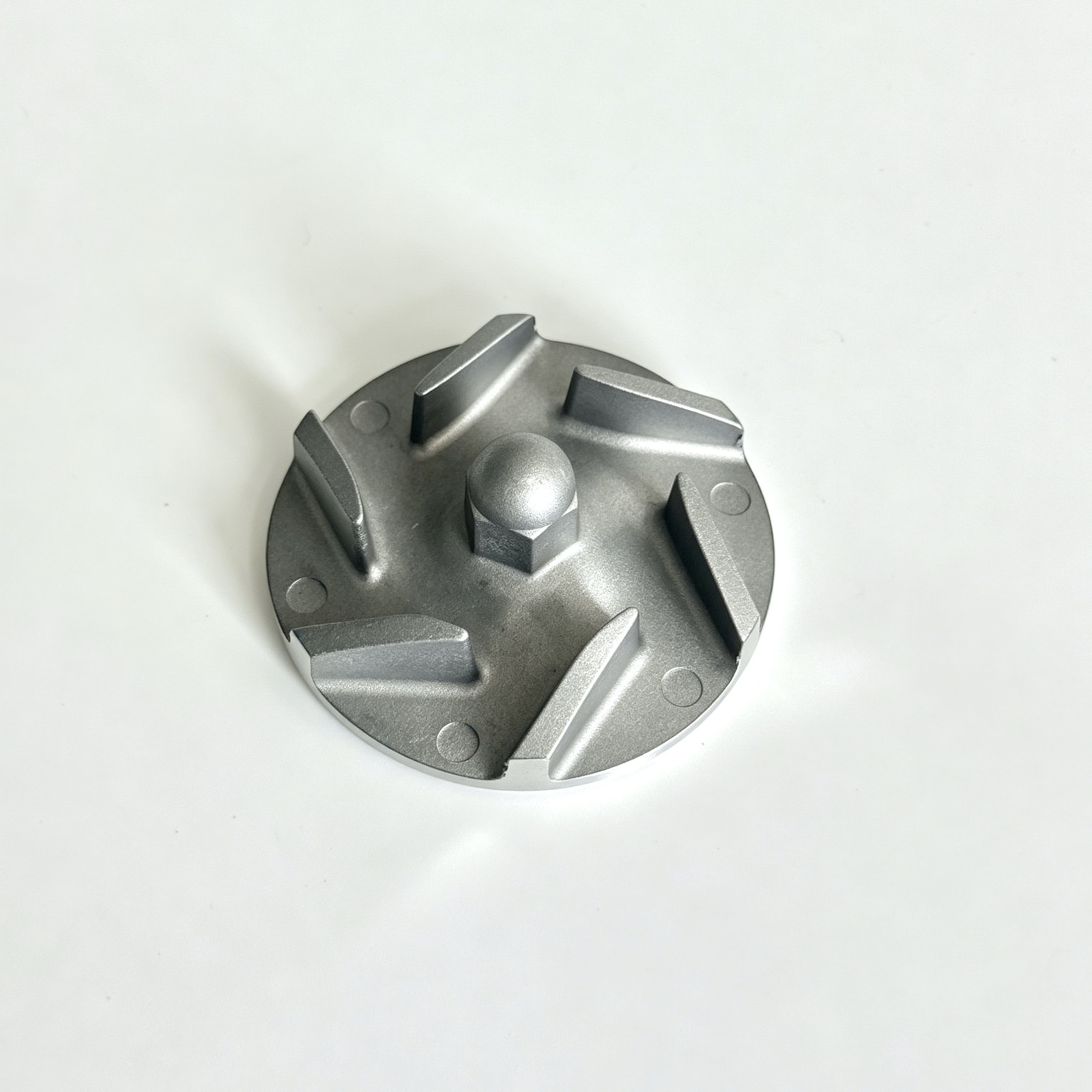
Engine Water Pump Impeller
Core shift left one side of the impeller thick and the other thin. Double-guided cores and symmetric gates hold blades within 0.15 mm and imbalance to 1 g·mm.
ADC12 (JIS H5302) · 约 85 gQuestions
Does every rotating part need balancing?+
It depends on speed and the product. Low-speed impellers are usually sample-checked across the industry; for high-speed or vibration-sensitive parts we can balance-test and correct to your requirement.
Can clutch slots be cast to size?+
Yes. With the cores properly cooled and maintained, cast slots hold ±0.05 mm, which is enough for the friction plates; only the centre bore and faces need CNC machining.
Have a part like this?
Start with the cost estimator to see how the price is built, or upload a drawing for us to review — we reply within 24 hours.