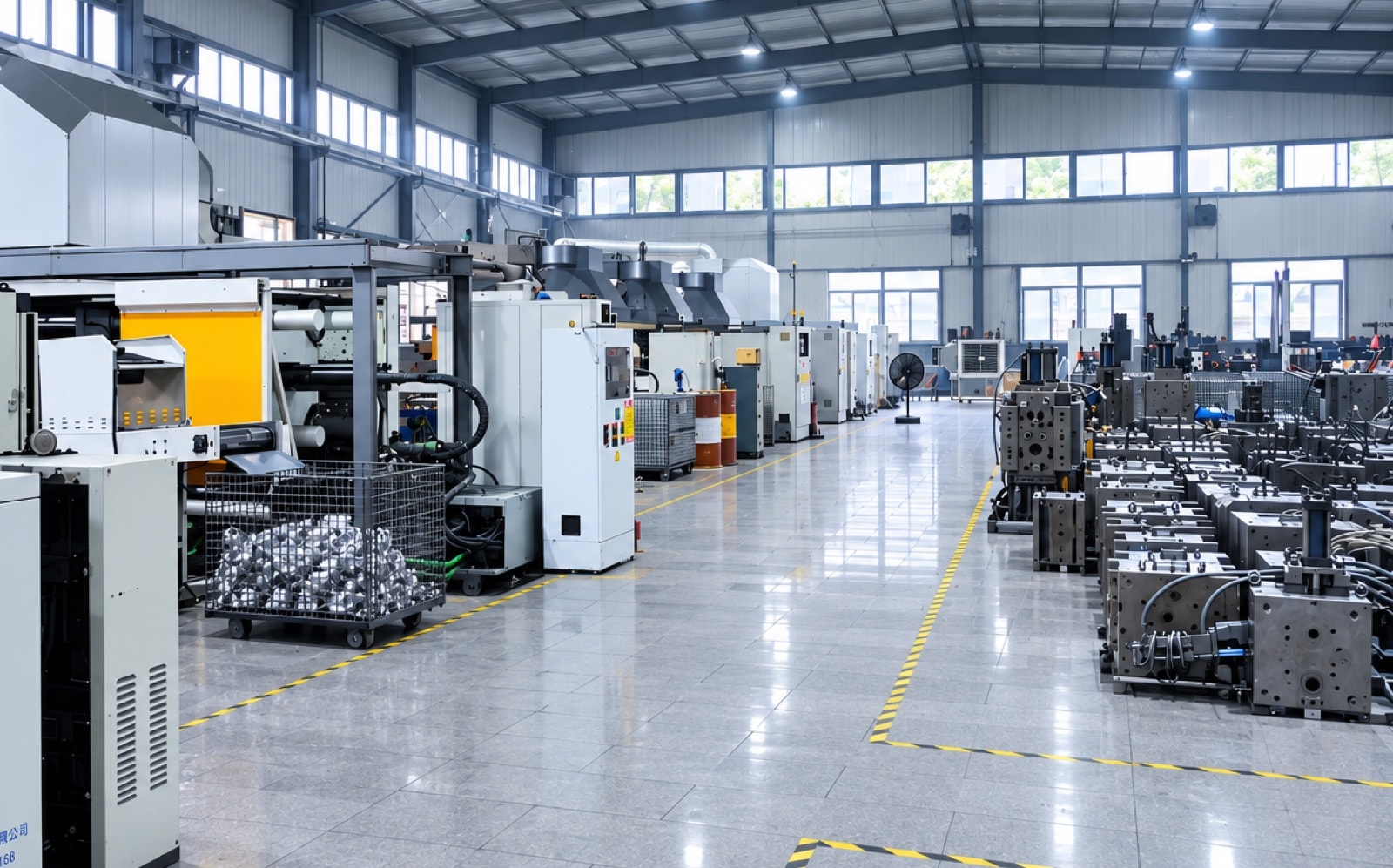
INDUSTRIES · Heat Sinks & Structural Enclosures
Die-cast heat sinks and structural enclosures
We make aluminum heat-sink housings and structural enclosures for lighting, power-supply, motor-control, energy-storage and charging-equipment manufacturers: fins and housing cast in one piece, mounting and shielding faces milled flat, and finishing done in-house.
- Fins 1.5–2.5 mm, up to 6:1 height ratio
- Mounting faces 0.05 mm per 100 mm
- Fins, housing and bosses in one casting
- Blasting, powder coat, anodizing in-house
OVERVIEW
What we make in heat sinks and enclosures
Our heat sinks and enclosures include LED and power-supply housings, motor-controller and inverter housings, shielded enclosures and finned structural parts, mostly in ADC12 with AlSi12 or A360 as options. Customers range from lighting and power-supply makers to new-energy and industrial-control manufacturers.
Die casting forms fins, housing, mounting bosses and seal grooves in one shot and removes most secondary machining. Fins are routinely 1.5–2.5 mm, about 1.2 mm at the limit, at height-to-thickness ratios up to 6:1; mounting and shielding faces are milled to 0.05 mm per 100 mm.
Finishing is done in-house — blasting, powder coating, anodizing and PVD. For cosmetic parts that will be colour-anodized we recommend A360, which finishes more evenly.
We also make aluminum housings and heat sinks for energy storage and charging equipment — battery-management and power-conversion enclosures in storage systems, and charger housings and heat sinks. These mostly live outdoors, so sealing and heat are what matter: seal grooves are cast in with the housing, joint faces milled to 0.05 mm per 100 mm, leak tested to the enclosure's protection requirement, and powder coated in-house.
CASE STUDIES
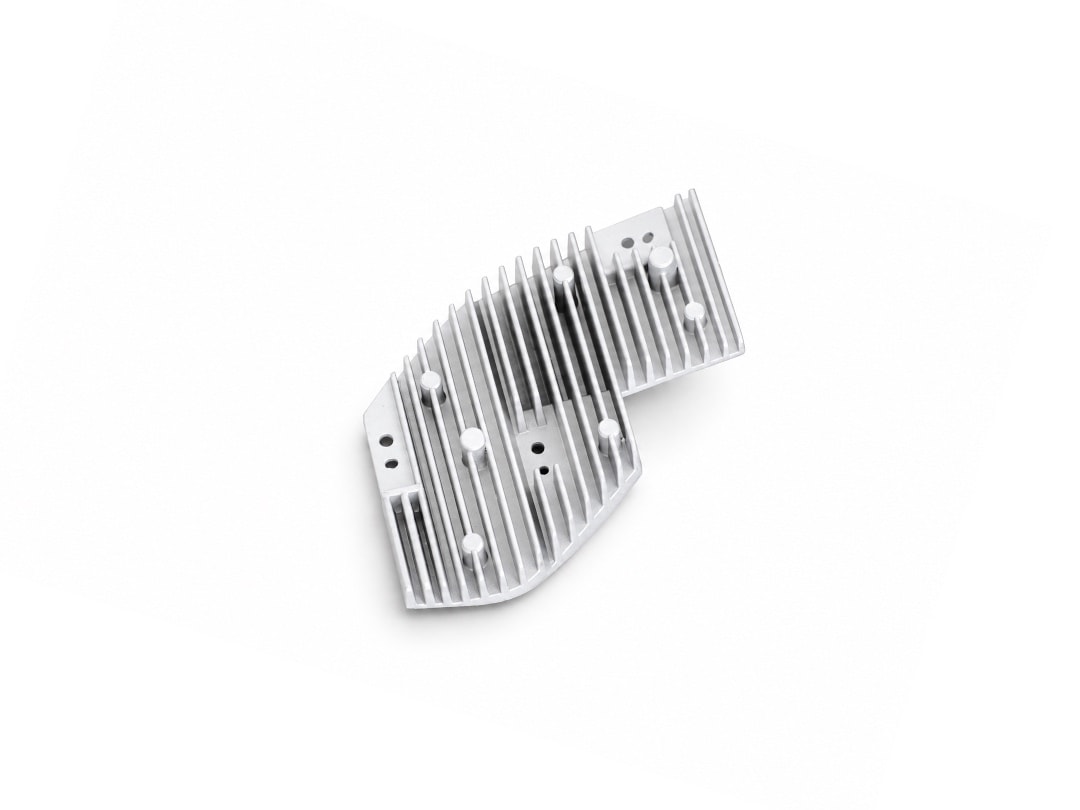
Representative parts
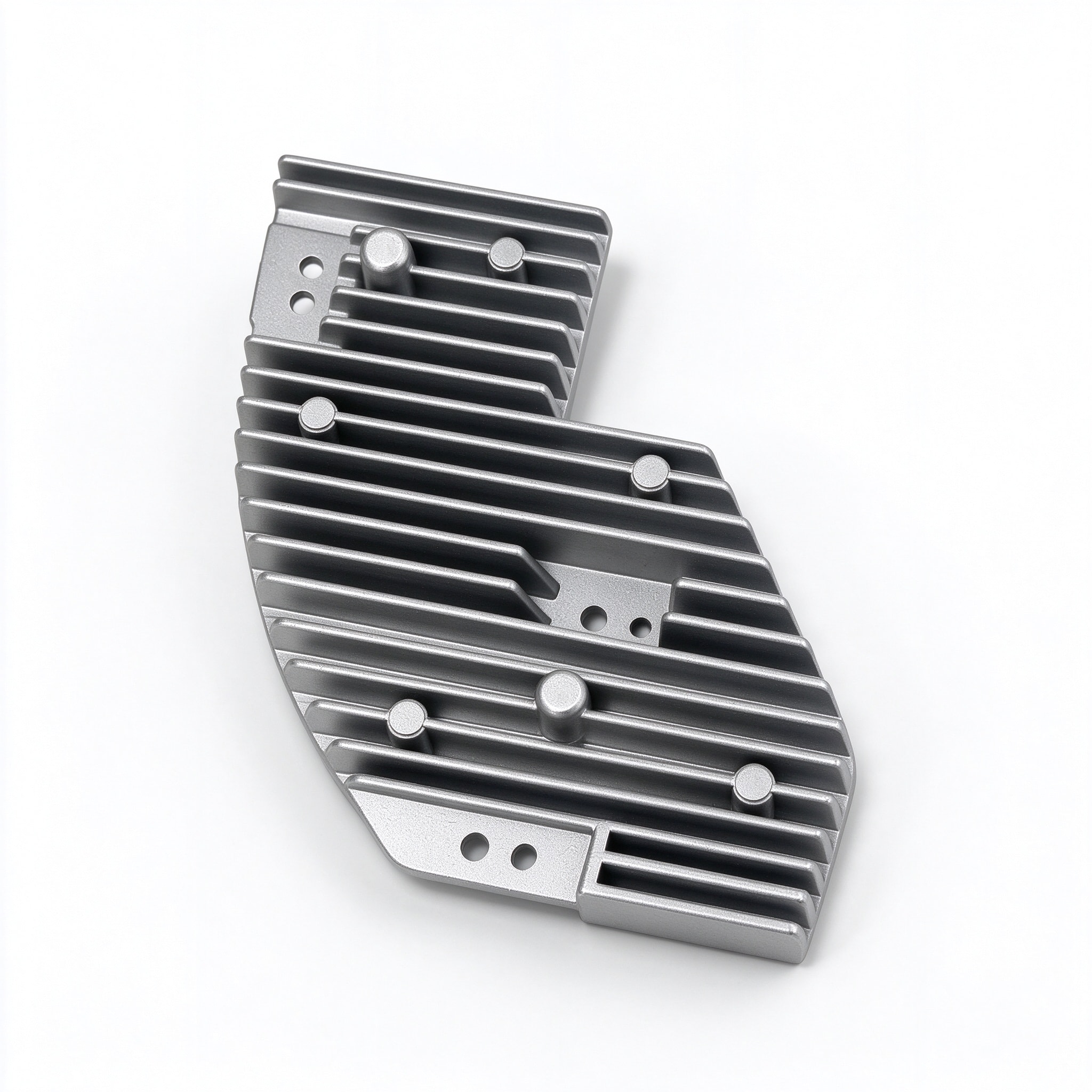
Shaped Aluminum Finned Heat Sink Plate
ADC12 · 约 480 g
An irregular plate with 2 mm fins and seven bosses among them. Flow-led gating, spot-cooled boss cores and more draft give over 99% fin fill and cut drag marks from 4% to under 0.5%.
Read the case →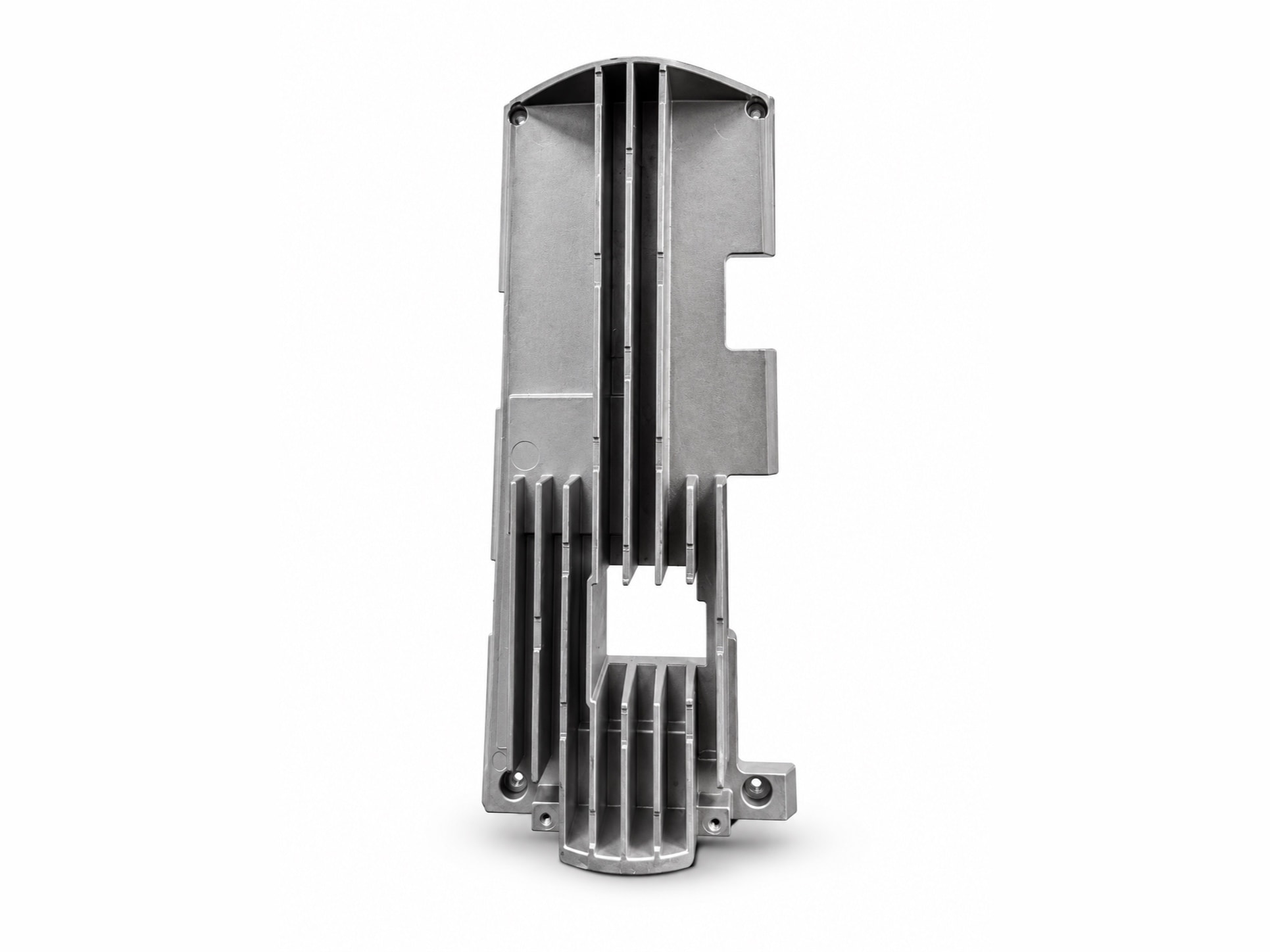
Long Aluminum Heat Sink Base Housing
ADC12 · 约 780 g
A 320 mm housing with long internal fins and an asymmetric section warped 0.6 mm. Multi-point gating, zoned cooling and stress relief brought it within 0.15 mm, base flat to 0.05 mm/100 mm.
Read the case →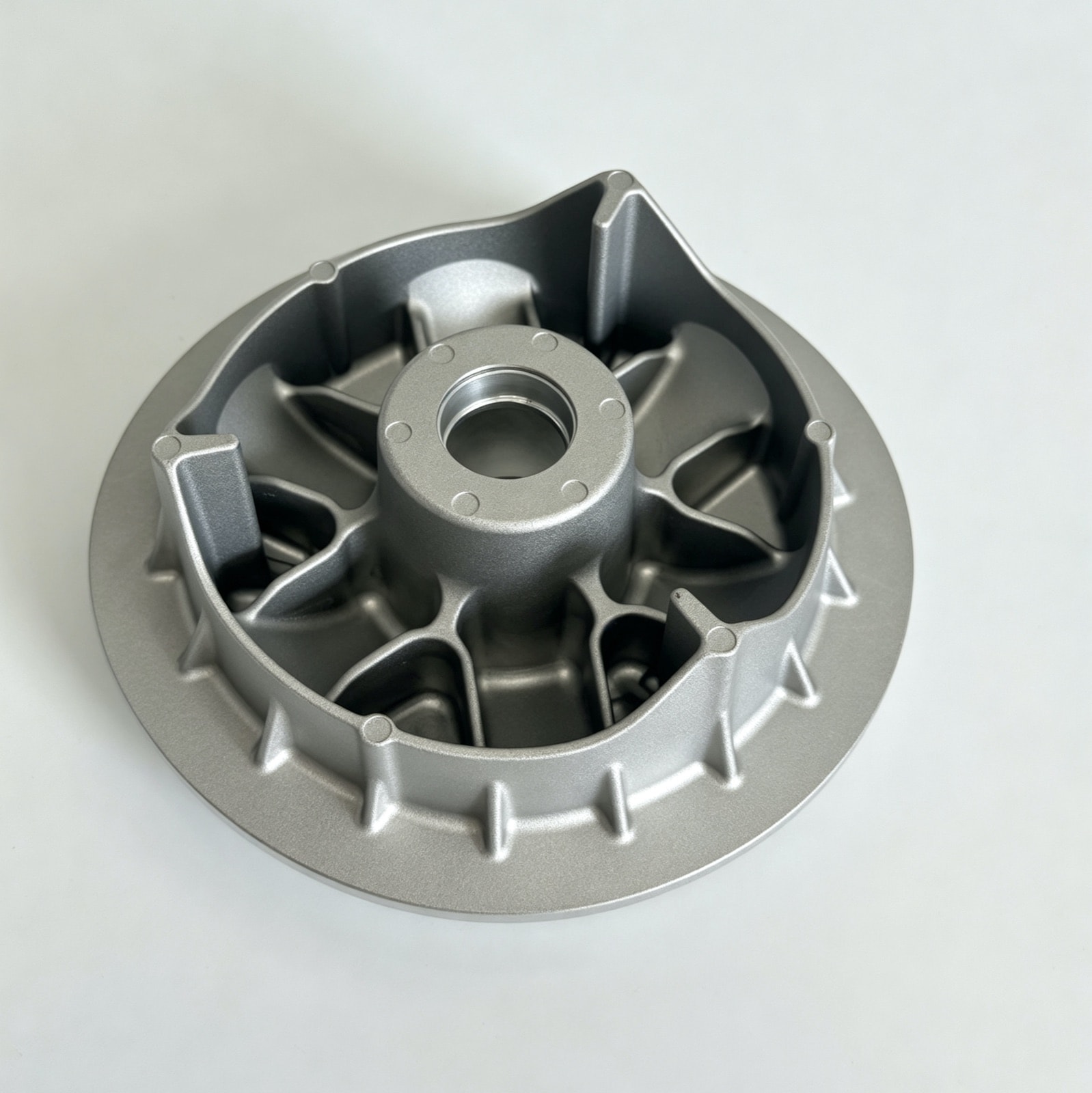
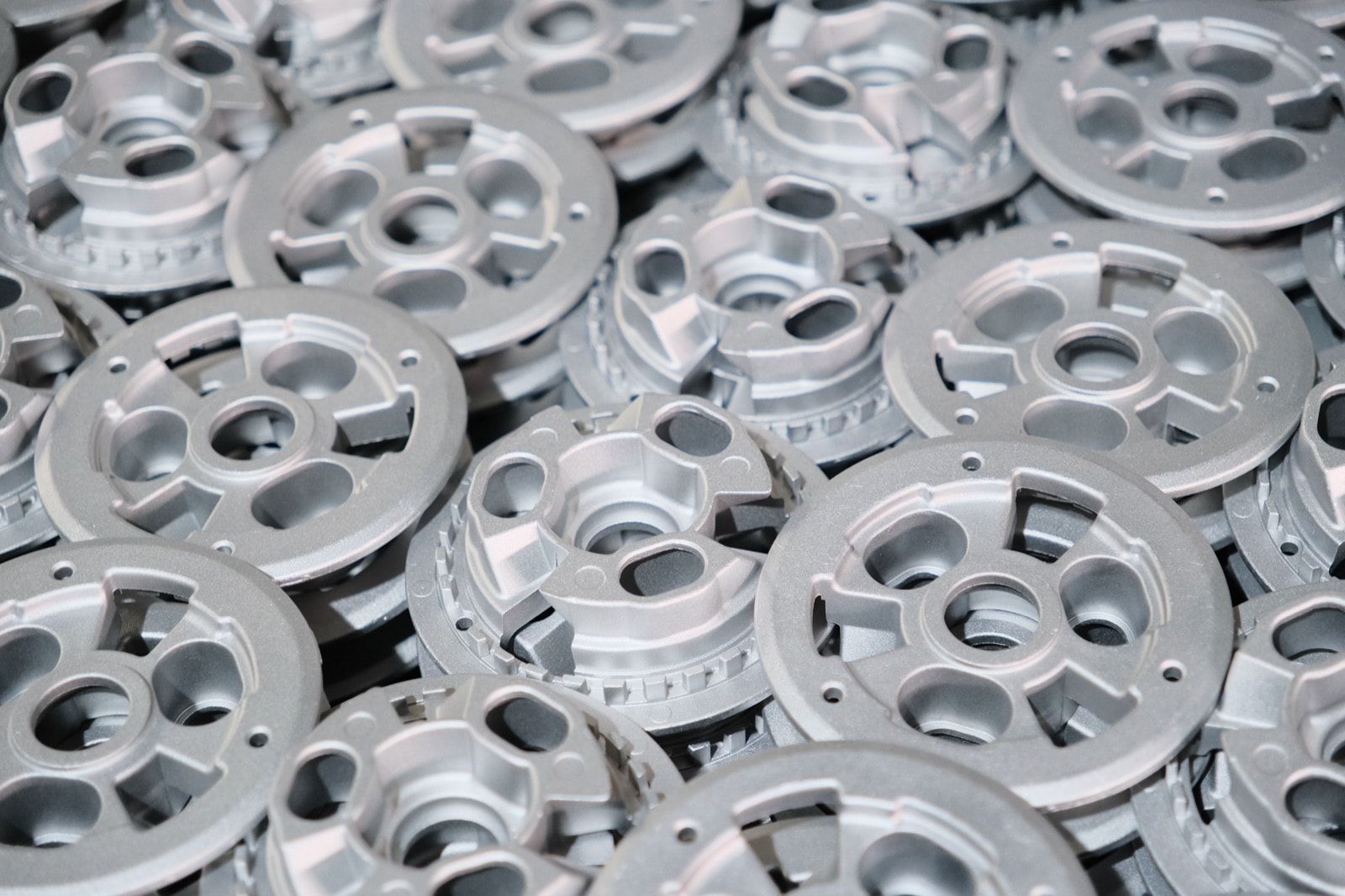
Motorcycle Clutch Pressure Plate
ADC12 · 约 260 g
2 mm fins short-filled at the tips and warped the face. Hotter fin cavities, tip vents and flow-length control now fill over 99%, with runout within 0.05 mm.
Read the case →TERMS
Working with us
Sampling lead time
Metal 3D-printed, CNC-machined or simplified-tool prototypes before tooling (about 7–15 days from a simplified tool); tooling normally takes 30–45 days and T1 trials 3–5 days. For finned geometry we recommend validating the fill in simulation before cutting steel.
MOQ
No MOQ for samples and pilot runs; production from 500 pcs. Anodized cosmetic parts are best ordered as one lot so they share a bath.
Documentation
Available on request: material certificates, dimensional and flatness reports, film thickness and adhesion tests and RoHS/REACH.
Nominated suppliers
We buy to your nominated grade; finishing can be done here or by your nominated finisher, with responsibilities set out in the contract.
HOW A PROJECT RUNS
From drawing to production: how we work with you
- 01
Design review and flow simulation
We confirm fin thickness, height, draft and flatness, and validate the fin fill in simulation before fixing the tool design.
- 02
Tool design and build
Conformal cooling in the fins and venting at the tips, with the tool built in-house.
More → - 03
T1 samples and first-article report
Dimensional and flatness reports available; colour panels agreed for cosmetic parts.
- 04
Pilot run
Casting, machining and finishing are proven end to end; production starts once fin fill and flatness are stable.
- 05
Production and delivery
Each lot finished in one bath for consistent colour; production from 500 pcs, 25–35 days per batch.
WHAT WE GUARANTEE
Heat-sink and enclosure parts: the three things you care about most, and how we deliver them
- 01
Fins: thin fins that fill
Die temperature comes up to 200–240 ℃ first, then tip venting, then root thickening as a flow leader if needed — shot velocity is the last dial. On a shaped heat sink plate with 2 mm fins at about 6:1, fin fill holds above 99%.
See the case → - 02
Flatness: long parts straight, faces in full contact
On long parts, zoned cooling and a setting fixture keep as-cast warp down; roughing and finishing are split with stress relief between, and faces are measured after finishing and again 24 hours later. A 320 mm heat sink base housing comes out of the die within 0.15 mm of warp and its base holds 0.05 mm per 100 mm. Shielding faces are also blue-checked for contact.
See the case → - 03
Appearance: consistent colour
High-silicon die-cast aluminum greys when anodized — a material limit. For cosmetic parts we recommend A360, uniform blasting to even the base tone and one bath per lot; where colour is critical, powder coating is the better choice.
More →
PROCESSES
Processes, materials and finishes we use
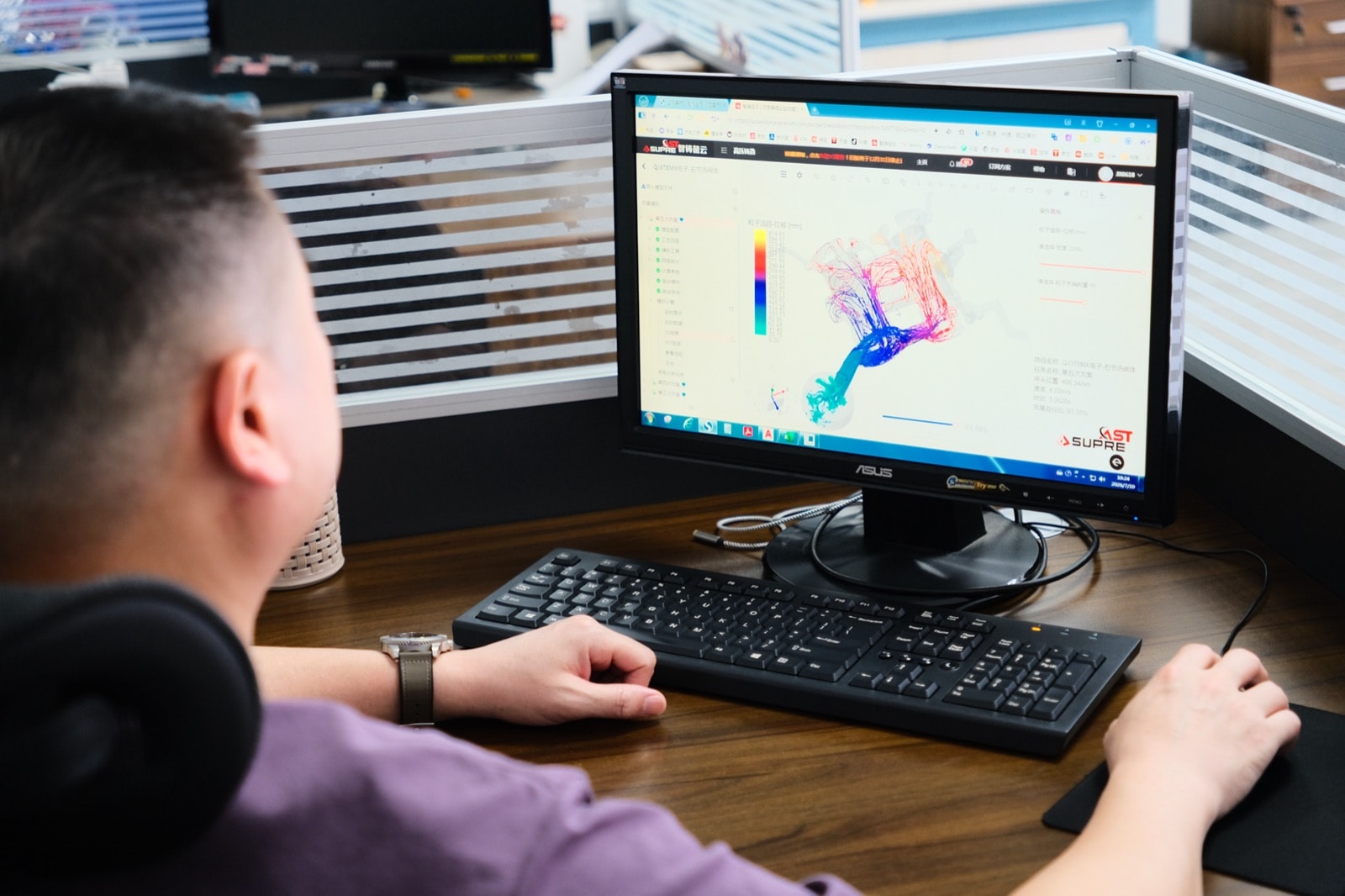
Tool design and build
Designed and built in-house with fin fill simulated first; aluminum tools last around 100k shots and belong to you.More →
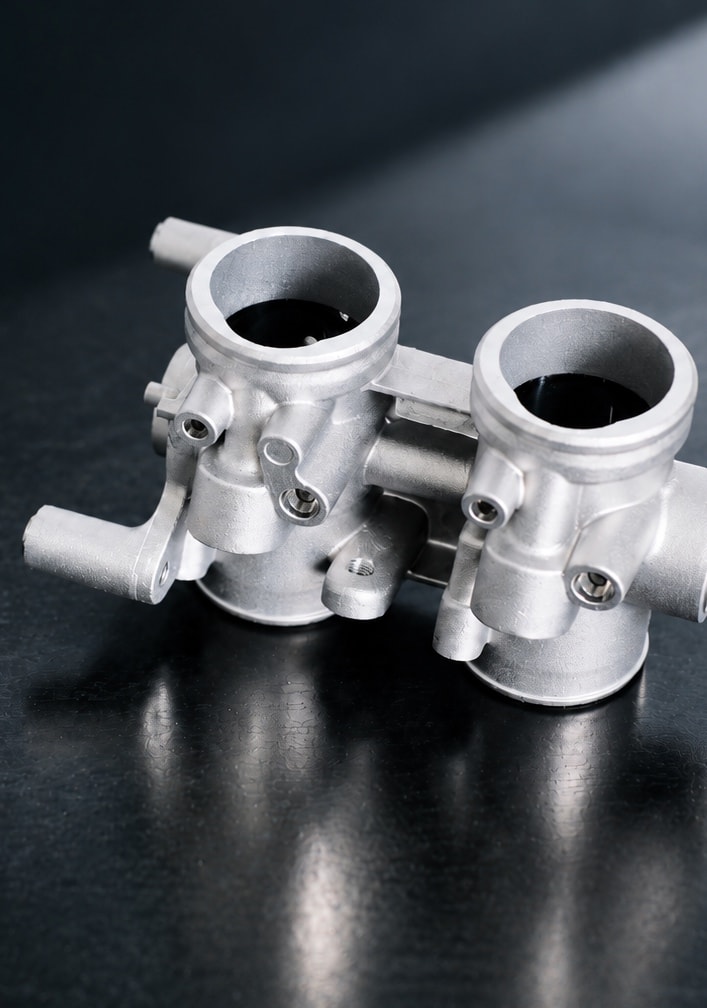
Aluminum die casting
Ten machines from 160 to 800 t; mostly ADC12, with AlSi12 for conductivity or A360 for appearance.More →
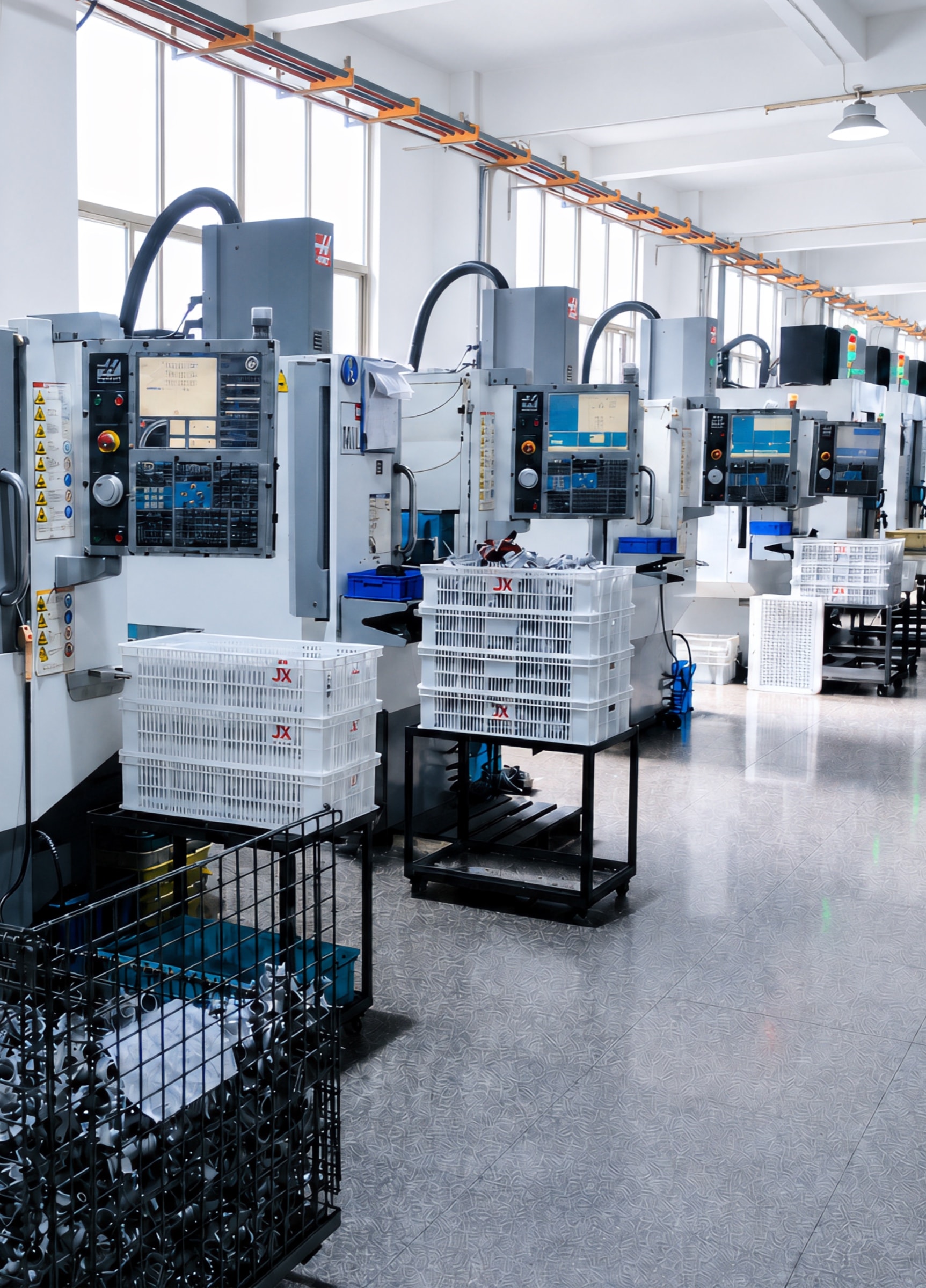
CNC machining
Mounting and shielding faces milled to 0.05 mm per 100 mm, with threads and mounting holes done at the same time.More →
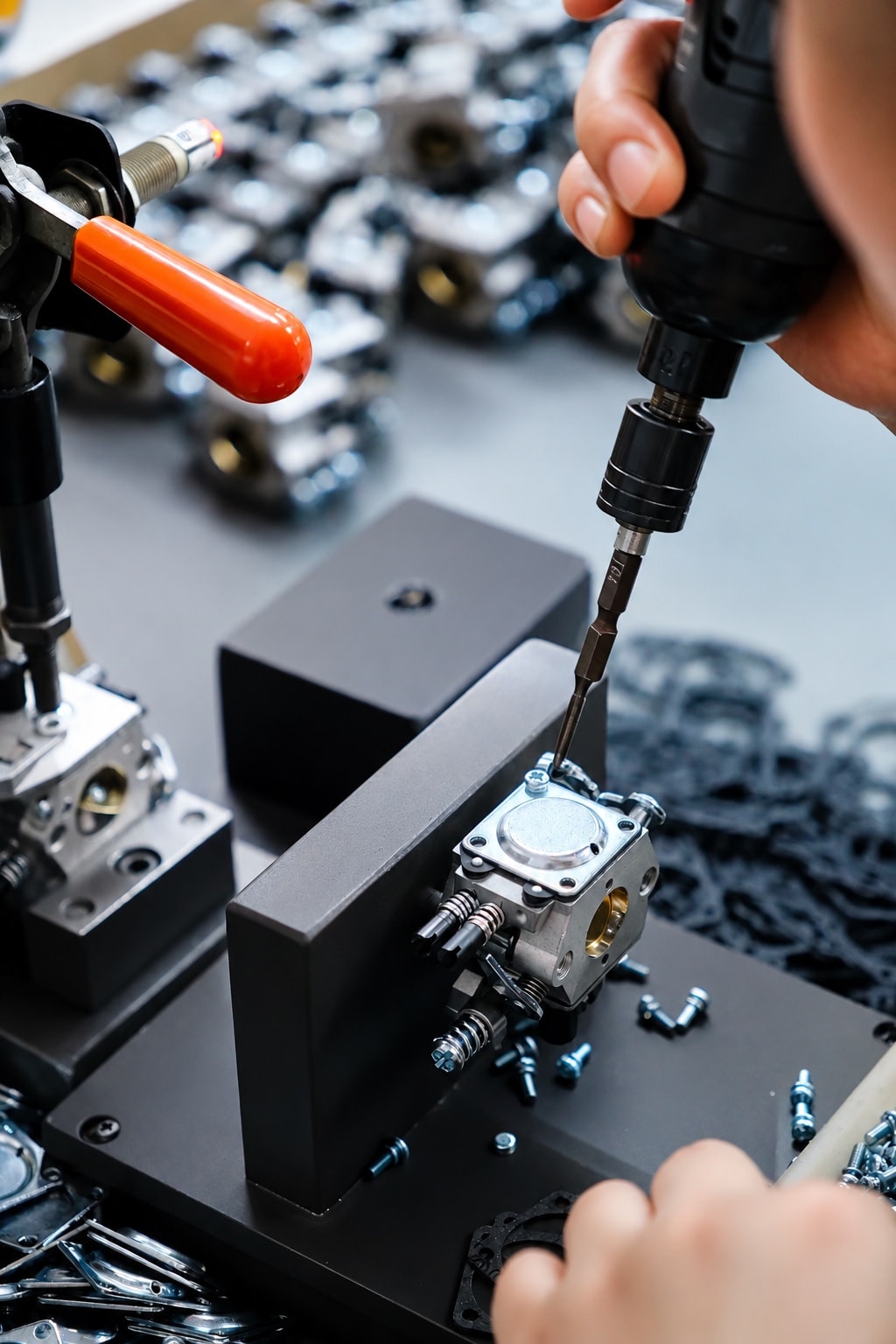
Finishing
Blasting, powder coating, anodizing and PVD in-house.More →
Choosing the alloy
Compare fluidity, conductivity and finishing behaviour of ADC12, AlSi12, A360 and other grades in the alloy selector.More →
FAQ
Questions we get
How thin can a cast cooling fin be?+
Aluminum fins are routinely 1.5–2.5 mm and can be pushed to about 1.2 mm, provided three things hold: height-to-thickness no worse than about 6:1, at least 1.5° draft per side, and real venting at the tip. Pitch should stay above twice the fin thickness — any closer and the die ribs become thin, fragile and hot, which causes more trouble than the extra surface area is worth. Beyond those limits, machined or extruded fins are the better route.
Die-cast heat sink or extruded — how do we choose?+
It comes down to geometry and volume. Extrusion gives thinner, denser fins and better conductivity, but the section is constant along its length, so mounting holes, cavities and shaped boundaries all need secondary machining. Die casting forms a complex three-dimensional part in one shot — shell, bosses, seal groove and fins together — removing most of that machining, and the economics improve with volume. Rule of thumb: a plain bank of fins goes to extrusion; fins integrated with a housing and mounting features go to die casting.
Which aluminum alloy suits a heat sink?+
It depends what you are optimising. For structure and cost, ADC12 — best fluidity, best value, and it suits thin complex fins. For conductivity, AlSi12 flows extremely well and conducts slightly better than ADC12. For appearance, especially coloured anodizing, A360 is low in copper and finishes far more evenly. Bear in mind that die-cast aluminum sits around 90–120 W/(m·K), well below pure aluminum: if the thermal design has no margin, extrusion or a copper base is the honest answer.
Anodized parts come out grey — can that be improved?+
It can be improved, but there is a material ceiling. Die-cast aluminum is high in silicon, and silicon does not convert during anodizing — it stays in the film and greys it, and that cannot be fully removed. Practical improvements: switch alloy (A360's low copper and AlSi12's uniformity both beat ADC12); blast uniformly to normalise the base tone; or move to powder coating instead, which gives far more colour control. If the customer expects an extrusion-grade anodized look, powder coating is usually the honest recommendation.
Which finishes do you do in-house?+
In-house we do anodizing, powder coating, sand and shot blasting, vibratory finishing and PVD. Heat-sink housings usually get blasting plus powder coat, or anodizing. Plating, where needed, goes through a partner shop.
What are the MOQ and sampling lead times?+
Samples and pilot runs have no MOQ; production starts at 500 pcs, and anodized cosmetic parts are best ordered as one lot so they share a bath. Before tooling we can supply metal 3D-printed, CNC-machined or simplified-tool prototypes (about 7–15 days from a simplified tool); a production tool normally takes 30–45 days to build and T1 trials 3–5 days, and finned parts should have their fill validated in simulation first; in production each batch takes 25–35 days.
Do you make housings for energy storage and chargers?+
Yes — we have made aluminum housings and heat sinks for energy-storage and charging equipment. As they mostly live outdoors we focus on three things: seal grooves cast in with the housing and joint faces milled to 0.05 mm per 100 mm; leak testing to the protection requirement; and in-house powder coating.
FURTHER READING
Technical articles
- DESIGN RULES
Design Limits for Die-Cast Heat Sinks: Fin Thickness, Height, Pitch and Draft
Surface area and manufacturability pull against each other. The four constrained dimensions, what draft really costs you in area, and when to switch to extrusion or skiving.
- DESIGN RULES
How to Control Minimum Wall Thickness in Aluminum and Zinc Die Casting Product Design
Learn how to control minimum wall thickness in aluminum and zinc die castings, including fillability, ribs, transitions, porosity, machining, tooling, and production capability.
- MATERIALS
ADC12, A380, and A360 Aluminum Alloys: Composition, Performance, and Practical Selection for Die-Cast Parts
Three grades with similar names and similar strength that are still not interchangeable. Composition and properties from NADCA and JIS sources, and what really differs in filling, corrosion, machining and finishing.