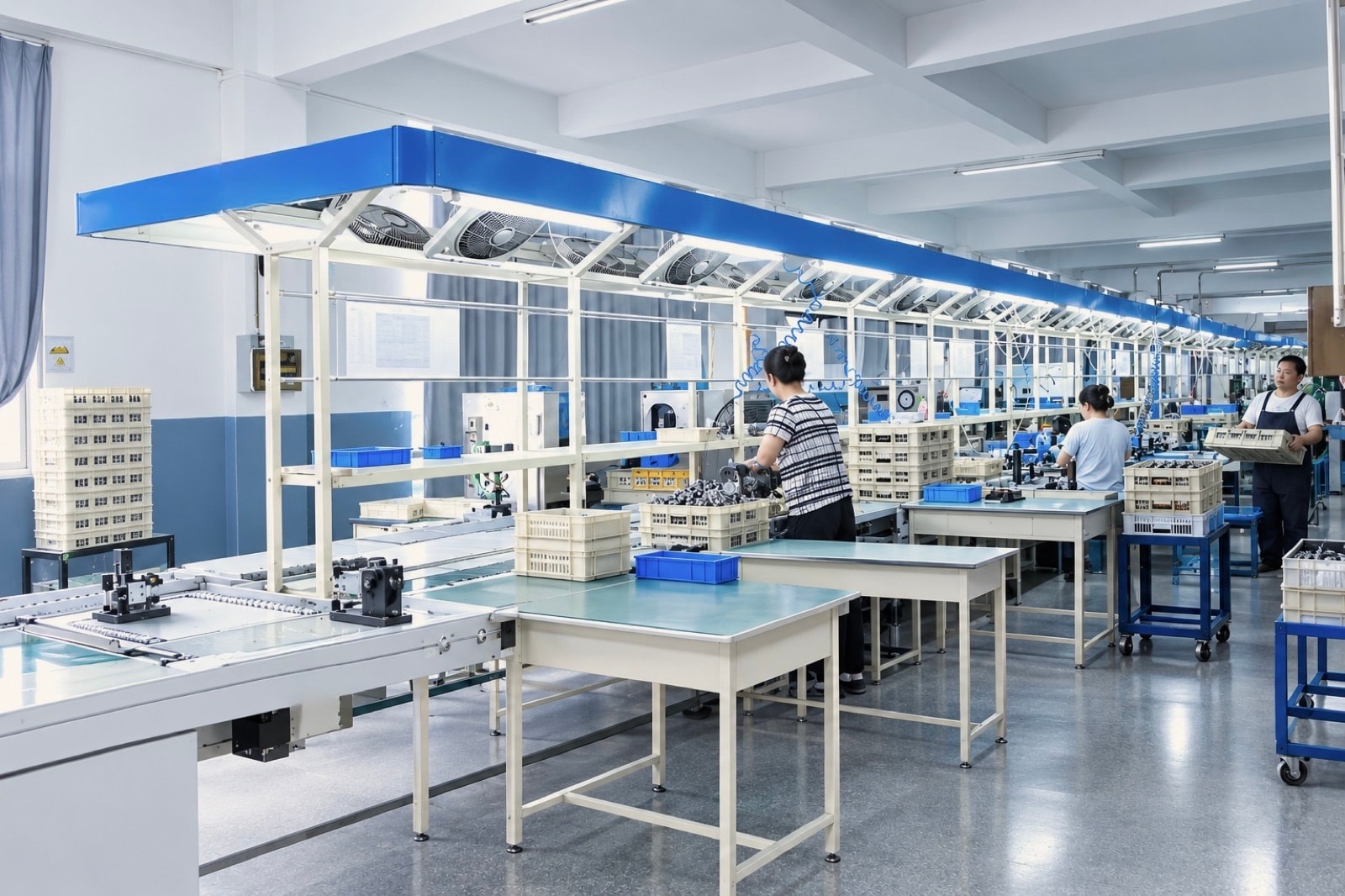
INDUSTRIES · General Power & Garden Machinery
Die castings for general power and garden machinery
GP-engine carburetors are one of our year-round products. We supply diaphragm carburetor assemblies, bodies and pump covers for brushcutters, chainsaws, generators and pump sets — as finished assemblies, machined parts or as-cast blanks.
- Diaphragm carburetors in production since 2005
- Every assembly flow and leak tested
- Assemblies, machined parts or blanks
- Documents for EPA and EU Stage V programmes
OVERVIEW
What we make for GP engines and garden machinery
GP-engine carburetors are one of our year-round products. We have produced diaphragm carburetors for brushcutters, chainsaws and other small petrol engines since 2005, and today supply diaphragm carburetor assemblies, bodies and pump covers, plus generator and pump-set housings, from 20 g to 1.5 kg. Our customers are engine makers, export buyers and carburetor makers with their own machining lines.
Delivery follows what you need: finished assemblies with diaphragms, springs and other components fitted, every unit flow and leak tested; machined bodies and pump covers; or, if you run your own machining line, as-cast blanks only.
For US and EU export programmes we provide material certificates and test documents to EPA Phase 3 and EU Stage V requirements. Garden machinery is seasonal, so we can work to a frame order against your annual forecast — building safety stock in the quiet months and replenishing weekly in season.
CASE STUDIES
Representative parts
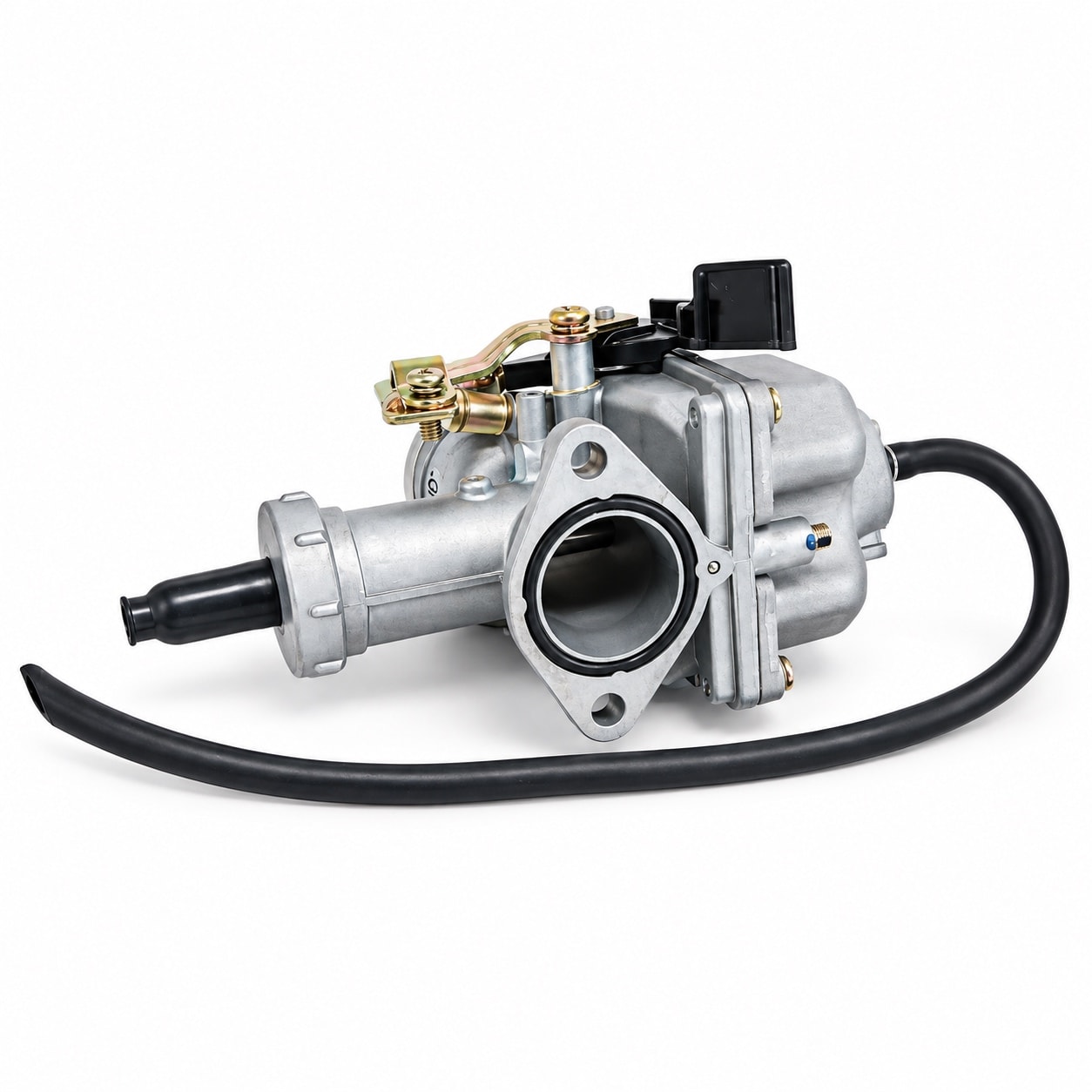
Diaphragm Carburetor for Brush Cutters and Chainsaws
ADC12 · 约 180 g(总成)
Diaphragm faces over 0.05 mm out of flat made engines stall hot. One-setup milling, low-stress holding and 100% leak and flow tests now hold 0.03 mm.
Read the case →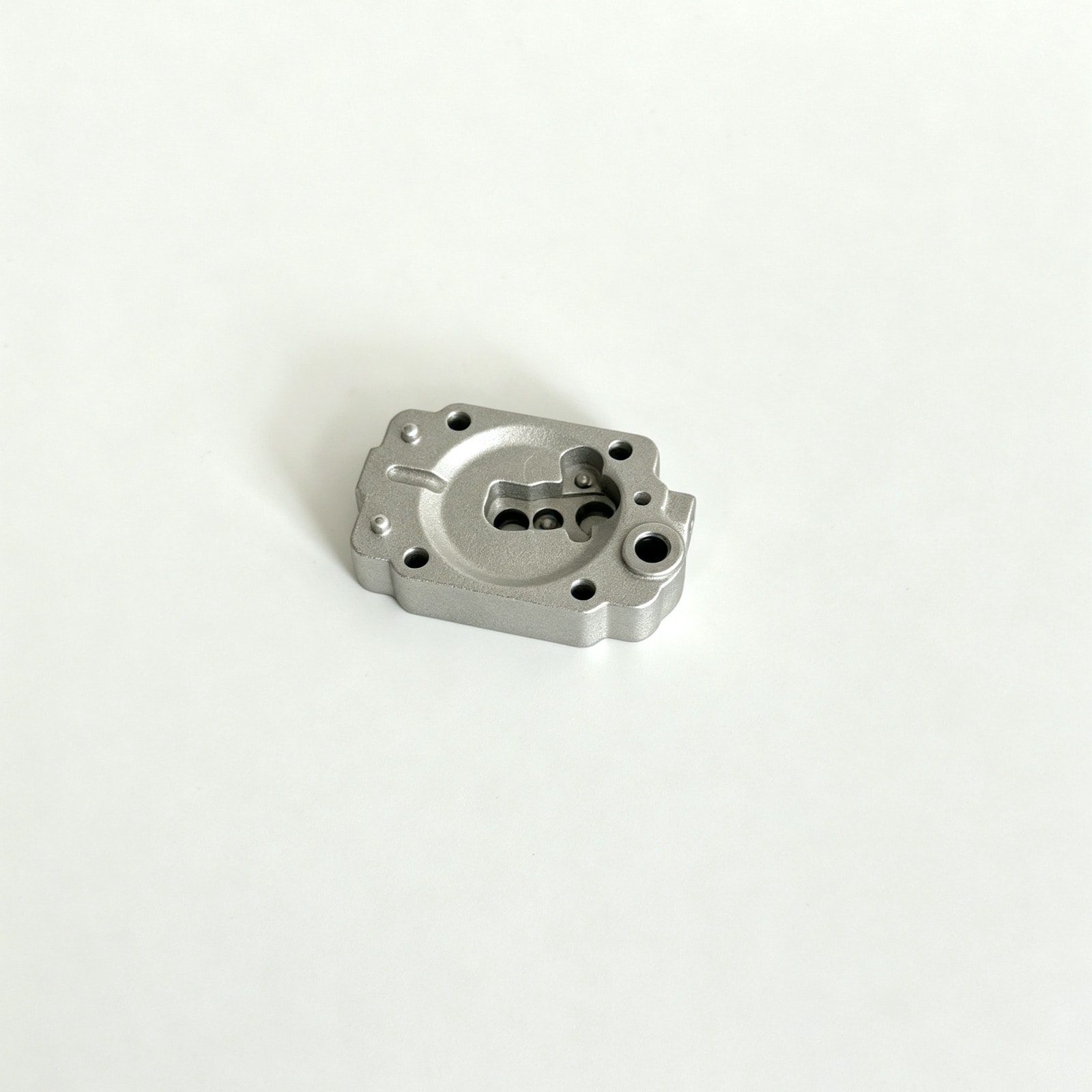
Diaphragm Carburetor Pump Cover
ADC12 · 约 45 g
Far cavities cold-shut and hand deburring bent the 2 mm cover. Balanced runners and fixtured, pressure-controlled brushing now hold 0.03 mm flatness.
Read the case →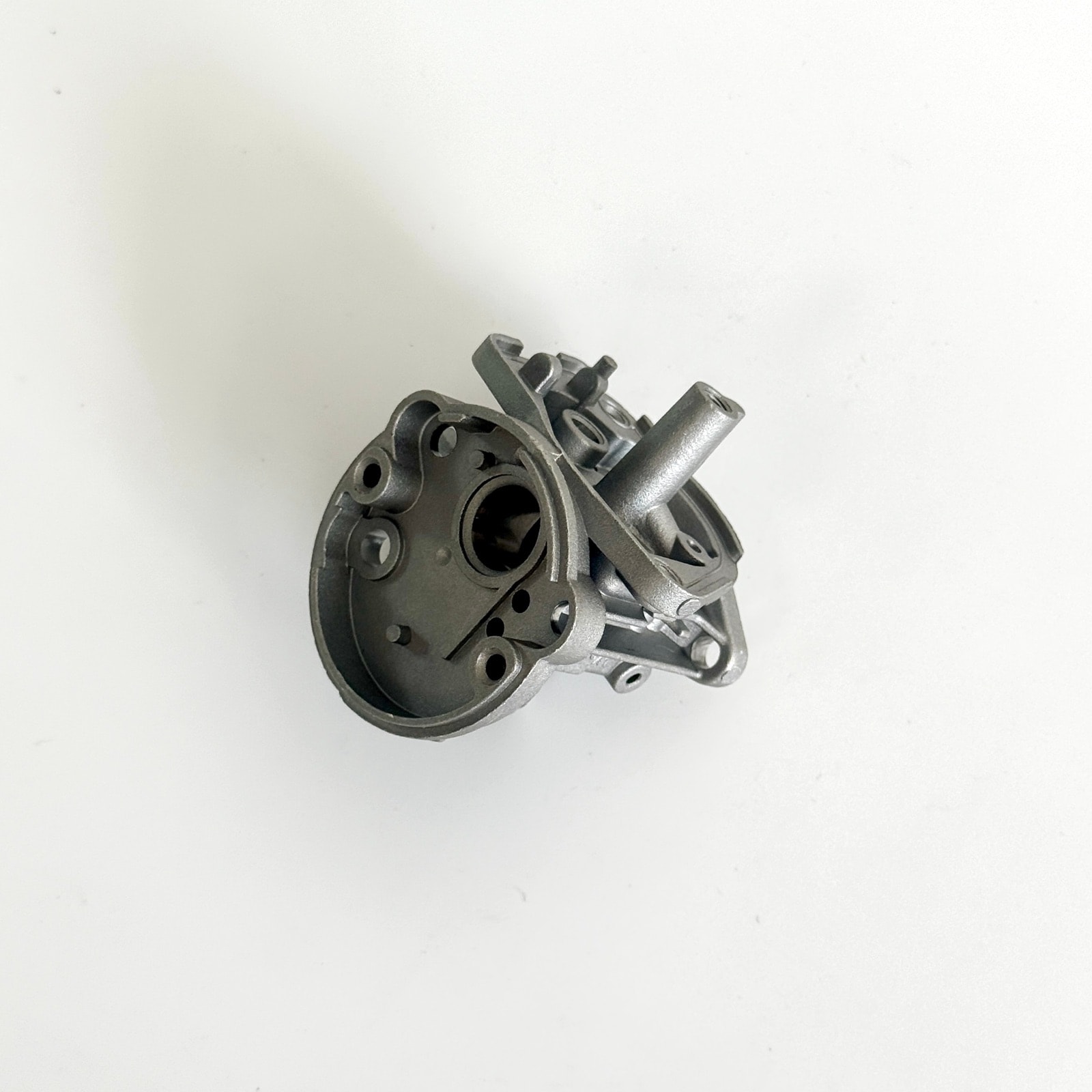
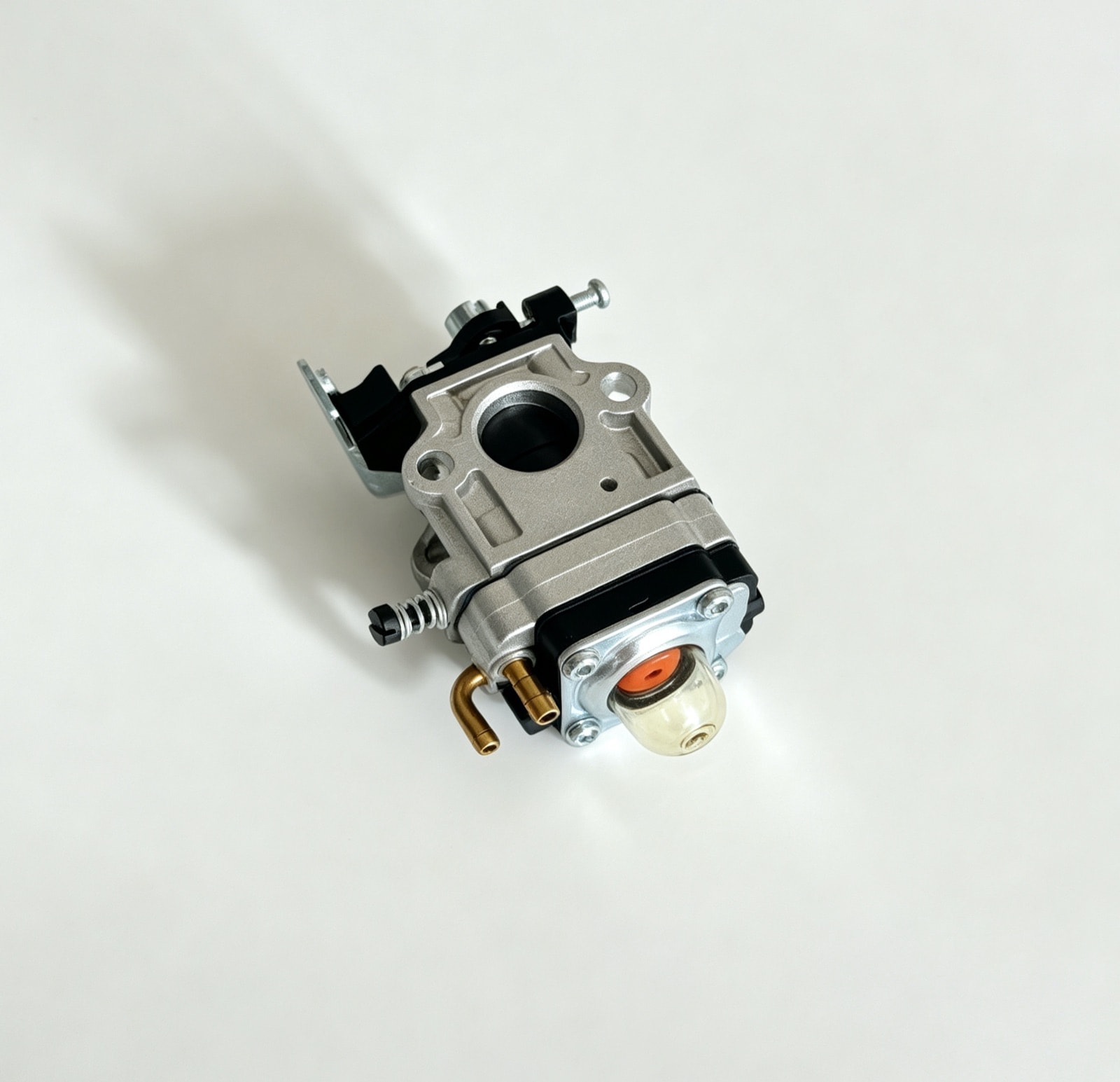
Diaphragm Carburetor Body Casting (Unmachined)
ADC12 · 约 160 g(含浇排)
Stock drifted 0.2 mm between batches and machining broke into porosity. Trend tracking, scheduled die care and targeted X-ray now hold 0.3 ± 0.1 mm.
Read the case →TERMS
Working with us
Sampling lead time
Metal 3D-printed, CNC-machined or simplified-tool prototypes before tooling (about 7–15 days from a simplified tool); tooling normally takes 30–45 days and T1 trials 3–5 days. Many GP programmes are variants, and modifying an existing tool can shorten that considerably.
MOQ
No MOQ for samples and pilot runs; production from 500 pcs.
Documentation
Available on request: material certificates, dimensional reports, flow curves, leak records, X-ray sampling reports and RoHS/REACH — plus lead-content testing for export programmes that need it.
Nominated suppliers
We buy to your nominated grade and use your nominated suppliers for diaphragms, springs and other critical components, handling incoming inspection and assembly ourselves.
HOW A PROJECT RUNS
From drawing to production: how we work with you
- 01
Drawing review and DFM
We confirm diaphragm faces, fuel passages and jets, and for small parts work out the cavity count that balances piece cost against even filling.
- 02
Tool design and build
Tools are designed and built in-house. Many GP programmes are variants, and modifying an existing tool shortens the lead time.
More → - 03
T1 samples and first-article report
Full dimensional results and material certificates available; carburetor assemblies can also come with flow curves and leak records.
- 04
Pilot run
Machining, assembly and flow testing are proven end to end and the yield confirmed before production starts.
- 05
Production and stock
Production from 500 pcs, 25–35 days per batch; frame orders against an annual forecast with agreed safety stock.
WHAT WE GUARANTEE
GP-engine parts: the three things you care about most, and how we deliver them
- 01
Sealing faces: diaphragms that seat
Pump and metering faces are held to 0.03 mm flatness. We clamp on a vacuum chuck or wide soft jaws, mill both faces in one setup, and measure flatness clamped and again released.
See the case → - 02
Flow: every carburetor the same
Brass jets are 100% sorted by measured flow and each carburetor is built from one band; the finished unit is re-tested on the flow bench, holding idle and wide-open flow within ±2% of your curve, with the data archived.
See the case → - 03
Blanks: steady stock, sound inside
If you buy blanks only, what matters most is not having to re-touch off every batch. We hold machining stock at 0.3 ± 0.1 mm, focus X-ray sampling on the areas you will cut, and can ship a trend sheet of key dimensions.
See the case →
PROCESSES
Processes, materials and finishes we use
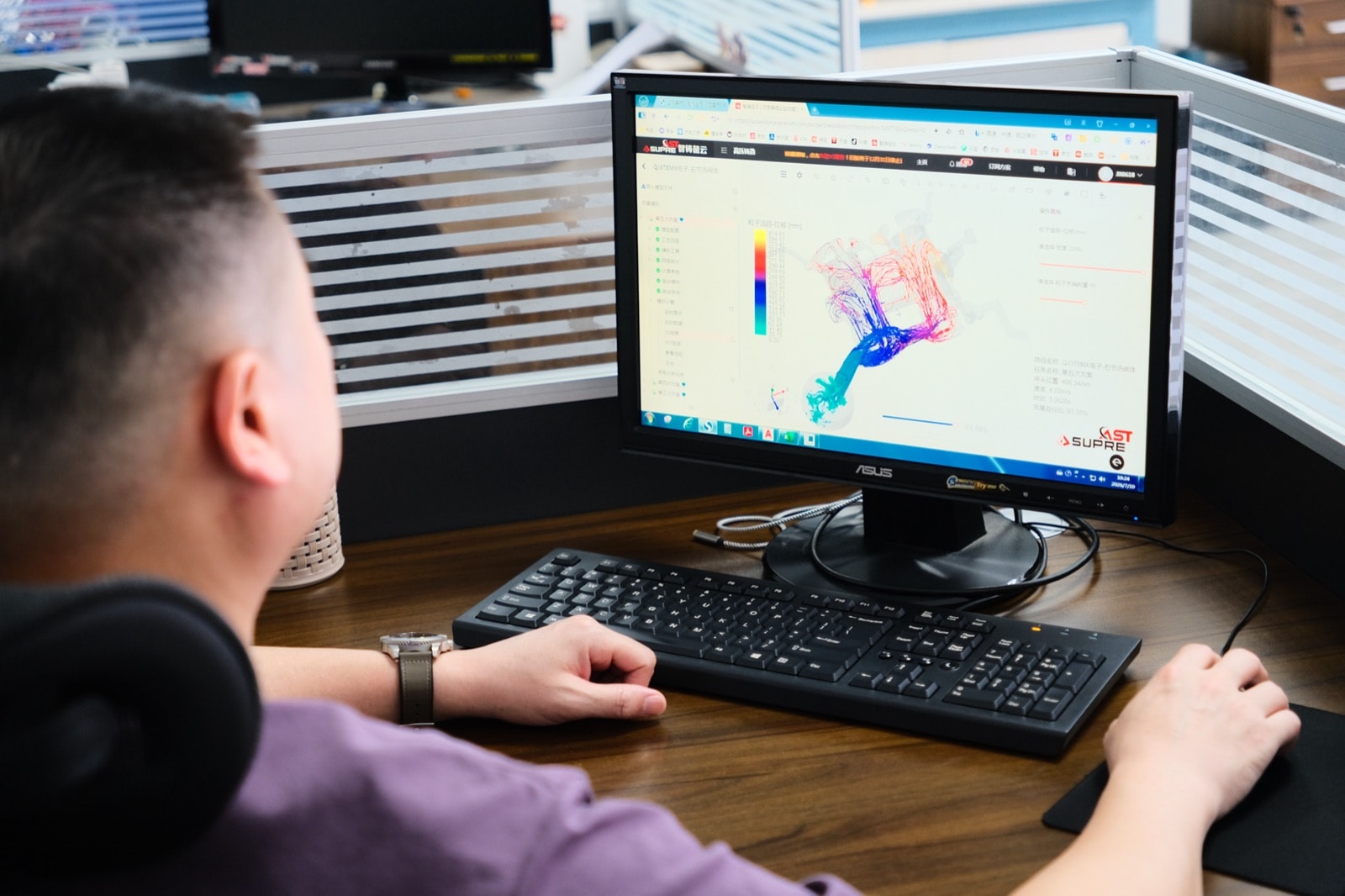
Tool design and build
Designed and built in-house with flow simulation first; variants can reuse an existing tool, and tools belong to you.More →
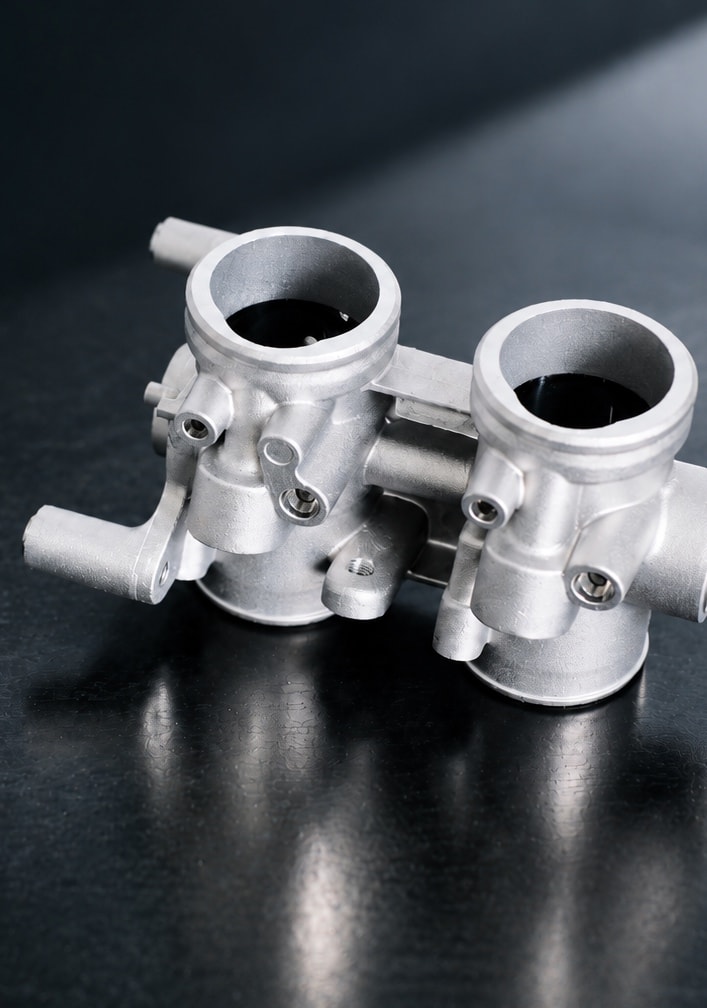
Aluminum die casting
Ten machines from 160 to 800 t; GP carburetor parts are mostly ADC12, with small parts run multi-cavity.More →
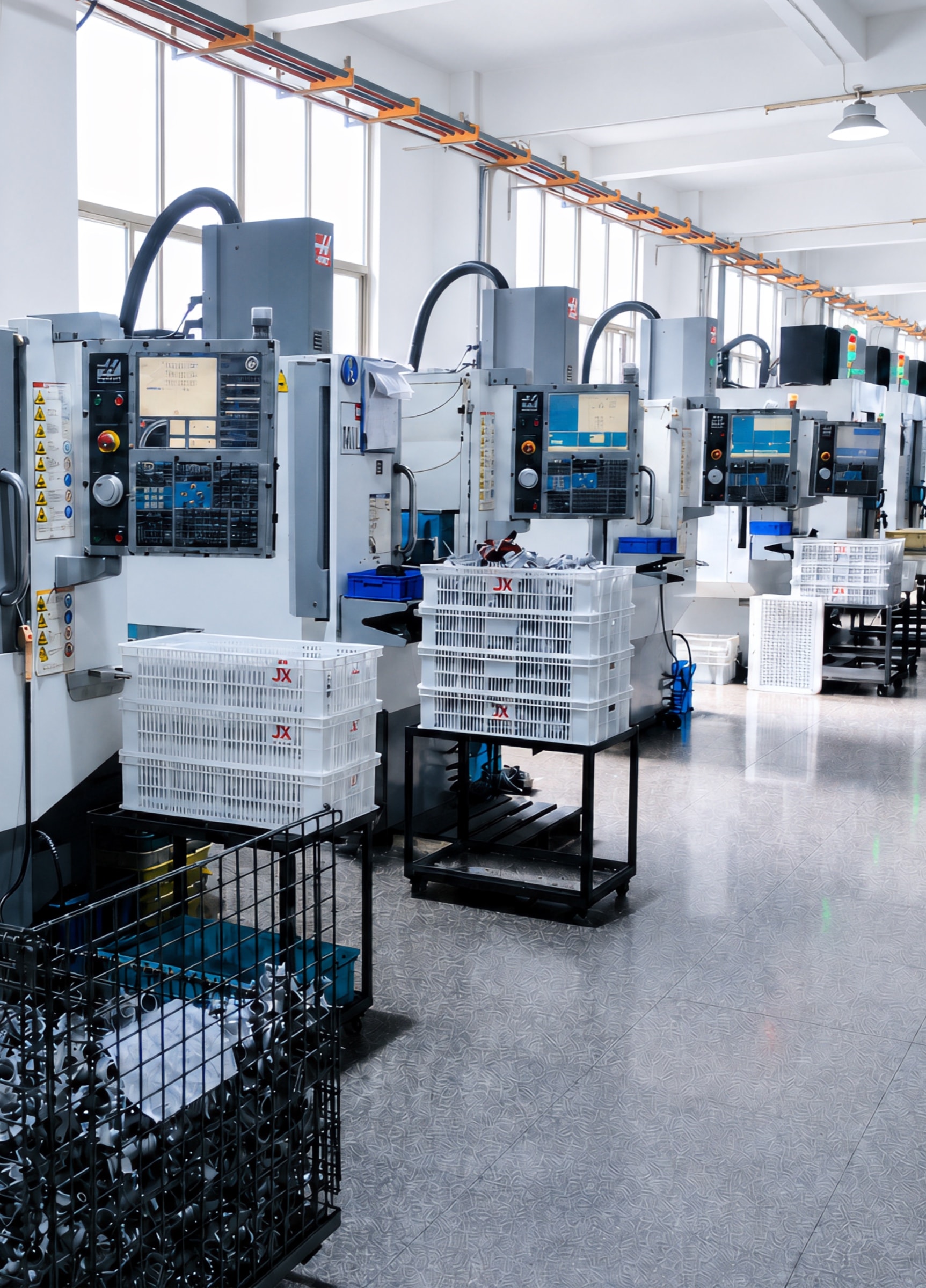
CNC machining
Sealing faces, fuel passages and jet bores; diaphragm faces to 0.03 mm flatness.More →
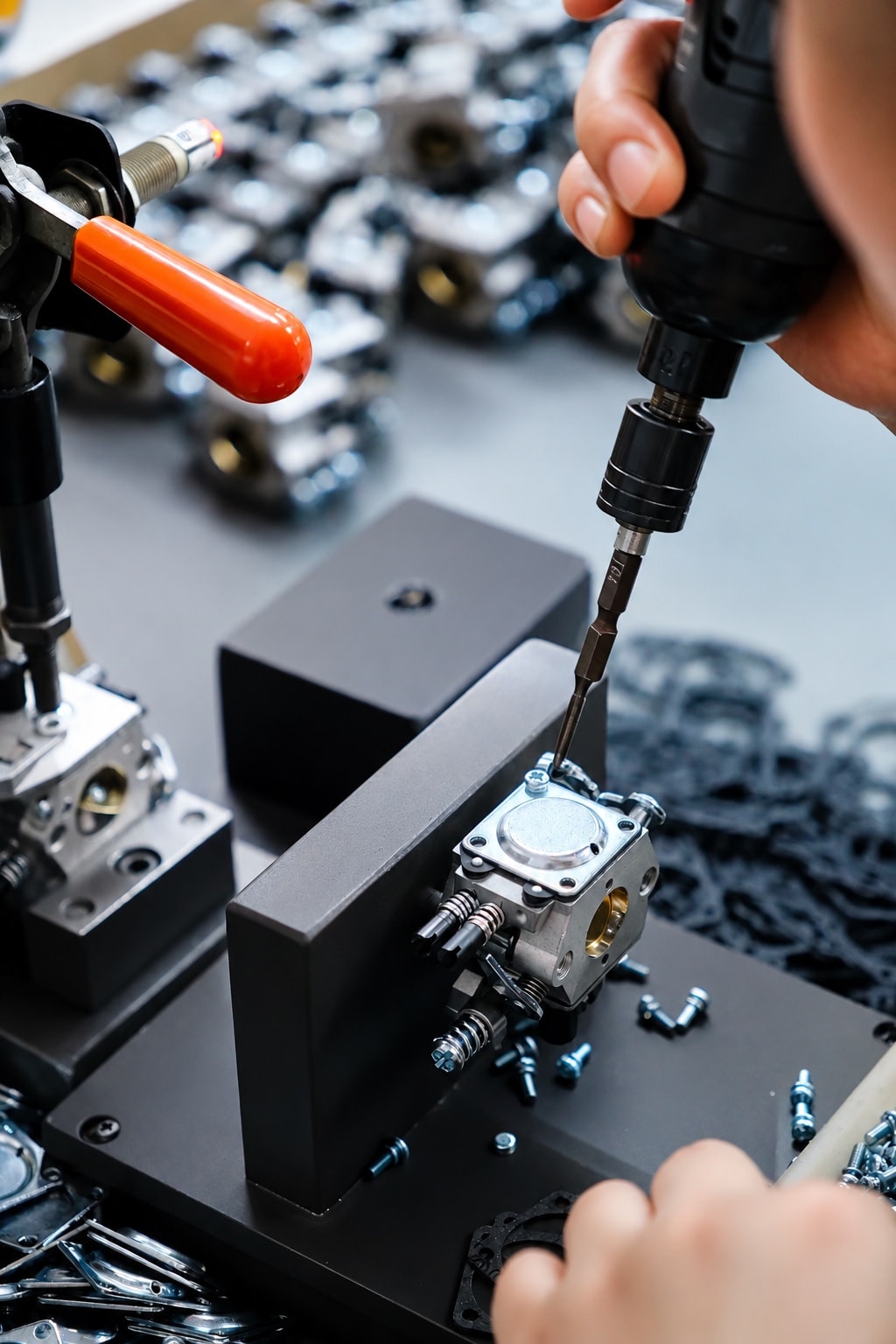
Assembly and testing
Diaphragms, springs and other components fitted in-house, every unit flow and leak tested; shot and sand blasting in-house.More →
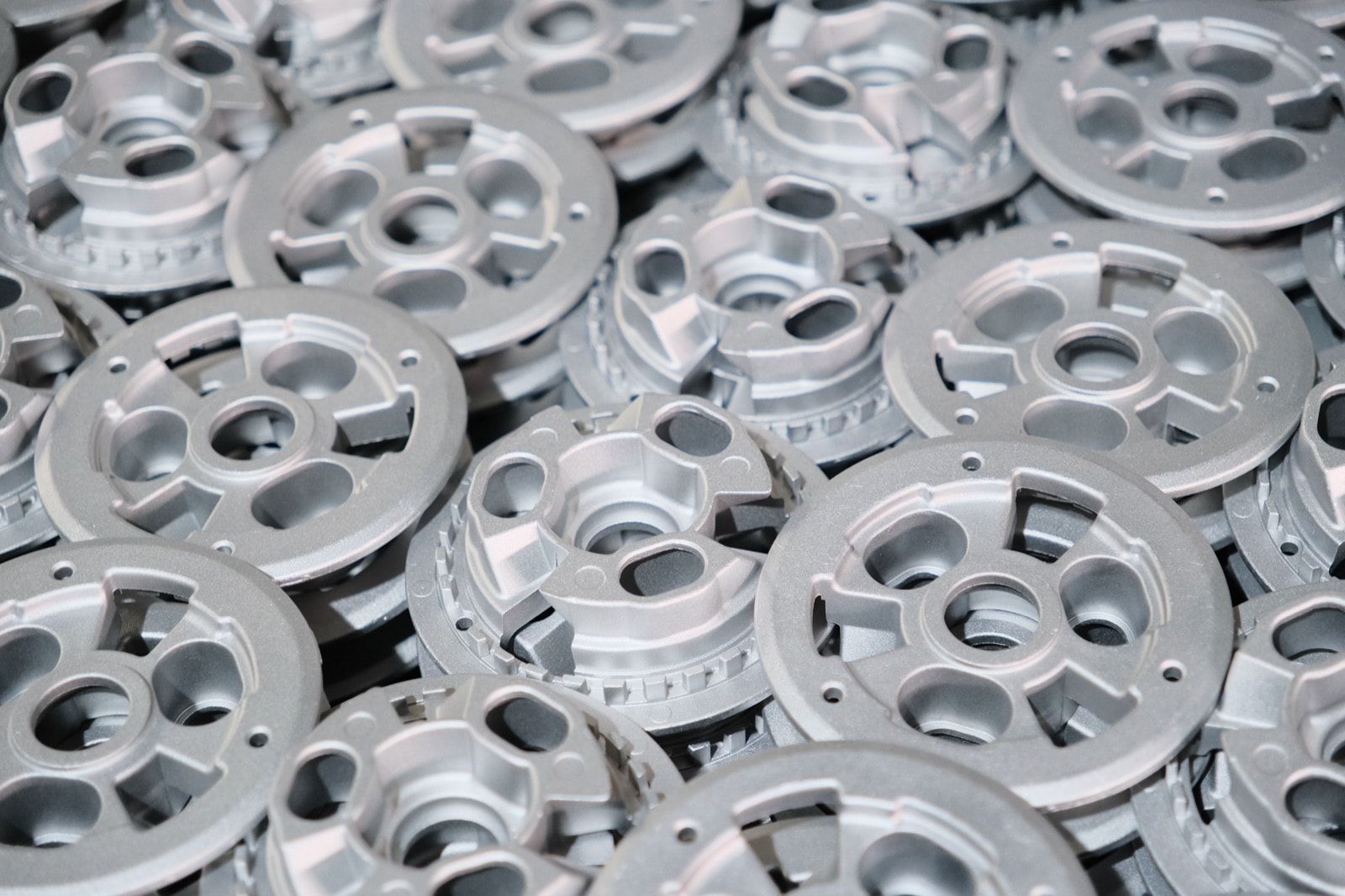
Choosing the alloy
Compare ADC12, A380, A360 and other grades in the alloy selector.More →
FAQ
Questions we get
Which GP-engine customers do you supply, and in what form?+
We have produced diaphragm carburetors for brushcutters, chainsaws and other small GP engines since 2005, for engine makers, export customers and carburetor makers with their own machining lines. Three delivery forms: finished assemblies with diaphragms, springs and other components fitted and 100% flow and leak tested; machined carburetor bodies and pump covers; or as-cast blanks for you to machine.
What should we watch when exporting GP-engine carburetors to the US or EU?+
Emissions and materials. For emissions, US programmes must meet EPA Phase 3 and EU ones Stage V for evaporative and exhaust limits, and both jet configuration and sealing feed directly into whether a unit passes. For materials you will need RoHS/REACH reports, and some markets cap lead in brass components separately. We can provide material certificates and arrange third-party testing on request, and confirm exactly which tests at quotation.
If we buy only blanks, how do we avoid problems in our own machining?+
Put three things in the contract: the machining-stock tolerance (we normally hold 0.3 ± 0.1 mm), the internal-quality sampling plan for the areas you will cut (X-ray rate and accept criteria), and how dimensional trend data reaches you. We can ship a trend sheet on key dimensions so you can see die wear coming. It is also worth agreeing die maintenance intervals, since drifting blank dimensions usually trace back to the tool rather than the process.
GP-engine demand swings a lot — can you hold stock for us?+
Yes. Two common arrangements: a frame order against an annual forecast, where we schedule monthly and carry agreed safety stock; or VMI/consignment, where stock sits at an agreed warehouse and you are invoiced on draw-down. Garden machinery is strongly seasonal, so we usually suggest building safety stock in the quiet months and replenishing weekly through the season. Stock levels and settlement terms are set in the contract.
What are the MOQ and sampling lead times?+
Samples and pilot runs have no MOQ; production starts at 500 pcs. Before tooling we can supply metal 3D-printed, CNC-machined or simplified-tool prototypes (about 7–15 days from a simplified tool); a production tool normally takes 30–45 days to build and T1 trials 3–5 days. Many GP programmes are variants, and modifying an existing tool can shorten that. In production each batch takes 25–35 days.
Can we nominate the diaphragm and spring suppliers?+
Yes. We buy alloy to your nominated grade, and will use your nominated suppliers for critical components such as diaphragms and springs while we handle incoming inspection and assembly.
FURTHER READING
Technical articles
- QUALITY
Die Casting Leak Testing and Impregnation: How to Specify Pressure-Tight Parts
What a pressure-tight die casting specification needs to state — test pressure, medium, leak limit and when testing happens — how to trace a leak, and when impregnation is and is not appropriate.
- TOLERANCES
Die Casting Tolerance vs CNC Machining Tolerance
Understand the difference between die casting and CNC machining tolerances, how tolerance stack-up occurs, and when machining is worth the added cost.