INDUSTRIES · Motorcycle & Two-Wheeler
Die castings for motorcycles and two-wheelers
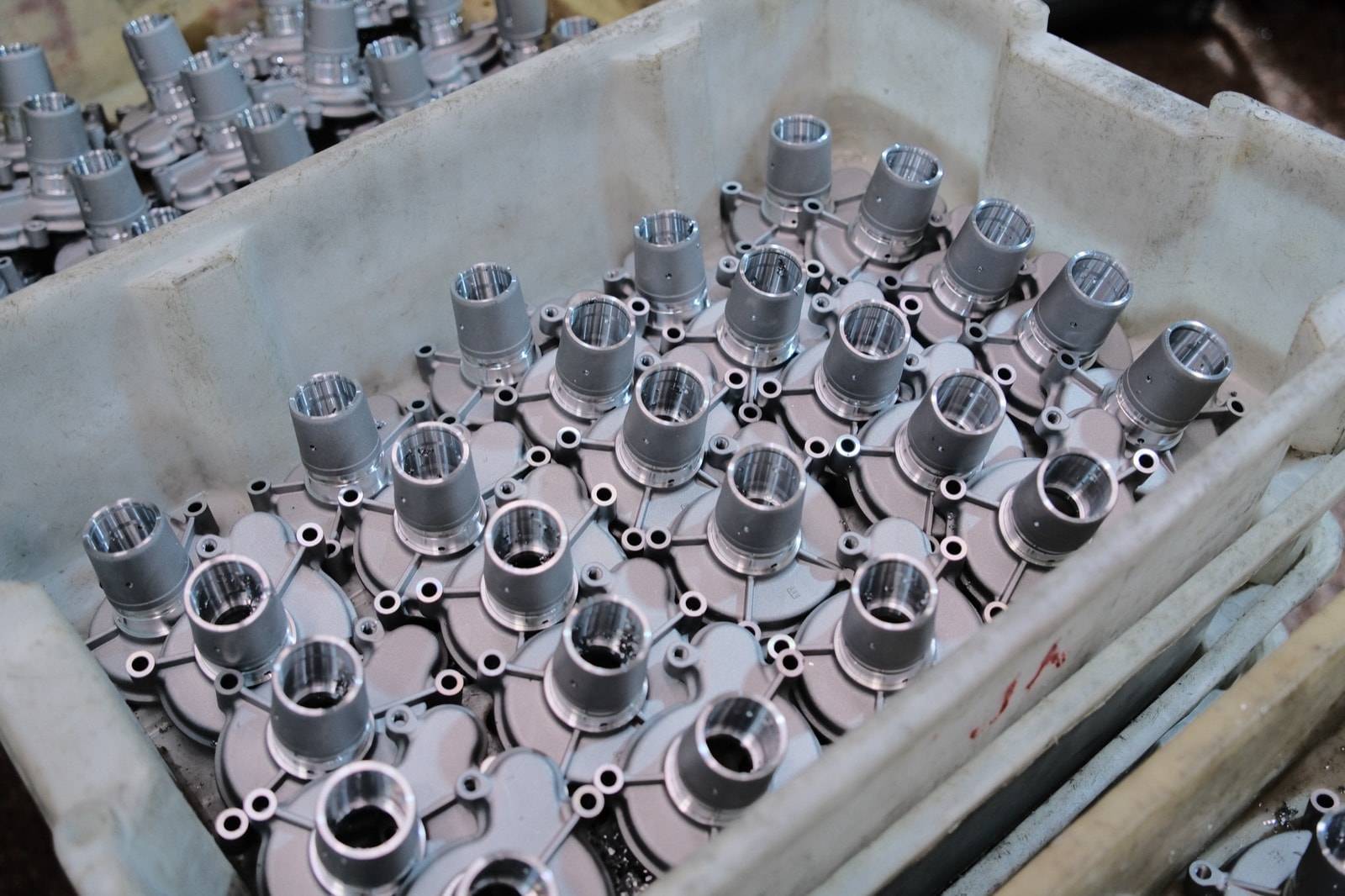
We started out making motorcycle carburetors, and since 2003 we have supplied aluminum die castings and finished assemblies to OEMs including QJMOTOR, Loncin and Jialing. Tooling, casting, CNC machining, finishing, assembly and testing all happen in one factory.
- Supplying QJMOTOR, Loncin and Jialing since 2003
- 100% leak tested; every carburetor flow tested
- First-article and control plans to PPAP / APQP
- Castings, machined parts or finished assemblies
OVERVIEW
What we make for the motorcycle industry
Motorcycles are where we started. The company grew out of the Jinxiong motorcycle carburetor works founded in 1998, and since 2003 we have supplied aluminum precision die castings in volume to OEMs including QJMOTOR, Loncin and Jialing. Carburetors are still our longest-running product line.
Parts in production today include carburetor assemblies and bodies, clutch baskets and pressure plates, crankcase side covers, cylinder head covers, valve covers, throttle bodies and intake manifold adapters, from 20 g to 5.5 kg and mostly in ADC12 aluminum. Our customers are OEMs, their tier-1 suppliers and aftermarket brands.
Each of these parts goes through tool design and build, casting, CNC machining, finishing, assembly and testing in the same factory. You can take raw castings, parts machined ready to assemble, or finished assemblies with bought-out parts fitted and flow and leak tested.
We have not yet supplied electric two-wheelers, but their motor housings, motor end covers and controller enclosures are made the same way as our production crankcase covers and shielded controller enclosures: bearing bores finished in one setup to ±0.02 mm, joint faces flat to 0.05 mm per 100 mm, sealing faces 100% leak tested, and external cooling fins of 1.5–2.5 mm. Electric two-wheeler programmes are welcome to send drawings for review.
CASE STUDIES
Representative parts
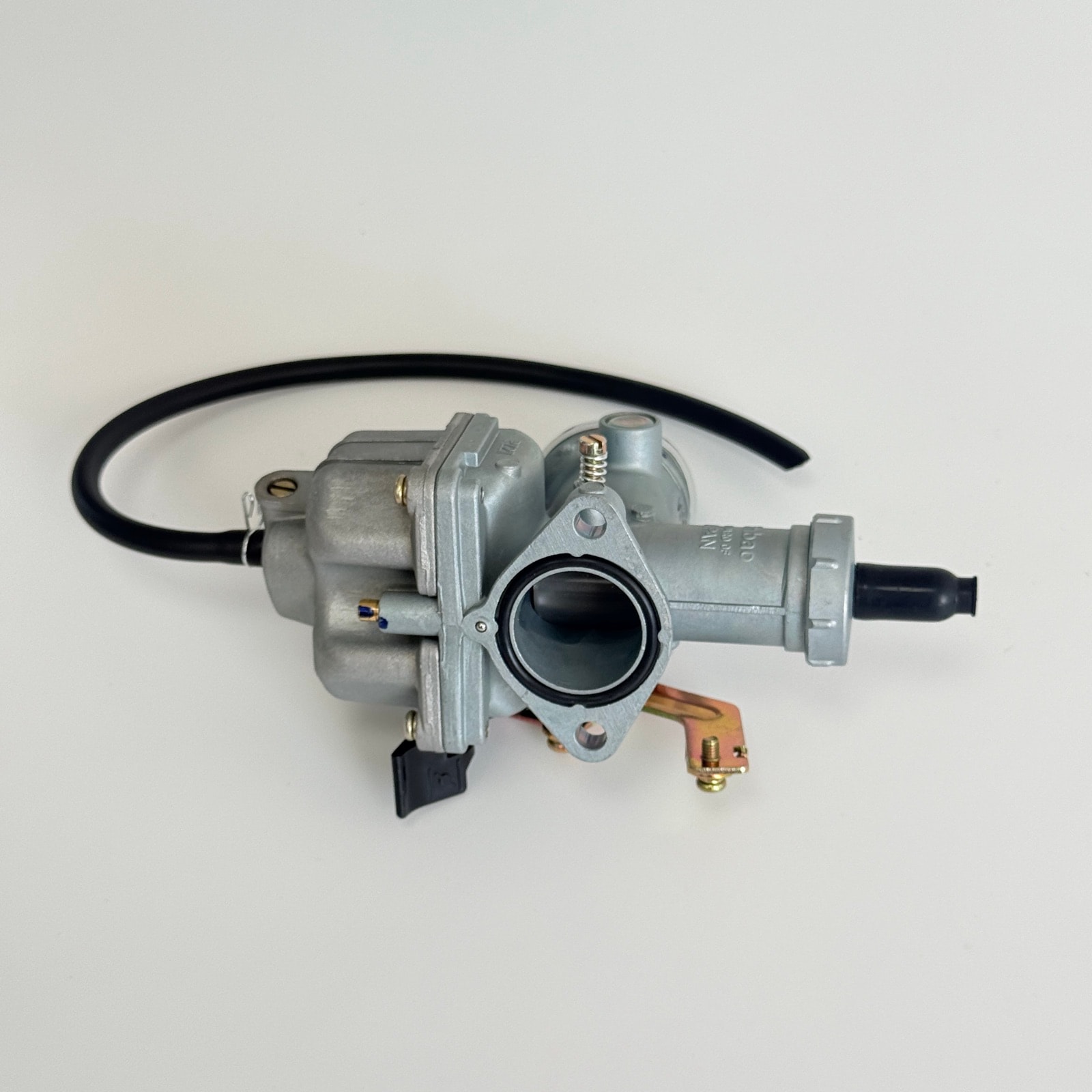
PZ27 Motorcycle Carburetor Assembly
ADC12 · 约 420 g(总成)
A 0.1 mm jet shift moves idle flow by over 5%. One-datum machining, flow-sorted jets and 100% bench testing hold ±2%, with over a million delivered.
Read the case →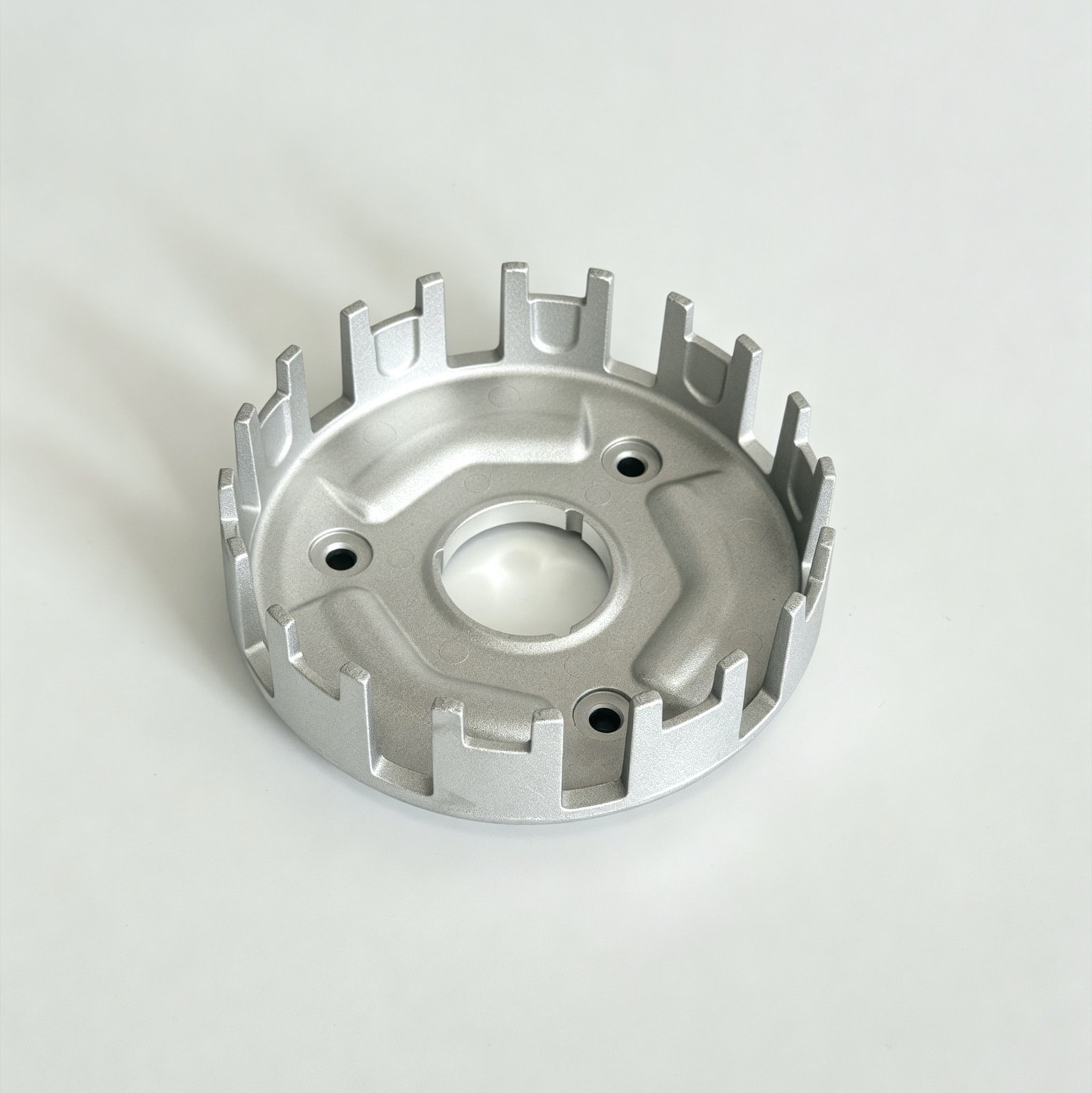
Motorcycle Clutch Basket
ADC12 · 约 330 g
Slot widths once varied by 0.08 mm between batches and the friction plates bound. Core cooling, scheduled core changes and 100% gauging now hold ±0.05 mm.
Read the case →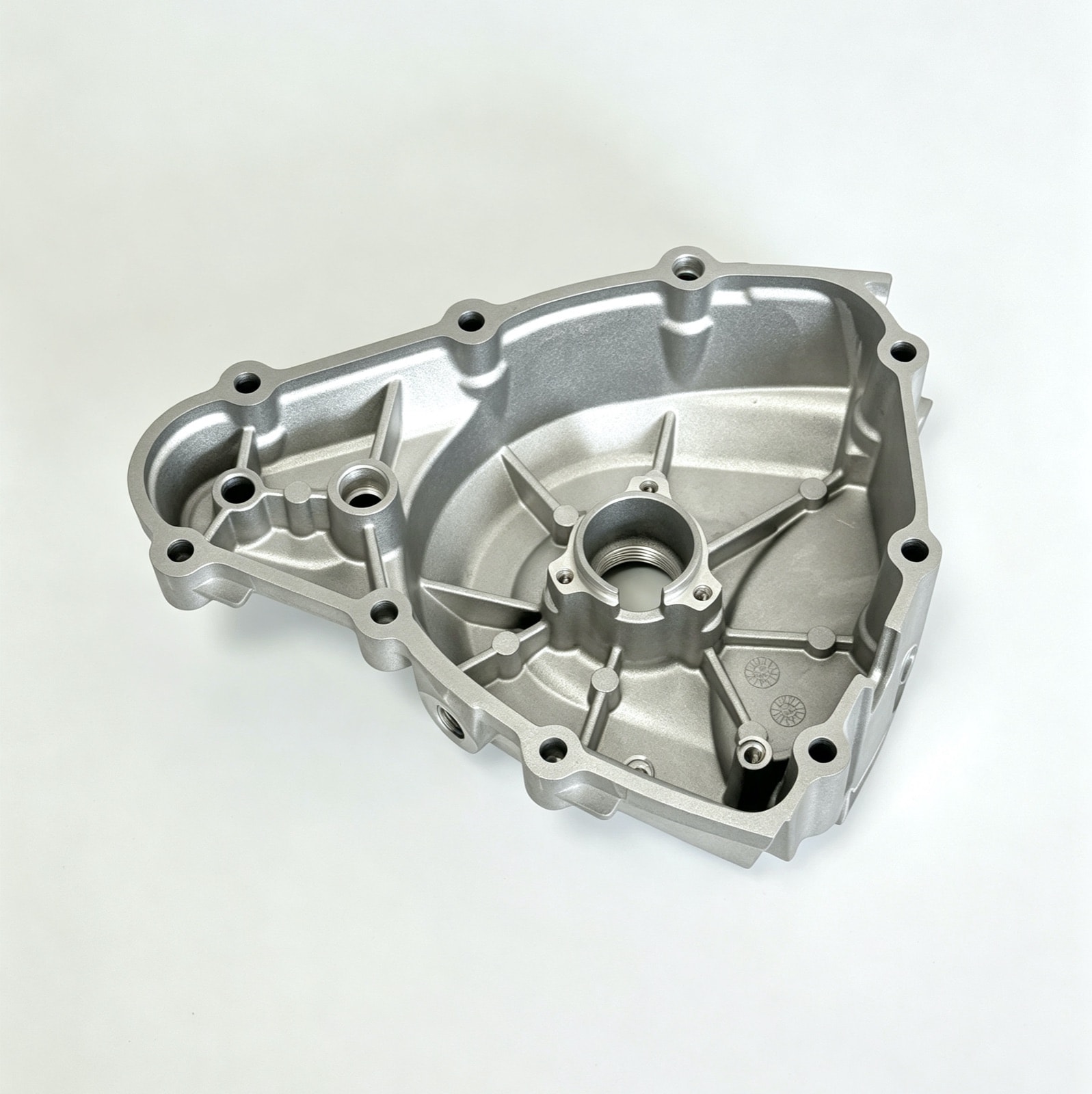
Motorcycle Crankcase Side Cover
ADC12 · 约 780 g
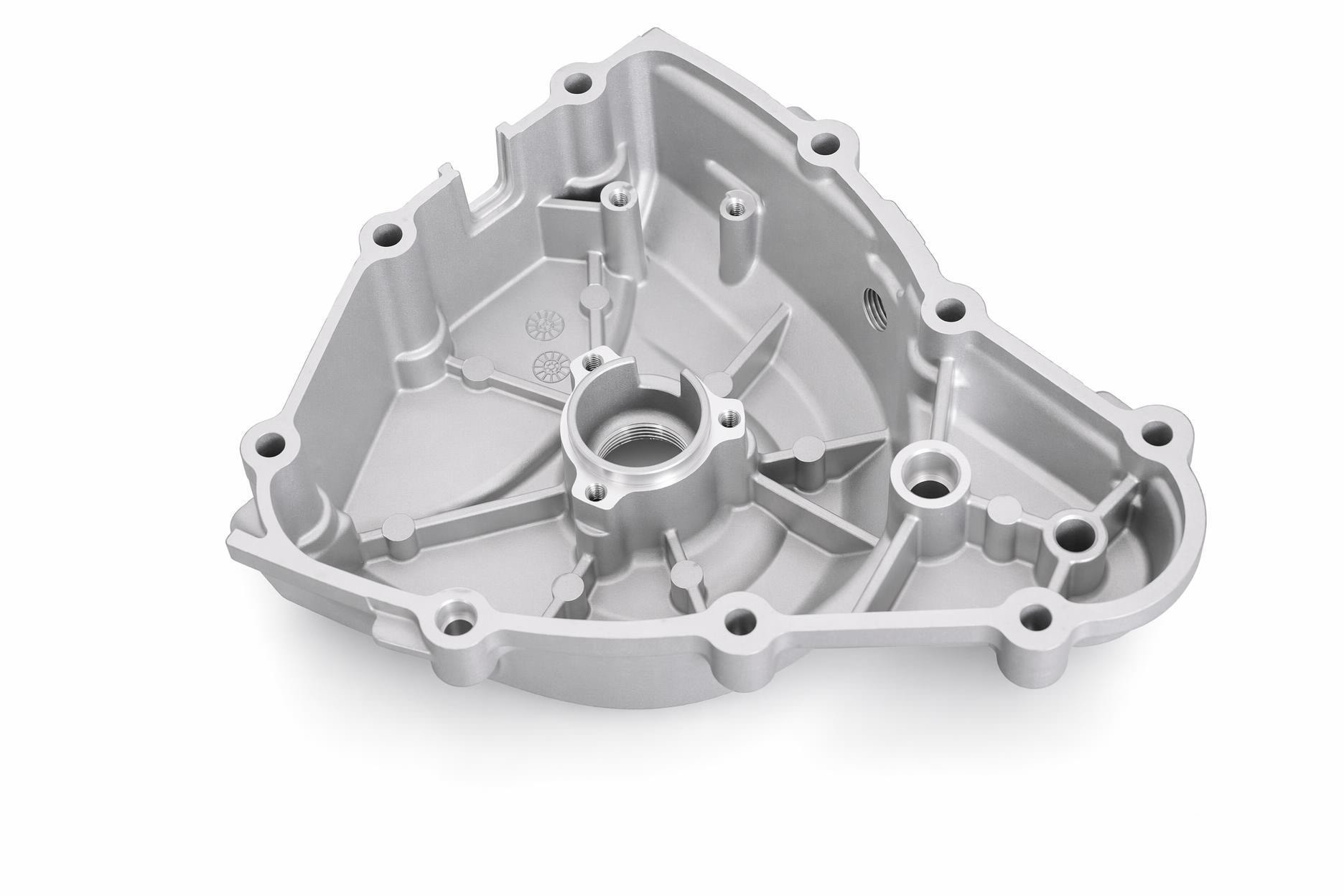
The 230 mm cover came off the die 0.15 mm out of flat. Even ejection, stress relief and gentle fixturing now hold 0.08 mm; oil-weep complaints are under 0.1%.
Read the case →TERMS
Working with us
Sampling lead time
Metal 3D-printed or CNC-machined prototypes before tooling; samples from a simplified or modified tool in 7–15 days; a production tool normally takes 30–45 days to build and T1 trials 3–5 days, and a pilot run can follow sample approval.
MOQ
No MOQ for samples and pilot runs; production from 500 pcs.
Documentation
Material certificates, dimensional and first-article (FAI) reports, leak and flow test records, X-ray sampling reports and RoHS/REACH reports can ship with the goods on request.
Nominated suppliers
We buy to your nominated grade or alloy supplier and can use your nominated finisher or component suppliers, with responsibilities set out in the contract.
HOW A PROJECT RUNS
From drawing to production: how we work with you
- 01
Drawing review and DFM
We confirm the sealing, flatness and critical-bore requirements, run flow simulation on filling and venting, and come back with changes to wall, draft and machining stock.
- 02
Tool design and build
Tools are designed and built in-house, with critical bores and locating faces kept on one die half so machining has a sound datum.
More → - 03
T1 samples and first-article report
After the trial we can submit full dimensional results, material certificates and leak or flow tests; OEM programmes can have a full PPAP package.
- 04
Pilot run
After sample approval a pilot run proves cycle time, process capability and assembly; production starts once key characteristics reach CPK ≥ 1.33.
- 05
Production and delivery
The control plan drives first-article, patrol and final checks, traceable to melt lot and shift; production from 500 pcs, 25–35 days per batch.
WHAT WE GUARANTEE
Motorcycle parts: the three things you care about most, and how we deliver them
- 01
Sealing: pressure parts that do not leak
Pump bodies, thermostat housings, carburetors and other pressure parts are 100% leak tested — 0.25 MPa for 30 s is a typical spec. Heavy sections get local squeeze, and micro-leakers are impregnated by prior agreement and re-tested 100%.
More → - 02
Flatness: large covers that do not weep oil
Crankcase side covers and head covers are large parts on a wall of about 3 mm. We split roughing from finishing with stress relief between, and measure flatness right after finishing and again 24 hours later — a part ships only if both pass, which holds production within 0.08 mm.
See the case → - 03
Bores: parts that fit and run true
On clutches, pumps and throttle bodies the fit depends on where the bores sit relative to each other. We cast critical bores and locating faces in one die half and bore them in a single setup, holding concentricity within φ0.05 mm and bearing seats to ±0.02 mm.
See the case →
PROCESSES
Processes, materials and finishes we use
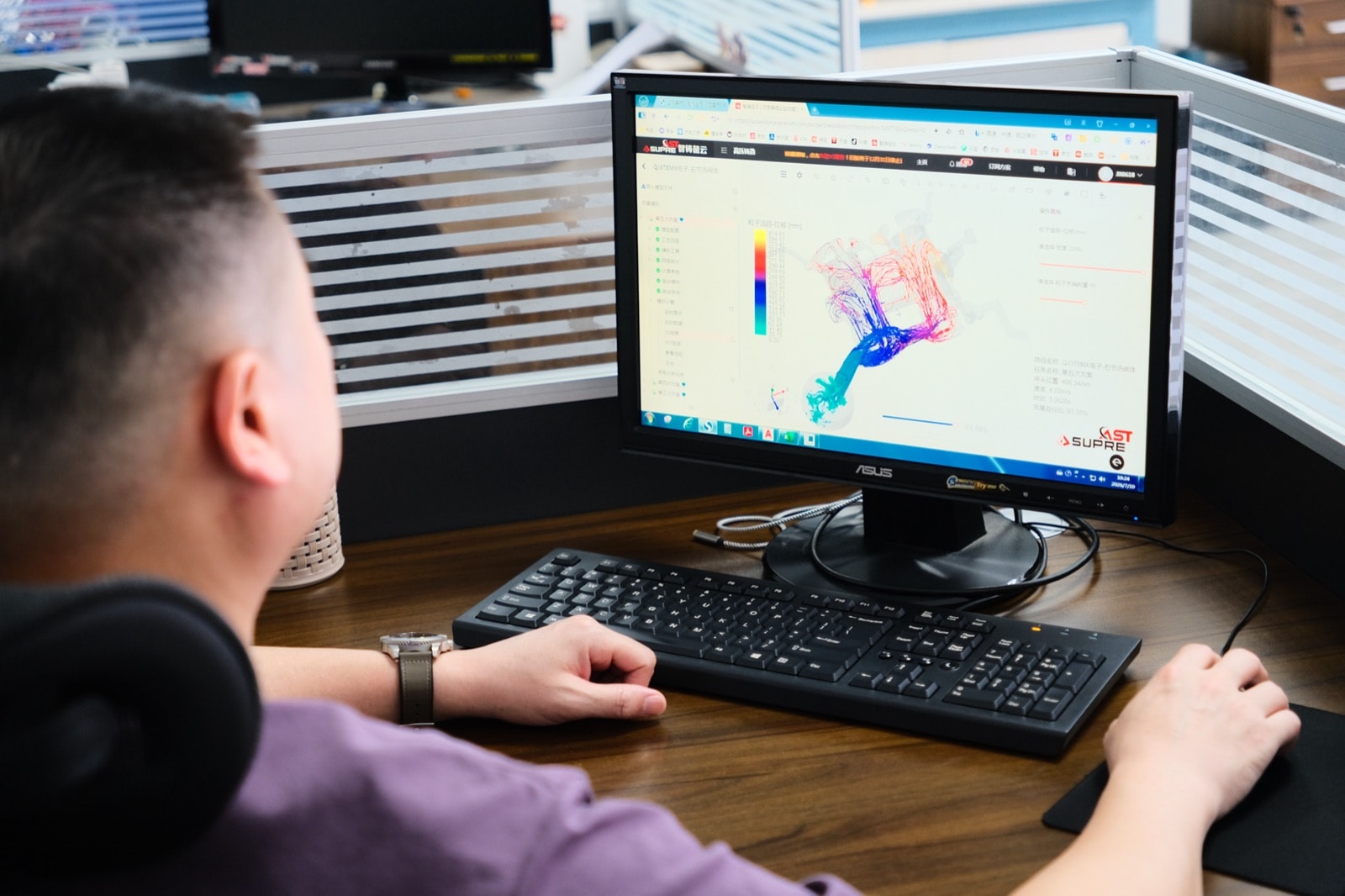
Tool design and build
Designed and built in-house with flow simulation before steel is cut; aluminum tools last around 100k shots and belong to you.More →
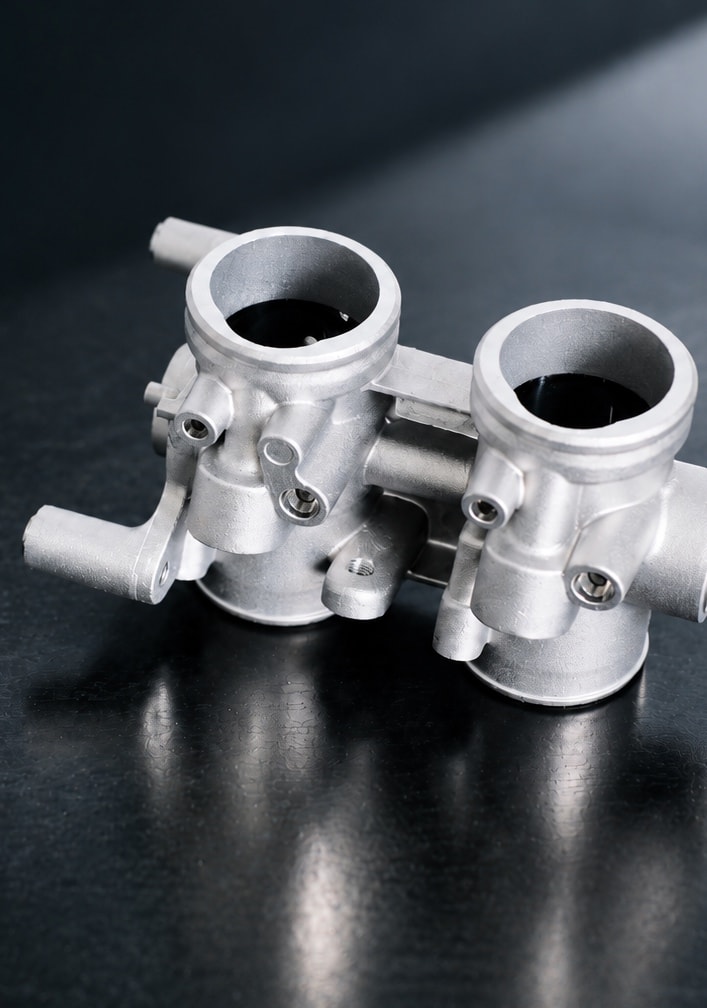
Aluminum die casting
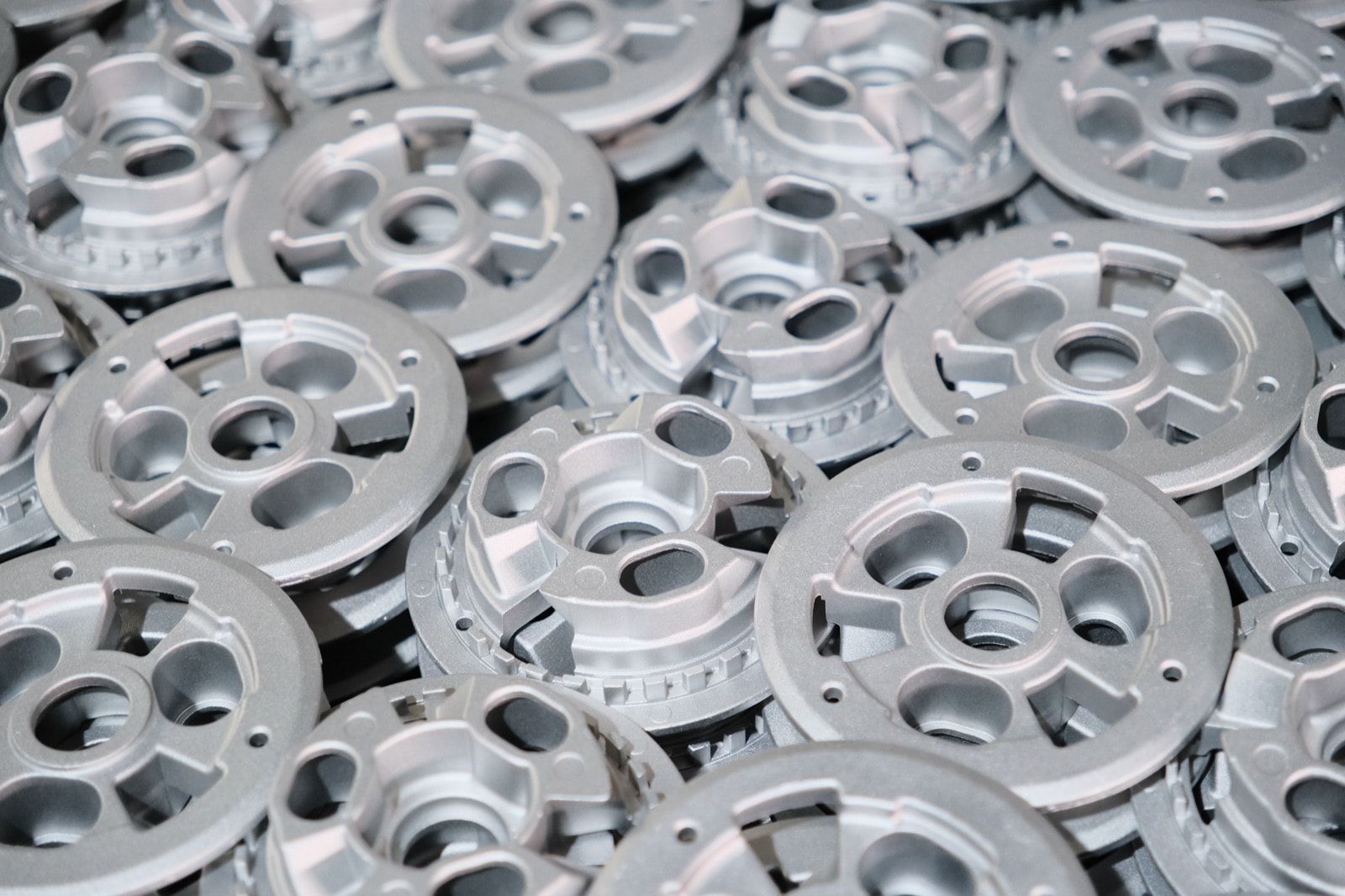
Ten machines from 160 to 800 t; motorcycle parts are mostly ADC12, with A380 and A360 available; local squeeze on heavy sections for sealed parts.More →
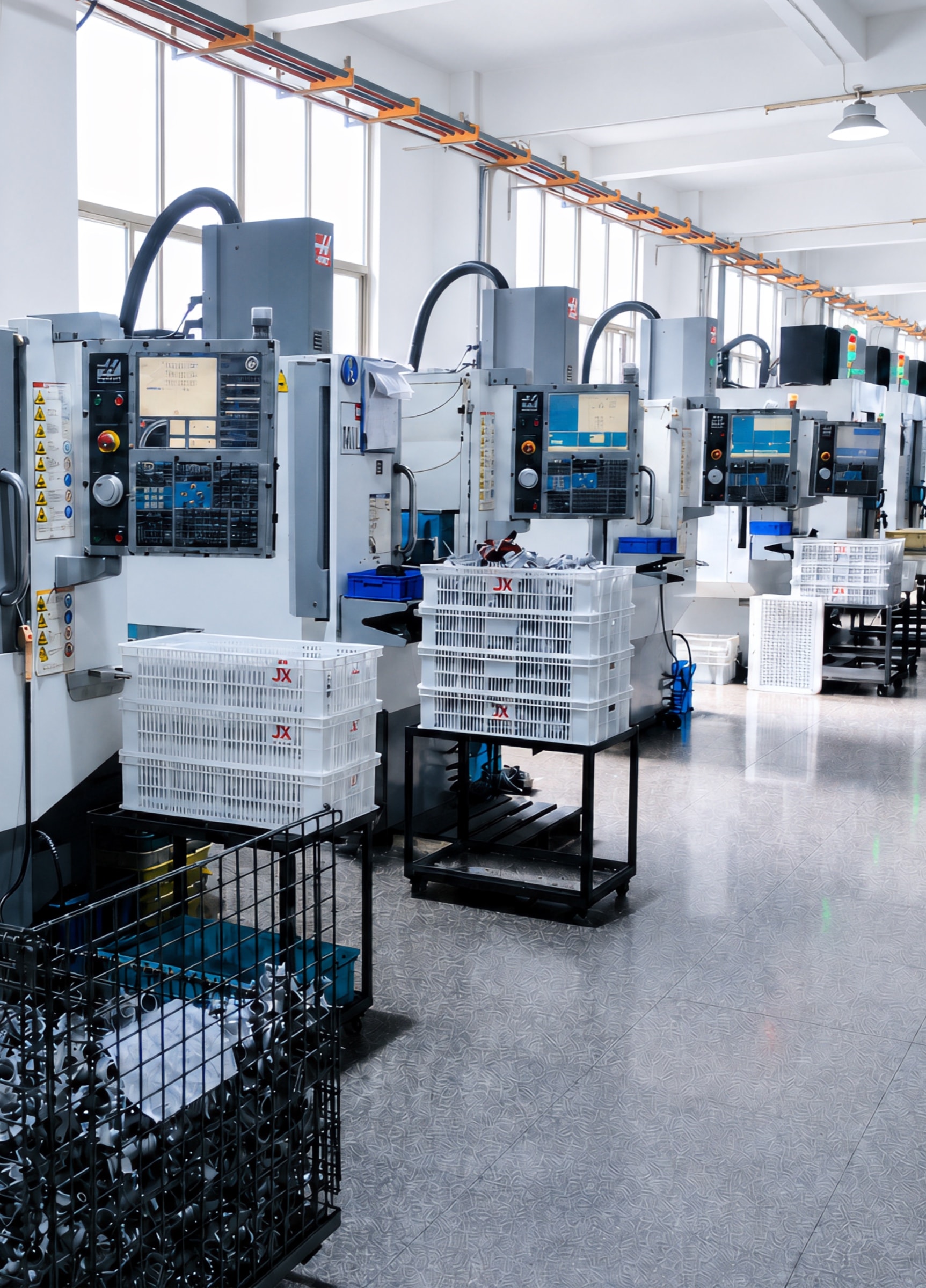
CNC machining
Haas and Brother machining centres and TAKISAWA lathes; critical bores in one setup, bearing seats to ±0.02 mm.More →
Finishing, assembly and testing
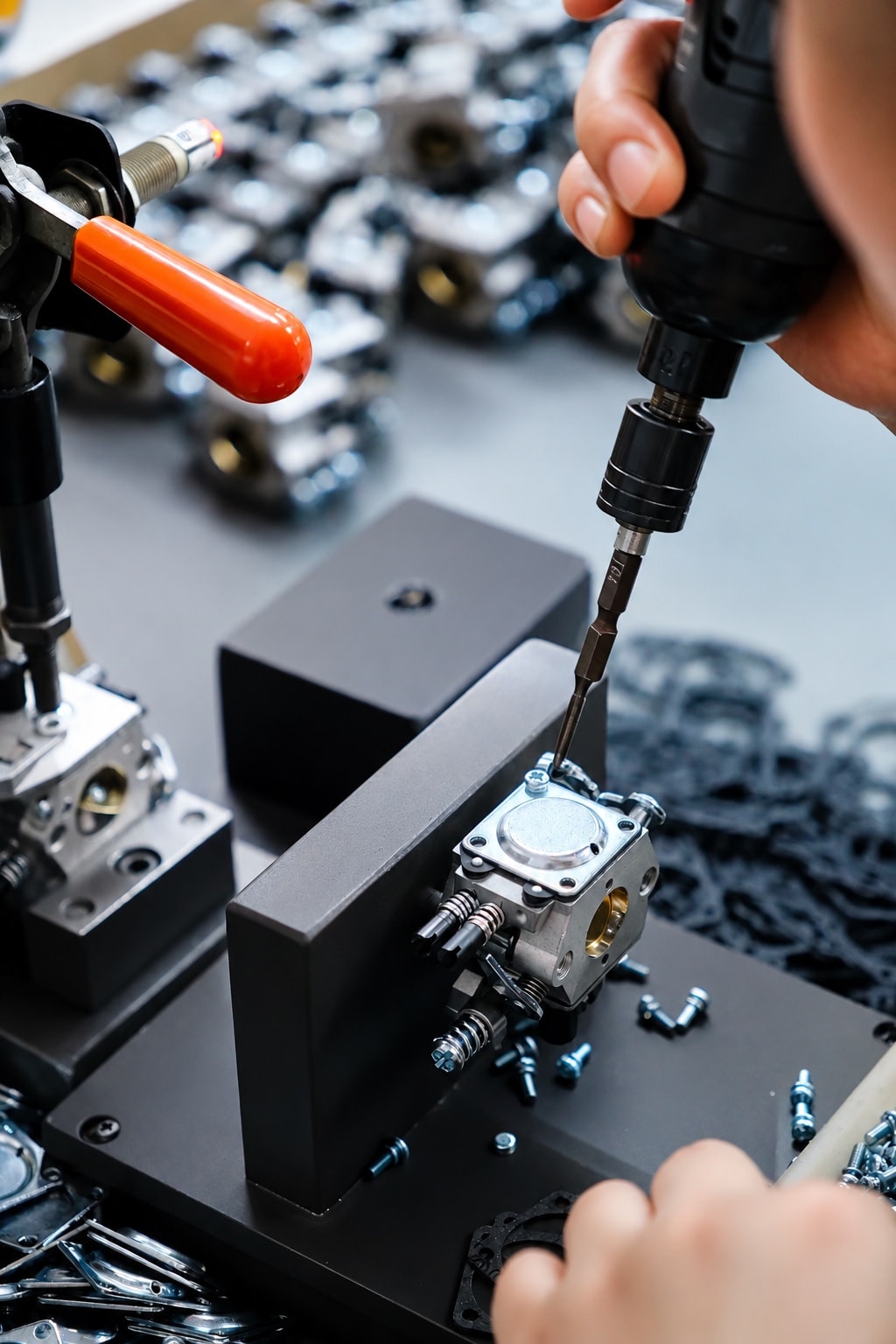
Shot and sand blasting, powder coating, anodizing, PVD and vibratory finishing in-house; carburetors and other assemblies built here with 100% flow and leak testing.More →
Choosing the alloy
Compare ADC12, A380, A360 and other grades in the alloy selector.More →
FAQ
Questions we get
Which motorcycle makers have you supplied?+
Since 2003 we have supplied aluminum die castings and carburetor assemblies to motorcycle OEMs including QJMOTOR, Loncin and Jialing, as well as to their tier-1 suppliers and to aftermarket brands. Parts in production include carburetor assemblies and bodies, clutch baskets and pressure plates, crankcase side covers, cylinder head covers, valve covers, throttle bodies and intake manifold adapters.
Do you only supply castings, or machined parts and finished assemblies too?+
All three. Raw castings, parts machined ready to assemble, and finished assemblies with bought-out components fitted are all made in the same factory. A carburetor assembly includes the brass jets, float or diaphragm, springs, seals, throttle shaft and butterfly, which we source and inspect on receipt; every finished unit runs the flow bench and a leak test, with the data archived and traceable.
Can you meet an OEM's PPAP requirements?+
Yes. We run PPAP/APQP: after DFM we issue the process flow diagram and control plan; after T1 we can submit the first-article package with full dimensional results, material certificates and performance tests; and capability studies on key characteristics are required to reach CPK ≥ 1.33. In production the control plan drives first-article, patrol and final checks, with records traceable to melt lot and shift.
What can you hold on pressure-tight parts and large covers?+
Every pressure-tight part is leak tested, at the pressure and dwell you specify — 0.25 MPa for 30 s is a typical example. On large covers such as crankcase side covers, milled flatness is normally 0.05–0.08 mm over 200 mm and holds within 0.08 mm in production. Bearing seats hold ±0.02 mm and critical bores stay within φ0.05 mm concentricity.
What are the MOQ and sampling lead times?+
Samples and pilot runs have no MOQ; production starts at 500 pcs. Before tooling we can supply metal 3D-printed or CNC-machined prototypes, and samples from a simplified or modified tool take 7–15 days; a production tool normally takes 30–45 days to build and T1 trials 3–5 days, and a pilot run can follow sample approval; in production each batch takes 25–35 days.
Can we nominate the alloy or suppliers?+
Yes. We will buy to your nominated grade or from your nominated alloy supplier, and work with your nominated finisher or component suppliers — with the split of responsibility set out in the contract.
Can you make motor and controller housings for electric two-wheelers?+
Yes, with one caveat: we have not yet supplied electric models. On motor housings and end covers what matters is coaxial bearing bores, a pilot square to the face and no porosity at the bosses — on our production parts we squeeze-feed the bosses and bore in one setup to ±0.02 mm. On controller enclosures it is the sealing face and heat: joint faces flat to 0.05 mm per 100 mm, with 100% leak testing available. The exact process is confirmed at drawing review.
FURTHER READING
Technical articles
- QUALITY
Die Casting Leak Testing and Impregnation: How to Specify Pressure-Tight Parts
What a pressure-tight die casting specification needs to state — test pressure, medium, leak limit and when testing happens — how to trace a leak, and when impregnation is and is not appropriate.
- TOLERANCES
Die Casting Tolerance vs CNC Machining Tolerance
Understand the difference between die casting and CNC machining tolerances, how tolerance stack-up occurs, and when machining is worth the added cost.
- MATERIALS
ADC12, A380, and A360 Aluminum Alloys: Composition, Performance, and Practical Selection for Die-Cast Parts
Three grades with similar names and similar strength that are still not interchangeable. Composition and properties from NADCA and JIS sources, and what really differs in filling, corrosion, machining and finishing.